The Indian Light Combat Aircraft (LCA) programme has achieved a significant technological milestone, further solidifying the Tejas Mk1A as a highly capable platform for modern aerial warfare.
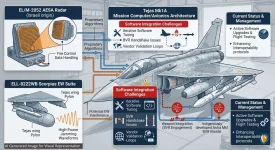
Recent flight tests have demonstrated that the indigenous Uttam Active Electronically Scanned Array (AESA) radar can successfully detect and track a target with a 10-square-metre Radar Cross-Section (RCS) at an impressive distance of 240 kilometres.
This breakthrough dramatically enhances the fighter's situational awareness and sets the stage for the platform's next major weapons upgrade: the integration of the advanced Astra Mk2 beyond-visual-range (BVR) air-to-air missile.
The 240-kilometre tracking capability was rigorously validated using Pilotless Target Aircraft (PTA) fitted with corner reflectors.
These reflectors are standard testing devices designed to artificially boost a drone's radar return, accurately imitating the electronic signature of a much larger combat jet without putting human pilots at risk during trials.
A 10m² RCS is roughly the radar signature of a standard multirole fighter burdened with external fuel tanks, heavy weapons, and electronic pods.
By spotting and firmly locking onto such a target at 240 kilometres, the Tejas Mk1A secures a critical "first-look, first-shot" advantage, enabling pilots to identify and track enemies long before they are themselves detected.
Developed indigenously by the Defence Research and Development Organisation’s (DRDO) Electronics and Radar Development Establishment (LRDE), the Uttam AESA radar represents a major leap in India's sensor capabilities.
Built with solid-state Gallium Arsenide (GaAs) transmit/receive modules, the radar features enhanced power generation, superior signal processing, and robust electronic counter-countermeasures (ECCM) designed to cut through heavy enemy jamming and clutter.
When this powerful radar is combined with the Tejas Mk1A’s naturally low radar cross-section—estimated to be a mere 0.5 to 1.5 m² when flying "clean" without external stores—the Hindustan Aeronautics Limited (HAL) manufactured fighter becomes exceptionally difficult for adversaries to target, yielding a distinct asymmetric advantage over regional rivals relying on older, mechanically scanned systems.
With the Uttam radar's extreme range envelope now validated, the logical next step is coupling the sensor with equally long-reaching weaponry.
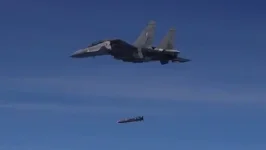
The Astra Mk2 beyond-visual-range missile is currently being primed for full integration onto the Mk1A platform.
Building on the success of the baseline Astra Mk1, the newer Mk2 variant is powered by an advanced dual-pulse solid rocket motor.
This dual-pulse technology optimizes the missile's energy management, pushing engagement ranges well past the 160–200 km threshold and allowing it to strike highly manoeuvrable targets at terminal speeds around Mach 4.5.
Once operational, the Astra Mk2 will permit Indian pilots to neutralize high-value airborne threats at extreme standoff distances.
The successful pairing of the LRDE's Uttam radar with the Astra missile family underscores India’s accelerating drive towards complete self-reliance in cutting-edge defence technologies.
As the Tejas Mk1A fleet expands, this potent combination of low-observability, advanced AESA sensors, and lethal dual-pulse weaponry will serve as a formidable force multiplier.
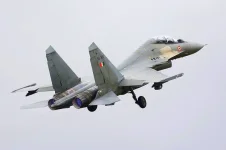
Furthermore, ongoing DRDO research into next-generation Gallium Nitride (GaN) radar components ensures that India's indigenous combat platforms—from the Tejas Mk1A to heavier assets like the Su-30MKI and the upcoming Advanced Medium Combat Aircraft (AMCA)—will maintain their technological edge for decades to come.