The ongoing conflict between Russia and Ukraine offers a rare look at how a major military power maintains its defence manufacturing while facing severe economic blockades.
Despite strict Western bans on critical technology, financial systems, aerospace components, and machinery since 2022, Russia has successfully continued to mass-produce weapons, drones, and armored vehicles.
For India, these events provide a crucial lesson that goes far beyond international politics.
As the nation pushes forward with its Atmanirbhar Bharat campaign, policymakers realize that simply manufacturing items at home is not enough to guarantee national security.
Currently, many of India's vital military assets still rely on imported parts and foreign supply networks, making them highly vulnerable to sudden geopolitical shocks.
The main issue is not India’s capability to construct advanced weapons. Rather, it is whether the country can sustain the continuous production and repair of these systems if access to foreign components is abruptly cut off.
A major takeaway from Russia's survival is the critical need for adaptable design. Today’s military hardware—such as fighter jets, naval ships, and tanks—is often built strictly around specific imported parts, like a unique engine or radar.
While this approach maximizes performance, it creates a massive weak point. If a foreign supplier halts deliveries, re-engineering an entire platform to accommodate a new component can stall production for years.
Moving forward, Indian defence projects must utilize modular designs. By implementing open architectures and standard connections, the military can swap out parts easily and avoid relying on any single foreign vendor.
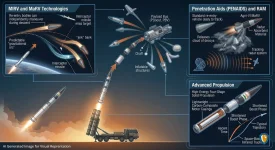
Another key lesson involves the heavy reliance on microchips. Modern warfare is fundamentally powered by electronics, from drones to advanced missile guidance systems.
While India has aggressively grown its domestic defence manufacturing—reaching a record annual production value of over ₹1.51 lakh crore—the global supply of advanced semiconductors remains tightly controlled by a few nations.
Russia’s ability to adapt shows that India must design electronic systems capable of functioning with a variety of available chips, rather than depending exclusively on highly specialized, hard-to-source components.
Expanding where parts come from is equally crucial. In a globally connected economy, no single country can produce every single piece of advanced military technology entirely within its own borders.
To lower risk, India must build relationships with multiple suppliers, establish alternative trade routes, and hold strategic reserves.
By strengthening trade ties across Asia, the Middle East, Europe, and the Global South, India can secure backup options and reduce the dangers of relying on concentrated supply chains.
Maintaining robust logistics is another vital factor gaining global attention. Producing defence equipment requires not just factories, but reliable shipping, insurance mechanisms, and stable international trade agreements.
As India grows its naval power and opens new maritime corridors, protecting these critical supply lines will become a core element of its long-term national security strategy.
The conflict also highlights the limits of relying on foreign intellectual property. In peacetime, buying the rights to build foreign weapons locally works smoothly.
However, during a major international crisis, foreign companies or governments might block access to technical manuals, software updates, and spare parts. This proves that true security comes from developing local engineering talent rather than just assembling imported kits.
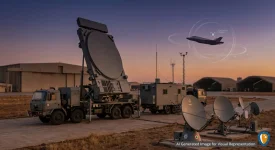
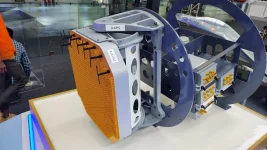
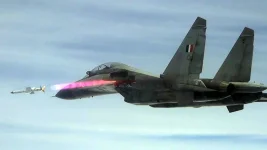
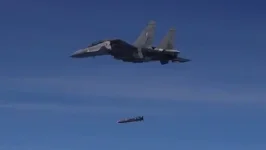
India is already moving in this direction with domestic projects like the Tejas fighter jet, the Uttam radar, the Astra missiles, and the Akash air defence system.
Furthermore, India's recent defence acquisition policies heavily emphasize true indigenous design, where domestic companies own the software source code and core architecture.
The ultimate value of these programs is that they build an independent engineering ecosystem capable of solving future challenges without outside help.
Ultimately, surviving international sanctions takes more than just technology. A truly secure defence industry requires domestic manufacturing capacity, varied supply networks, strong financial systems, reliable transport logistics, and a skilled workforce ready to adapt when global crises strike.