The successful maiden test flight of Russia’s new twin-seater stealth fighter prototype, the Su-57D, on May 19, 2026, could significantly impact the long-term combat strategies of the Indian Air Force (IAF).
Developed by the United Aircraft Corporation (UAC) and flown by Chief Test Pilot Sergei Bogdan, this new variant directly resolves key issues that previously led New Delhi to exit the joint Indo-Russian Fifth Generation Fighter Aircraft (FGFA) project in 2018.
Specifically, India had long sought a dedicated two-seater stealth jet designed for deep-strike missions and modern, network-centric aerial combat.
As regional dynamics shift—with China already operating its twin-seat J-20S stealth fighter and Pakistan looking to eventually acquire the Chinese-origin J-35—the Su-57D presents a practical, near-term solution for India.
It can serve as a stealthy "mothership" to fill critical capability gaps until India's homegrown Advanced Medium Combat Aircraft (AMCA) is fully inducted into service, which is expected by the mid-2030s.
Recent reports indicate that the Indian government is now increasingly involving private industry to fast-track the AMCA project, making an interim command platform highly relevant.
Beyond its ability to evade enemy radar, the true strategic value of the Su-57D lies in its capacity to function as a flying command-and-control centre.
It is uniquely positioned to manage India’s future network of unmanned aerial vehicles, including loyal wingman drones, stealth unmanned combat aerial vehicles (UCAVs), and autonomous drone swarms.
The concept of teaming manned jets with unmanned drones places massive stress on a single pilot.
Operating in heavily defended airspace requires managing flight controls, sensor data, electronic warfare, and weapon targeting, all while simultaneously directing drones hundreds of kilometres away.
The tandem-seat design of the Su-57D solves this problem. The front pilot can concentrate entirely on flying, evading threats, and engaging immediate targets.
Meanwhile, the rear-seat Weapon Systems Officer (WSO) acts as a tactical battle manager, overseeing the broader fleet of drones.
This division of labour will be vital in future conflicts, where stealth fighters will act more like battlefield coordinators than solo strike aircraft.
Highlighting this intended purpose, Russian officials have explicitly stated the aircraft was developed to manage joint groups of manned and unmanned aircraft.
The Su-57D prototype was even recently seen bearing tail graphics that show it pairing with Russia’s S-70 Okhotnik-B stealth combat drone, confirming the jet was built specifically for advanced drone warfare.
Should India choose to acquire or locally produce the Su-57D, the fighter could become the central hub for several Indian unmanned projects currently in the works.
These include the Defence Research and Development Organisation’s (DRDO) Ghatak stealth UCAV, Hindustan Aeronautics Limited’s (HAL) CATS Warrior loyal wingman, and the ALFA-S swarm drone systems.
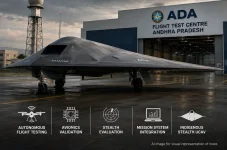
For example, the Ghatak UCAV is designed as a flying-wing stealth bomber intended to penetrate deep into enemy territory. Such complex missions will likely require human oversight before authorising weapon strikes.
A Su-57D flying safely near the combat zone could direct Ghatak drones using secure, targeted data links, reducing the need to rely on vulnerable satellite communications.
HAL’s CATS Warrior programme—which is steadily progressing through ground and engine testing toward its own flight trials—is another perfect match for this setup.
These loyal wingman drones could be sent ahead of the Su-57D to draw enemy fire, jam enemy radars, or destroy air defence systems before the manned jet enters the danger zone.
In this scenario, the rear-seat operator in the Su-57D would essentially act as an airborne drone commander, guiding multiple autonomous assets at once.
However, the Su-57D’s usefulness extends beyond commanding drones. Two-seater stealth aircraft are highly effective for deep-strike missions due to the sheer complexity of penetrating modern air defences.
The base Su-57 is already equipped with powerful sensors, including advanced active electronically scanned array (AESA) radars and a robust electronic warfare suite.
With two crew members, the rear operator can focus entirely on analysing enemy radar networks and finding safe flight paths, while the pilot focuses on survival and executing the mission.
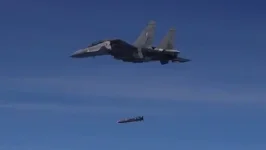
This is especially crucial when launching long-range stealth cruise missiles, as managing low-altitude flying, electronic jamming, and weapon deployment is overwhelming for a single person.
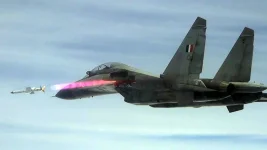
Historically, the IAF has strongly favoured twin-seat fighters for long-range offensive missions. The Su-30MKI, which currently forms the backbone of India’s strike capabilities, relies heavily on this pilot-and-WSO partnership for maritime strikes and precision attacks.
Introducing the Su-57D would allow the IAF to maintain these proven combat methods while upgrading to stealth technology, superior sensors, and artificial intelligence-assisted warfare.
While the AMCA remains India’s ultimate goal for a homegrown fifth-generation fighter, its widespread deployment is still years away. In the meantime, the Su-57D could supply the IAF with a ready-to-use stealth platform tailored for the new era of manned-unmanned combat.
Crucially, it would give the Indian military a practical tool to establish the strategies and doctrines needed for operating stealth motherships, commanding loyal wingmen, and mastering the future of aerial warfare.