- Views: 2K
- Replies: 2
As of 2026, the nature of aerial warfare has fundamentally transformed. Inexpensive loitering munitions, heavily popularized by the Iranian-designed Shahed series, have emerged as persistent and economically draining threats.
Recent conflicts in Ukraine and the Middle East have highlighted a critical vulnerability: utilizing multi-million-dollar air defence networks against cheap, disposable drones is an unsustainable strategy.
Consequently, military planners are increasingly looking toward turboprop aircraft as a highly efficient countermeasure.
For India, Hindustan Aeronautics Limited’s (HAL) indigenous HTT-40 trainer aircraft offers a prime foundation to be adapted into a specialized, low-cost "drone hunter."
The primary operational hurdle in defeating loitering munitions is their flight profile. Drones like the Shahed-136 generally cruise at sluggish speeds of 150 to 180 km/h and hug the terrain to avoid radar detection.
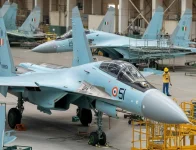
Advanced fighter aircraft, such as the Indian Air Force's Rafales or Su-30MKIs, are engineered for supersonic combat and air superiority.
Because these jets possess a high minimum stall speed, pilots only get a fraction of a second to align their sights and fire at a slow-moving drone.
This massive speed discrepancy makes visual tracking and targeting incredibly difficult, leading to high pilot fatigue and inefficient interception rates.
Turboprop aircraft, by contrast, thrive at these lower speeds.
An aircraft like the HTT-40 can comfortably match the velocity of a loitering munition. This allows the pilot to safely trail the target, stabilize the aircraft, and line up a highly accurate shot.
The concept of using slower planes for drone interception is already being proven on modern battlefields.
Aircraft like the A-29 Super Tucano, and even vintage Yak-52 trainers operated by Ukrainian forces, have been successfully deployed to shoot down hostile unmanned aerial vehicles (UAVs) by simply flying alongside them.
Beyond flight physics, the financial argument is even more compelling.
Flying a modern jet fighter costs approximately $20,000 to $25,000 per hour, whereas a light turboprop operates at a mere $1,000 to $2,000 hourly.
Furthermore, firing a $1 million to $2 million advanced air-to-air missile at a drone that costs roughly $20,000 to manufacture heavily favours the attacker's war chest.
A modified turboprop solves this uneven cost-exchange ratio by utilizing significantly cheaper munitions.
By equipping the aircraft with standard machine gun pods or laser-guided rockets—such as the APKWS (Advanced Precision Kill Weapon System)—the cost of interception is brought in line with the actual value of the target.
The HAL HTT-40 is structurally well-suited for this emerging mission.
Powered by a reliable Honeywell Garrett TPE331-12B turboprop engine, it boasts stable handling at low speeds, a modern digital glass cockpit, and excellent fuel endurance.
To transition from a basic trainer to a combat-ready interceptor, the aircraft would require specific, yet manageable, modifications.
These include integrating electro-optical and infrared (EO/IR) targeting sensors, installing a lightweight fire-control system, and adding under-wing hardpoints to carry lightweight weaponry.
Because the HTT-40 is relatively inexpensive to produce, India could field large numbers of them to establish persistent aerial patrols over vital military bases, logistics hubs, and civilian infrastructure.
Another significant tactical benefit of the turboprop is its extended loiter time.
Loitering munitions are often launched in massive swarms or staggered waves designed to exhaust ground-based air defences.
A squadron of HTT-40 drone hunters could maintain continuous Combat Air Patrols (CAP) for hours.
A single aircraft could potentially engage and destroy multiple drones in one sortie, a feat that is logistically taxing for fast jets that burn through fuel at a much higher rate.
Utilizing trainer-based platforms for combat also smartly distributes operational risk.
Losing a frontline fighter jet is a massive blow to national security—both financially and strategically—particularly given the extensive time and resources required to train fighter pilots.
A turboprop is far easier and cheaper to replace, granting military commanders the flexibility to deploy them in riskier, contested environments without jeopardizing their most valuable aerial assets.
However, it is crucial to recognize that turboprops are not a wholesale replacement for high-performance jets.
Fast fighters remain absolutely necessary for engaging enemy aircraft, intercepting high-speed cruise missiles, and operating in complex airspace where enemy anti-aircraft systems and fighter cover are present.
Instead, the turboprop serves as a complementary layer. By handling the bulk of the slow-moving drone threat, they free up advanced fighters to focus on the high-end, rapid-response missions they were originally designed for.
Integrating a dedicated HTT-40 drone hunter squadron into the military would be a highly pragmatic step forward for India’s layered air defence architecture.
It provides a financially sustainable answer to the realities of modern drone warfare, while directly supporting the "Make in India" initiative by expanding the operational utility of a domestically manufactured aerospace platform.