The Indian Navy is setting the stage for a revolutionary leap in maritime air operations.
The upcoming Twin Engine Deck Based Fighter (TEDBF) is being engineered from its inception to lead unmanned combat aerial vehicles, signalling a transformative era for carrier strike groups.
Defence officials confirm that Manned-Unmanned Teaming (MUM-T) is integrated as a fundamental capability from day one, rather than being treated as a retroactive upgrade.
The "Mothership" of Naval Aviation
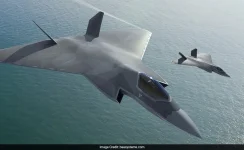
When the TEDBF joins the active fleet, it will serve as the primary command centre within the Combat Air Teaming System (CATS), a joint initiative by Hindustan Aeronautics Limited (HAL) and the Defence Research and Development Organisation (DRDO).This advanced architecture will empower a single TEDBF pilot to coordinate a swarm of autonomous drones directly from the deck of an aircraft carrier.
The cornerstone of this ambitious strategy is the CATS Warrior. Currently, a 2.1-tonne low-observable prototype is being developed primarily for the Indian Air Force.
However, naval planners are aggressively exploring a heavily modified, deck-capable variant. Furthermore, open-source reports indicate that HAL is already scaling up its drone development, which could pave the way for a fully navalised wingman.
Redefining High-Risk Operations
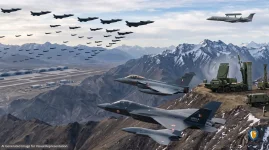
By operating as autonomous wingmen, these drones will undertake the most perilous tasks in highly contested environments.Deploying ahead of the main carrier strike group, unmanned assets will execute reconnaissance, disrupt enemy radar systems, gather electronic intelligence, and conduct precision strikes against fortified targets.
This forward-leaning approach effectively shields manned fighters from advanced enemy air defences.
Insiders reveal that preliminary talks are also underway for a significantly larger Twin Engine Naval UCAV.
This proposed combat drone would exceed the dimensions of the Naval Light Combat Aircraft (LCA) demonstrator and be custom-built for complex carrier launch and recovery sequences.
AI and Advanced Avionics
Controlling a squadron of drones while piloting a fighter jet is an immense cognitive challenge.To mitigate pilot fatigue and prevent task saturation, the TEDBF will feature AI-driven battle management software.
A robust, low-latency datalink will form the backbone of this network, allowing seamless real-time exchange of targeting coordinates and threat assessments.
The aircraft will rely on state-of-the-art sensor fusion, aggregating data from the indigenous Uttam Active Electronically Scanned Array (AESA) radar, the Unified Electronic Warfare Suite (UEWS), and live feeds from the CATS drones.
Rather than juggling multiple screens, pilots will view a unified, intuitive tactical map on a next-generation wide-screen Large Area Display (LAD).
Borrowing from the AMCA
While the TEDBF is designated as a 4.5+++ generation platform, it is leaning heavily on the fifth-generation Advanced Medium Combat Aircraft (AMCA) programme.To streamline logistics, cut costs, and slash development risks, the naval jet will share crucial Line Replaceable Units (LRUs), mission computing architecture, and advanced sensors with the AMCA.
Expanding the Horizon to 2038
The Aeronautical Development Agency (ADA) is systematically advancing the TEDBF programme to eventually replace the Navy's existing MiG-29K fleet.The project aims to complete its Critical Design Review (CDR) by 2026, followed by anticipated clearance from the Cabinet Committee on Security (CCS) in 2027.
Based on the current trajectory, the TEDBF is slated for induction around 2038, capitalising on the mature fifth-generation technologies refined by the earlier AMCA rollout.