India’s prolonged pursuit of a homegrown fighter jet engine is regaining momentum due to ongoing global supply chain issues and soaring costs of imported powerplants.
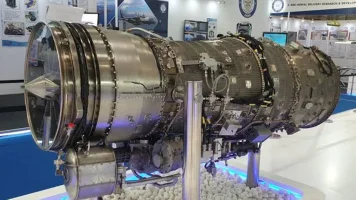
The Defence Research and Development Organisation (DRDO) and its Gas Turbine Research Establishment (GTRE) are actively reviving the Kaveri engine initiative, now widely known as Kaveri 2.0.
This marks a crucial strategic pivot aimed at breaking the nation's reliance on foreign manufacturers for powering future military aircraft.
Supply Bottlenecks and Surging Costs
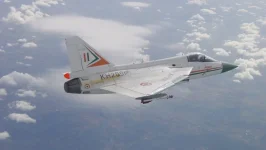
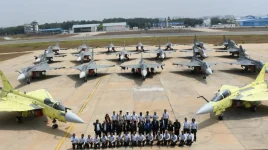
This renewed focus arrives at a critical juncture, as delayed shipments of foreign engines have severely hindered the Indian Air Force's (IAF) modernisation efforts.A pressing issue has been the stalled delivery of General Electric (GE) F404-IN20 engines, which are essential for the Tejas Mk1A fighter fleet.
Consequently, Hindustan Aeronautics Limited (HAL) has faced significant disruptions. Recent reports data reveals that around 30 newly built Tejas Mk1A airframes have been parked on the tarmac awaiting propulsion.
While a small handful of engines finally arrived in mid-2026, reports indicate that at least one faced a technical snag during quality checks, further complicating the delivery schedule.
Simultaneously, the financial burden of future projects is mounting. The more potent GE F414 engine—designated to propel the upcoming Tejas Mk2 and the initial batches of the Advanced Medium Combat Aircraft (AMCA)—has seen a drastic spike in price.
While official contract figures remain undisclosed, defence analysts estimate the quoted price per engine may have nearly tripled from initial projections of ₹70–80 crore.
The dual challenge of unpredictable deliveries and escalating expenses has firmly reinforced the necessity of fast-tracking domestic engine programmes.
The Kaveri Evolution: A Phased Strategy
The Kaveri project has evolved significantly since 2008, when it was separated from the Tejas programme.During its initial run, the engine failed to deliver the required power for a fully loaded fighter jet, maxing out at roughly 72 kN of thrust with an afterburner.
This fell short of the 83–85 kN threshold demanded for the Tejas to operate effectively in rigorous combat scenarios.
Instead of scrapping the project, GTRE engineers pivoted to a step-by-step development model:
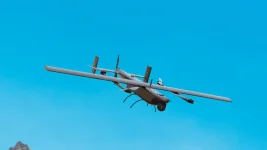
- Phase 1 (Unmanned Platforms): The initial stage concentrates on a "dry" version of the Kaveri engine, capable of generating between 48 and 52 kN of thrust without relying on an afterburner. Unlike piloted fighter jets, stealthy unmanned combat aerial vehicles (UCAVs) do not rely on continuous supersonic speeds or intense agility. As a result, this dry variant presents a highly practical, homegrown solution for drone propulsion, most notably for the DRDO's Ghatak Remotely Piloted Strike Aircraft (RPSA).
- Phase 2 (Fighter Jets): The subsequent phase of the Kaveri 2.0 initiative aims to integrate a modernized afterburner, effectively upgrading the system into a true fighter-class engine. This ambition caught the public eye when Defence Minister Rajnath Singh visited the GTRE testing facility in Bengaluru to personally review the enhanced afterburner's performance. Scientists are striving to push the thrust into the 80–85 kN range, which could eventually allow for a gradual replacement of F404 engines in the Tejas fleet during the 2030s.
A Dual-Track Future for India's Aerospace
Despite these advancements, aviation experts consistently warn that crafting a dependable military turbofan is among the hardest challenges in the global defence sector.State-of-the-art fighter engines rely on highly specialized technologies—such as single-crystal turbine blades and advanced superalloys capable of withstanding extreme heat—that only a select few nations currently possess.
Acknowledging these immense technical hurdles, India is now steering its engine development through a parallel strategy:
- Maturing Kaveri: Perfecting the Kaveri series for drones while persistently refining the afterburning variant for light fighters.
- International Co-development: Seeking a foreign partnership to jointly develop a massive 120 kN-class turbofan for the AMCA Mk2 and other sixth-generation fighters. Global aerospace giants like France’s Safran and the UK’s Rolls-Royce have shown keen interest in a joint venture, though a formal deal is still pending.
To support this long-term vision, India is heavily investing in creating a localized aerospace supply chain. Establishing domestic plants to manufacture vital raw materials like titanium and superalloys is expected to cut reliance on foreign vendors.
Ultimately, the grand vision goes far beyond equipping a single type of aircraft. India's goal is to build a fully self-reliant military aviation ecosystem that can sustain fighters, strike drones, and next-generation platforms without the looming threat of foreign export bans or supply chain shocks.
As highlighted by the ongoing engine shortages, achieving sovereignty in propulsion technology is no longer just an aspiration—the revival of the Kaveri programme proves it is a pressing national priority.