Analysis How Institutional and Material Flaws Delayed India's Jet Engine Dreams for Decades, and How New Strategy Aims to Fix Them

How Institutional and Material Flaws Delayed India's Jet Engine Dreams for Decades, and How New Strategy Aims to Fix Them


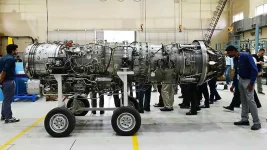
India’s prolonged quest to build its own military jet engine has returned to the spotlight following a candid analysis by former DRDO Chairman Dr. V.K. Aatre in a recent discussion with Wing Commander (Retd.) Julie Rosy.

Their assessment makes it clear that the setbacks of the Kaveri engine project were not simply engineering mishaps, but symptoms of profound institutional and structural weaknesses within India's defence and aerospace ecosystem.

The Kaveri initiative, originally meant to power the Light Combat Aircraft (LCA) Tejas, fell short of its critical performance targets and was ultimately delinked from the fighter jet in 2008. Dr. Aatre observed that this separation was the result of long-standing systemic flaws rather than isolated technical glitches.

A primary flaw was an unbalanced approach to development. Historically, India heavily funded the construction of impressive research centres and testing laboratories.

While this gave the illusion of rapid momentum, experts note that such infrastructure cannot replace the vital, tedious work of incremental engineering, continuous prototyping, and parts refinement.

Furthermore, unlike other nations that mastered aviation technology by first reverse-engineering foreign designs, India's academic and research institutions largely skipped this foundational step. This gap in practical learning severely hindered the growth of indigenous design expertise.

Institutional silos also crippled progress. The Gas Turbine Research Establishment (GTRE) handled engine design, while Hindustan Aeronautics Limited (HAL) was tasked with production.

In successful global aerospace programmes, designers and manufacturers work hand-in-hand. In India, however, HAL focused almost exclusively on assembling foreign engines under licence, while GTRE designed the Kaveri with very little practical input from the manufacturing floor.

Material science posed another massive hurdle. Modern fighter engines endure extreme pressures and temperatures, demanding advanced components like single-crystal turbine blades, thermal barrier coatings, and nickel-based superalloys.

For decades, India lacked the domestic capability to produce these materials, leaving the country heavily reliant on foreign suppliers.

Additionally, the lack of specialised high-altitude testing infrastructure in India meant the Kaveri engine had to be shipped to Russia for crucial evaluations, which drastically inflated costs and delayed the process of identifying and fixing design flaws.

Today, however, the Ministry of Defence has adopted a radically different approach. Instead of trying to reinvent the wheel in isolation, India is actively securing strategic partnerships with global engine giants.

Recent developments in 2026 highlight this shift, as GE Aerospace and HAL have resolved key technical matters to co-produce the F414 jet engine in India.

This landmark agreement includes an 80% transfer of technology and aims to power the Tejas Mk2 and the initial prototypes of the Advanced Medium Combat Aircraft (AMCA) Mk1.

The Kaveri project has also found a new, more realistic purpose. Instead of being scrapped, a dry-thrust variant of the engine is currently being developed for the Ghatak Unmanned Combat Aerial Vehicle (UCAV), an application where thrust requirements are far lower than those of a supersonic fighter.

Looking towards the future, India is pushing for total self-reliance in heavy fighter propulsion.

For the future AMCA Mk2, New Delhi is evaluating competitive offers for a new 110-130 kN class engine. Both British firm Rolls-Royce and French aerospace major Safran have submitted proposals to co-develop this engine from scratch in India.

Crucially, these offers include full technology transfer and joint intellectual property (IP) ownership, which would allow India to upgrade and modify the engines natively without future external restrictions.

Finally, to break the historical monopoly of state-owned enterprises, the government is expanding the role of the private sector. Private aerospace firms are now actively participating in manufacturing advanced materials, critical subsystems, and precision components.

This shift is expected to build a robust, competitive domestic supply chain.

The decades spent on the Kaveri programme proved that building a modern combat engine is one of the most complex technological challenges any nation can face.

However, by embracing international co-development, integrating manufacturing with research, and empowering private industry, India’s current strategy shows that it has finally absorbed the hard lessons of the past.
 
It's all hogwask HAL not helping with engine production experience with GTRE...LRDE looked down upon HAL for a key project...we should have formed a national engine team lead by GTRE and participated by HAL ISRO, WALCHAND INDUSTRIES,DMRL and IISc ...
 
The best jet engines are Russian make. No western jet can come close in performance to Su30MKI or Su57 in agility, speed, service ceiling, durability, endurance, ability to survive bird hits, tolerate side fuel quality and ability to land & take off from rough strips. All this at an cost lower than the western ones. Then the US and all its allies are always against Bharat, they have Pakistan Supersonic jets first. It was Russian Migs that fortified IAF. In all our wars US helps Pakistan. In 1971 war US Navy came to attack our forces, again it was Russian Navy that came to our aid and chased US 7th fleet out of Bay of Bengal. In the UN too the west is against Bharat. In Kashmir issue too the west supports Pakistan. Pakistan is a US chosen ally specially created and nurtured to hinder Bharat's rise. So is it wise to trust the west with critical things like jet engines. Instead of being grateful to Russia we give the the cold shoulder, we further run salt into the wound by taking our best fighter Su30MKI for military exercises with Quad and other exercises. Giving western pilots training to tackle the mighty Sukhoi. These powers colonized us for centuries. Then again China supplies 95% of global rare earths. So China can control the number of engines produced by the west. I hope our leaders put Bharat's security first and foremost . Hope good sense prevails. Jai Bharat! Jai Hind! Vande Mataram!
 
It's all hogwask HAL not helping with engine production experience with GTRE...LRDE looked down upon HAL for a key project...we should have formed a national engine team lead by GTRE and participated by HAL ISRO, WALCHAND INDUSTRIES,DMRL and IISc ...
Correct. We should get these organizations back in track. Instead of going to private entities which could easily accessed by foreign hostile powers. Jai Bharat Jai Hind!
 
The best jet engines are Russian make. No western jet can come close in performance to Su30MKI or Su57 in agility, speed, service ceiling, durability, endurance, ability to survive bird hits, tolerate side fuel quality and ability to land & take off from rough strips. All this at an cost lower than the western ones. Then the US and all its allies are always against Bharat, they have Pakistan Supersonic jets first. It was Russian Migs that fortified IAF. In all our wars US helps Pakistan. In 1971 war US Navy came to attack our forces, again it was Russian Navy that came to our aid and chased US 7th fleet out of Bay of Bengal. In the UN too the west is against Bharat. In Kashmir issue too the west supports Pakistan. Pakistan is a US chosen ally specially created and nurtured to hinder Bharat's rise. So is it wise to trust the west with critical things like jet engines. Instead of being grateful to Russia we give the the cold shoulder, we further run salt into the wound by taking our best fighter Su30MKI for military exercises with Quad and other exercises. Giving western pilots training to tackle the mighty Sukhoi. These powers colonized us for centuries. Then again China supplies 95% of global rare earths. So China can control the number of engines produced by the west. I hope our leaders put Bharat's security first and foremost . Hope good sense prevails. Jai Bharat! Jai Hind! Vande Mataram!
You should look into the engine replacement rate, usable life cycles, maintenance hours per flight maintenance cost and material tolerance of the 'western' engines. Yes can't handle the rough conditions as well as Russian engines but please understand that their low cost comes at a huge price. The kind man power and machinery the IAF and HAL has to put in order to keep up this mighty but 'old' sukhoi fleet is enormous, comparatively cheaper but enormous. And clearly you have no idea about the importance of joint military exercises or the 'western' systems already integrated in the Su-30MKI so I won't touch on that.
 
these govt bastards are wasting tax money paying these useless companies like HAL and GTRE where the management does no work for decades because they know they wont be fired because the are "govt employees", we should have privatized the Aero industry long ago if we were really serious of being a aero superpower
 

Forum statistics

Threads
7,720
Messages
67,555
Members
5,627
Latest member
basub65
Back
Top