- Views: 3K
- Replies: 14
The Aeronautical Development Agency (ADA) and Hindustan Aeronautics Limited (HAL) are making major strides in India's domestic fighter aircraft programme.
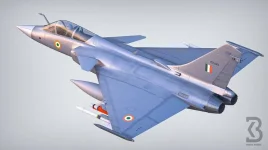
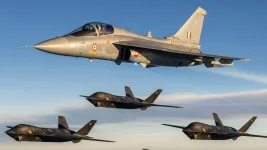
The upcoming Tejas Mk2, also known as the Medium Weight Fighter (MWF), will feature a drastically smaller radar footprint than the current Tejas Mk1A.
Project leaders suggest the frontal Radar Cross Section (RCS) will drop by roughly 75%.
While the Mk1A already possesses a respectable clean-configuration RCS of around 0.5 square metres, independent assessments indicate the Mk2 will achieve an exceptional 0.1 to 0.2 square metres, putting its baseline stealth characteristics on par with premium global platforms like the Dassault Rafale.
Overcoming Size with Smart Design
What makes this radar-evading achievement remarkable is the physical profile of the new aircraft.The Tejas Mk2 is a significantly larger 17.5-tonne class machine. It features an elongated fuselage, close-coupled canards for enhanced manoeuvrability, and an expanded internal capacity to house more fuel and a heavier 6.5-tonne weapons payload.
Typically, increasing the physical dimensions of an airframe results in a larger radar return.
However, Indian aerospace engineers have successfully countered this physics problem.
By utilising highly refined aerodynamic contours, precise edge alignments, and seamless surface connections, the aircraft's physical geometry actively scatters incoming radar waves away from the enemy's receiver.
Key Technologies Driving "Semi-Stealth"
To accomplish this impressive radar deflection, the Tejas Mk2 incorporates several advanced survivability technologies, borrowing heavily from research done for India's fifth-generation Advanced Medium Combat Aircraft (AMCA) programme:- Extensive Composite Use: Over 90% of the aircraft's surface area—including the wings, canards, and fuselage—is built from carbon-fibre composite materials. Developed with assistance from the National Aerospace Laboratories (NAL), these materials naturally absorb radar energy much better than traditional metallic skins while keeping the aircraft lightweight.
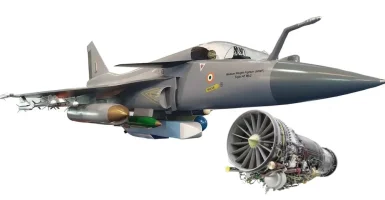
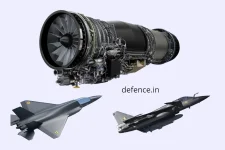
- Twisted Intakes: The aircraft uses twisted, Y-shaped or S-duct air intakes. This is a crucial design choice that hides the highly reflective spinning compressor blades of the aircraft's powerful new GE F414-INS6 engine from hostile radar sweeps.
- Specialised Coatings: The airframe is treated with indigenous Radar Absorbent Material (RAM) coatings. Furthermore, an Indium-Tin Oxide layer is applied to the cockpit canopy to prevent radar waves from bouncing off the pilot's helmet and internal equipment.
The Challenge of External Payloads
While these structural features make the Tejas Mk2 exceptionally difficult to spot in a "clean" configuration, military aircraft must carry weapons into combat.Because the Tejas Mk2 relies on 11 external hardpoints rather than internal weapons bays, carrying heavy weaponry, drop tanks, and targeting pods will naturally increase its radar visibility.
To mitigate this, engineers are actively prioritising clever loadout strategies.
Solutions being implemented include using advanced RAM treatments on external stores and weapon pods, as well as exploring conformal weapon designs to keep the overall radar signature as low as possible during fully armed strike missions.
Strategic Impact on National Defence
The Ministry of Defence and programme officials remain focused on ensuring these complex design upgrades do not severely delay the project's manufacturing timeline.The Indian Air Force urgently needs the Tejas Mk2 to replace its ageing fleets of Jaguars, Mirage 2000s, and MiG-29s, serving as a critical bridge before the AMCA stealth fighter enters active service.
Expected to take its maiden flight in the coming years and targeted for induction by the end of the decade, the Tejas Mk2 will be paired with the highly capable indigenous Uttam AESA radar and a Unified Electronic Warfare Suite (UEWS).
This combination of "ghosting" low observability, superior domestic sensors, and a massive weapons payload represents a major doctrinal shift, providing India with a highly survivable 4.5-generation fighter tailored for contested airspaces.