- Views: 4K
- Replies: 14
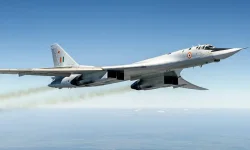
Despite renewed efforts by Moscow to pitch the Tu-160M "White Swan" strategic bomber to India, the Indian Air Force (IAF) has officially declined interest in the platform.
High-ranking officials have confirmed that the IAF is not looking to acquire the supersonic bomber through direct purchase, leasing, or any "wet-lease" arrangements, effectively ending long-standing speculation regarding a major shift in India’s aerial doctrine.
Strategic Focus on Regional Deterrence
The IAF’s refusal stems from a fundamental assessment of India's security landscape.Military leadership views India as a dominant regional power whose primary security concerns involve China and Pakistan. These threats are located within a 3,000 to 4,000 km radius, a range already effectively covered by the current fleet.
The IAF maintains that its Su-30MKI fighters, particularly when equipped with the 1,500 km-range BrahMos-A cruise missiles, provide sufficient reach.
Furthermore, the development of future hypersonic weapons is expected to bolster this stand-off capability, making the intercontinental reach of a heavyweight bomber like the Tu-160M unnecessary for the nation's defence strategy.
Logistical and Operational Hurdles
Operating the "White Swan" would introduce significant challenges that the IAF deems unsustainable:- Human Resources: Managing even a minimal fleet of six to eight aircraft would require a decade of intensive training for hundreds of specialised pilots and ground personnel.
- Infrastructure & Escort: The Tu-160M’s massive size and high radar signature would require constant fighter protection from Rafale or Su-30MKI squadrons during missions, potentially depleting resources needed for other combat roles.
- Maintenance Ecosystem: The bomber’s unique engines and variable-geometry wings would necessitate a separate, costly logistics chain, duplicating the efforts already focused on the multirole fighter fleet.
The Evolution of India’s Air Power
The decision aligns with a broader trend in global military aviation where the line between "strategic bombers" and "multirole fighters" is blurring. Recent open-source reports highlight that:- Operation Sindoor (2025): Success in recent operations has reinforced the IAF’s confidence in long-range precision targeting using existing platforms.
- BrahMos-NG & LR-AShM: India is currently testing the BrahMos-NG (a lighter, stealthier variant) and the Long-Range Anti-Ship Missile (LR-AShM), which offer hypersonic speeds and unpredictable trajectories, providing better penetration against modern air defences than a large, non-stealthy bomber.
- Indigenous Stealth: India is prioritising the Advanced Medium Combat Aircraft (AMCA) and exploring indigenous 50-ton stealth bomber concepts rather than investing in older-generation foreign platforms.
The IAF concluded that the Tu-160M, while a masterpiece of engineering, does not align with India’s current combat requirements.
Resources will instead be directed toward 4.5- and 5th-generation multirole fighters, stealth technology, and advanced stand-off munitions.