- Views: 4K
- Replies: 30
The Indian Air Force (IAF) is refining its strategy to acquire a fifth-generation stealth fighter, opting for a restricted direct purchase rather than establishing a massive domestic manufacturing line.
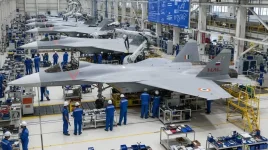
While international partners, particularly Russia, have offered extensive technology transfers to build stealth aircraft like the Sukhoi Su-57 within India, senior defence officials indicate that local assembly is not currently a practical priority for the service.
Strategic Bridge Over Industrial Expansion
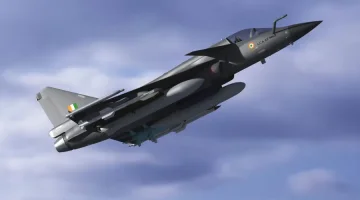
The IAF has identified a specific requirement for approximately 40 to 60 aircraft to serve as a temporary "bridge" until the indigenous Advanced Medium Combat Aircraft (AMCA) is ready for deployment.Experts within the service argue that this relatively small fleet size does not justify the immense capital investment needed to create a local production ecosystem.
Setting up the necessary infrastructure—including specialized tooling, stealth coating facilities, and certification frameworks—requires long-term orders that far exceed a stopgap requirement. Consequently, the IAF is leaning toward a direct import to save both time and financial resources.
The Timeline Challenge
Timing remains the most critical factor in this decision. Even if a procurement contract were finalized immediately, the delivery and integration of a foreign stealth platform would likely only begin in the early 2030s.Current projections suggest that by the time the final imported jets arrive, India’s own AMCA should already be entering its production phase.
This creates a narrow operational window of roughly six to seven years where the imported jet would be the primary stealth asset.
Over-investing in the local production of a foreign platform during this brief overlap could inadvertently drain funding and industrial focus away from the AMCA, which is intended to be the backbone of India’s future air defence.
Balancing Capability and Cost
From a structural perspective, the IAF views this potential purchase as a "capability hedge."The primary goal is to maintain a technological edge and ensure pilots are trained in stealth-era tactics while domestic programmes transition from blueprints to the runway.
Maintaining a fifth-generation fleet is uniquely demanding, requiring specialized materials and advanced avionics support.
IAF planners believe that limited resources are better spent on ensuring the success of the AMCA, which will be a sovereign platform.
By keeping the interim acquisition lean, the Air Force aims to preserve the "investment headroom" necessary for the AMCA to underpin India's air power for the coming decades.
The Stealth Landscape in 2026
Recent open-source reports from early 2026 indicate that India is currently evaluating the Su-57M1E, an upgraded "final form" of the Russian Felon, which features improved stealth nozzles and "supercruise" engines.This interest has intensified following reports that regional adversaries are rapidly expanding their own stealth fleets, such as the Chinese J-20 and the newly revealed J-35A.
Meanwhile, the AMCA project reached a major milestone in late 2025, with the Cabinet Committee on Security (CCS) further streamlining the production model to include more private sector participation. The first prototype rollout is currently anticipated for 2028, with a maiden flight targeted for 2029.