- Views: 2K
- Replies: 1
The Indian Air Force (IAF) has reshaped how it positions its most powerful air defence weapon, the S-400 Triumf.
Moving forward, roughly 65% of these advanced systems will be placed along the western border with Pakistan, while the remaining 35% will stand guard against threats from China.
This strategic shift is designed to strengthen India's overall security umbrella in response to rapidly changing regional challenges.
In 2018, India signed a landmark $5.4 billion contract with Russia for five S-400 squadrons.
With the fourth system scheduled to become operational by the end of May 2026 and the fifth and final unit expected to arrive by November 2026, the IAF is focusing heavily on its western frontiers.
Currently, three of the systems are heavily aligned to cover states like Punjab, Rajasthan, and Gujarat.
This placement is crucial for protecting important military airbases, logistics networks, and national infrastructure from potential drone, missile, and fighter jet attacks originating from Pakistan.
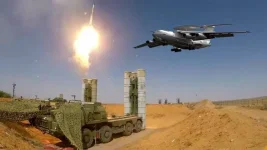
The S-400 is considered the backbone of India's modern deterrence due to its impressive technical capabilities.
Capable of tracking and destroying multiple aerial targets simultaneously at ranges up to 400 kilometres, it acts as a massive shield.
By concentrating the majority of these long-range surface-to-air missiles on the western border, the military is addressing its most immediate operational needs and creating a formidable barrier in a highly active region.
Meanwhile, the remaining 35% of the S-400 inventory is dedicated to the Line of Actual Control (LAC) shared with China.
This includes strategic deployments in the eastern sector, such as the vital Siliguri Corridor, to protect high-altitude military infrastructure and vulnerable airspace.
This carefully calculated distribution ensures that India maintains a robust defensive posture on both major fronts, even as it directs more concentrated firepower westward.
This tactical reshuffle is largely driven by recent battlefield experiences and rising border tensions.
The S-400 proved highly effective during the 2025 "Operation Sindoor" crisis, reportedly neutralising hostile drones and aircraft while providing unmatched deep radar surveillance.
By establishing thick "denial zones" over the Pakistan front, the IAF makes it exceptionally difficult for adversaries to plan or execute aerial incursions.
Known domestically as the "Sudarshan Chakra," the Russian-made platform does not operate in isolation.
It is being carefully linked with India's other active weapons, such as Akash and Barak-8, and the upcoming indigenous Project Kusha (Extended Range Air Defence System).
Furthermore, recent open-source reports from May 2026 indicate that New Delhi is in active negotiations with Moscow to purchase an additional batch of five S-400 squadrons.
This massive expansion and integration will create a multi-layered defensive web vital to modernising India's military against both traditional and hybrid threats across the Indo-Pacific.
Ultimately, dividing the S-400 assets into a 65-35 split highlights a practical, threat-driven military doctrine.
As the final systems from the original contract come online and potential new orders are finalised, the IAF retains the flexibility to relocate these highly mobile units whenever required.
This enhanced western focus sends a definitive warning to adversaries, ensuring the nation remains comprehensively protected from all directions.