The recent events of Operation Sindoor, which involved targeted precision strikes on terror infrastructure in Pakistan and Pakistan-occupied Kashmir followed by a tense four-day military standoff, have fundamentally reshaped the Indian Army's modernisation plans.
Securing the skies against low-altitude threats has become a paramount concern for military planners.
Driven by this strategic shift, South Korea's K30 Biho self-propelled air defence system has re-emerged as a leading candidate to strengthen the military's frontline arsenal.
Defence sector reports indicate that the previously frozen acquisition procedure is set to resume shortly.
The Army is anticipated to forward a fresh procurement request for these advanced systems in the near future.
As the first administrative step toward resurrecting the purchase process, the military will seek a new Acceptance of Necessity (AoN) from the Defence Acquisition Council (DAC).
The K30 Biho is quite familiar to the Indian military establishment. Back in 2021, the system secured DAC approval after successfully outperforming rival platforms in extensive field trials.
Although negotiations had progressed and the final contract was on the verge of being signed, the entire process was abruptly halted.
While the Ministry of Defence never formally disclosed the reasons for the cancellation, defence analysts widely noted that fierce diplomatic pushback from Russia—whose competing Tunguska and Pantsir systems had reportedly failed to meet the trial benchmarks—along with a domestic policy push to promote indigenous manufacturing, played a significant role in derailing the purchase.
This renewed interest in the Biho highlights a critical shift in modern combat dynamics, where Short-Range Air Defence (SHORAD) has become essential for battlefield survival.
As observed in multiple contemporary conflict zones, heavily armed troops are highly vulnerable to relatively cheap aerial threats like attack drones, loitering munitions (kamikaze drones), helicopters, and cruise missiles.
To counter these fast-moving threats, armies require highly mobile, rapid-reaction defence umbrellas capable of moving alongside advancing troops.
Originally engineered by Hanwha Aerospace in the late 1990s, the K30 Biho (translating to "Flying Tiger") is a highly capable hybrid anti-aircraft platform.
It is armed with twin 30mm automatic cannons capable of firing an impressive 600 rounds per minute each.
To strike targets beyond the reach of its guns, the Biho is integrated with KP-SAM Chiron infrared-guided surface-to-air missiles.
This hybrid combination, guided by the advanced TPS-830K pulse-Doppler surveillance radar and electro-optical sensors, ensures that the crew can reliably detect, track, and destroy a diverse array of aerial targets in all weather conditions.
To meet different geographical and tactical challenges, the manufacturer offers the Biho in both tracked and wheeled formats.
The tracked model, built upon the proven K200 infantry fighting vehicle chassis, is ideal for moving alongside heavy tanks and mechanised units through rugged, uneven terrain.
Meanwhile, the wheeled version provides a more cost-effective solution with faster road speeds, making it excellent for rapid strategic deployments across connected infrastructure.
For the Indian Army, acquiring the K30 Biho would serve as a natural, highly modernized upgrade to its current air defence network.
Its combat role is directly comparable to the Russian 2K22 Tunguska, which India currently operates.
While both the Russian and South Korean platforms use a mix of rapid-fire cannons and missiles to create a layered defensive shield, the Biho boasts a significant advantage with its state-of-the-art digital fire-control systems, thermal sights, and superior electronics developed over the past few decades.
If finalised, the Biho would be the second major South Korean heavy weapon system to join the Indian military.
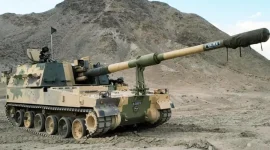
The Army already fields the K-9 Vajra-T, a 155mm/52-calibre self-propelled tracked artillery howitzer originally designed in South Korea and successfully manufactured in India by Larsen & Toubro.
The outstanding performance of the Vajra programme has not only deepened strategic defence ties between New Delhi and Seoul, but has also proven that complex military hardware can be reliably built in India through collaborative technology transfers.