India is fundamentally reshaping its approach to aerial warfare by accelerating the development of advanced stealth drones under the Manned-Unmanned Teaming (MUM-T) doctrine.
In a decisive leap forward, the nation is actively operationalising a fleet of autonomous, "loyal wingman" aircraft.
Designed to match the capabilities of fifth-generation manned fighter jets, these uncrewed platforms will take on high-risk missions deep within hostile territory, shielding human pilots from the most dangerous aspects of modern combat.
The Vanguard: HAL CATS Warrior
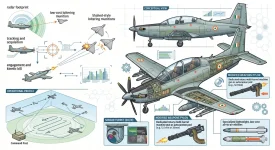
At the forefront of this airborne revolution is the Combat Air Teaming System (CATS) Warrior, a low-observable Unmanned Combat Aerial Vehicle (UCAV) spearheaded by Hindustan Aeronautics Limited (HAL) alongside private sector partners like NewSpace Research and Technologies and Tata Elxsi.Built to fly alongside formidable aircraft such as the Tejas, Rafale, Su-30MKI, and the future Advanced Medium Combat Aircraft (AMCA), the CATS Warrior is a true force multiplier.
It is engineered to scout ahead, paint targets, conduct electronic warfare, and execute precision strikes. It can even act as a decoy to absorb enemy fire.
Recent advancements have seen the 2-to-3-ton prototype undergo successful engine ground runs using twin PTAE-W turbojets.
Furthermore, HAL is equipping the system with the Air Combat Intelligence Development (ACID) algorithm to ensure secure, real-time data links with manned cockpits.
Capable of deploying up to 24 ALFA-S swarm drones mid-air, the CATS Warrior is undergoing rigorous refinements to its radar-absorbent coatings, with its first flight anticipated by 2027.
HAL is also conceptualising heavier, scaled-up variants—up to 10 tons—which will boast internal weapons bays and indigenous propulsion for supersonic speeds.
Deep Strikes with DRDO’s FUFA
Alongside the CATS Warrior, the Defence Research and Development Organisation (DRDO) is rapidly advancing the Futuristic Unmanned Fighter Aircraft (FUFA).Prioritised for its high-speed and stealth capabilities, FUFA is a tailless, flying-wing UCAV driven by artificial intelligence. It is explicitly tailored for the Suppression and Destruction of Enemy Air Defences (SEAD/DEAD).
Having successfully completed its Preliminary Design Review (PDR) in late 2025, FUFA is currently undergoing extensive wind-tunnel testing.
Building on the foundational success of the SWiFT (Stealth Wing Flying Testbed) demonstrator, this 7-to-10-ton drone will feature supersonic cruising capabilities powered by a Kaveri Derivative Engine (KDE).
By penetrating heavily defended airspace to conduct deep strikes and air-to-air engagements, FUFA will clear the skies without putting human lives in jeopardy.
Precision Targeting via ADA’s RSPA
Complementing these high-speed assets is the Remotely Piloted Stealth Aircraft (RSPA), an ambitious heavy-strike UCAV developed by the Aeronautical Development Agency (ADA).Belonging to the heavier 13-to-15-ton class associated with Project Ghatak, the RSPA is designed for autonomous precision bombing in heavily denied areas.
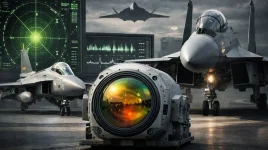
In a move believed to be a global first for uncrewed aviation, the RSPA is being integrated with the highly sophisticated Electro-Optical Targeting System (EOTS) originally developed for the manned AMCA programme.
This allows the drone to utilise multi-spectral infrared and optical sensors to identify, track, and dismantle radar networks, missile batteries, and command centres with pinpoint accuracy, regardless of weather conditions.
A New Era of Air Dominance
Together, these platforms place India at the leading edge of next-generation air combat.By deploying AI-driven, low-observable drones to neutralise integrated air defence systems, the Indian Air Force can create safe operational corridors for human-piloted jets.
This strategy drastically reduces the risk to pilots while amplifying the destructive effectiveness of the strike force.
This aggressive push into uncrewed aviation is deeply intertwined with the Aatmanirbhar Bharat initiative.
By fostering robust public-private partnerships and prioritising indigenous engines, avionics, and sensors, India is rapidly moving away from import dependency.
The successful integration of the CATS Warrior, FUFA, and RSPA will ultimately transform the Indian Air Force into a highly networked, swarm-capable force, ready to dominate the contested skies of tomorrow.