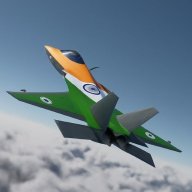
India-France 114 Rafale Contract to Include Direct Integration of Indian-Made Weapons, Eliminating Procedural Delays

India-France 114 Rafale Contract to Include Direct Integration of Indian-Made Weapons, Eliminating Procedural Delays


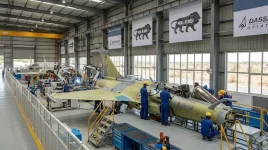
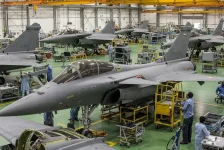
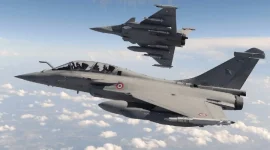
In a significant strategic shift, India’s forthcoming mega-contract with France for the procurement of 114 Rafale fighter jets is set to encompass far more than the mere delivery of aircraft.

The deal, estimated to be worth nearly $40 billion (approx. ₹3.25 lakh crore) under the Multi-Role Fighter Aircraft (MRFA) programme, will now include the full financial and technical scope for integrating a comprehensive suite of Indian-made weaponry directly onto the Rafale platform.

This move represents a decisive change in how the Indian Air Force (IAF) plans its future combat readiness, prioritising immediate operational capability and sovereign control over its firepower.

A Departure from Past Procurement Models​

Sources familiar with the negotiations indicate that the IAF is determined to embed indigenous weapons integration into the primary contract.

This stands in contrast to the model utilized during the previous procurement of 36 Rafale jets, where the integration of Indian systems—such as the Astra Mk1 air-to-air missile, the RudraM-1 anti-radiation missile, and the Smart Anti-Airfield Weapon (SAAW)—required separate, subsequent agreements with Dassault Aviation.

By bundling these requirements into the main deal, the Air Force aims to eliminate the procedural red tape and time lags that plagued earlier upgrades.

The objective is to ensure that when the new Rafale squadrons enter service, they are already fully armed with India’s latest generation of air-to-air and air-to-surface munitions, rather than waiting for retrofit cycles.

Expanding the Indigenous Arsenal​

The weapon systems slated for integration reflect India’s growing self-reliance in missile technology.

According to defence officials, the list is extensive and covers the entire spectrum of aerial combat:

1. The Astra Missile Family​

The deal is expected to formalise the integration of the Astra Mk2, a beyond-visual-range air-to-air missile with an estimated range exceeding 160 kilometres.

Production clearance for the Mk2 is anticipated later this year. Furthermore, the contract will include provisions for the Astra Mk3, a Solid Fuel Ducted Ramjet (SFDR) missile.

The Mk3 is designed to engage aerial targets at very long ranges (up to 350 kilometres), acting as a counter to adversary force multipliers like AWACS and refuellers. Its induction is targeted for around 2029.

2. The RudraM Strike Suite​

Following the successful testing of the RudraM-1, the IAF is expanding the Rafale’s suppression of enemy air defence (SEAD) capabilities.

The package will include the RudraM-II, a hypersonic aero-ballistic missile, and the RudraM-III, capable of striking targets at ranges of 550 kilometres.

Future integration of the RudraM-IV is also part of the long-term roadmap, creating a potent, indigenous anti-radiation shield for the fleet.

3. Precision Strike Capabilities​

The integration list also features the Tara precision-guided munition family.

Developed by the DRDO, Tara is a high-speed, low-drag glide bomb equipped with a range extension kit, allowing for precise strikes at standoff distances.

Additionally, a new generation of indigenous air-launched cruise missiles is being evaluated to provide the Rafale with deep-strike capabilities in both short-to-medium and long-range profiles.

Strategic Sovereignty for the Future​

For the Indian Air Force, this bundled approach is not merely a matter of administrative convenience but a critical component of national security strategy.

With the 114 Rafales expected to serve as the backbone of the IAF well into the 2060s, establishing a sovereign weapons ecosystem around them is essential.

By ensuring these fighters are compatible with indigenous systems from day one, India reduces its dependence on foreign original equipment manufacturers (OEMs) for ammunition and upgrades.

This flexibility ensures that the fleet remains adaptable to evolving threats without being hindered by external geopolitical factors or supply chain disruptions.
 
Indian fighter jets equipped with Astra mk3, Brahmos-NG and Rudram missiles on the Rafale and Sukhois is a dream for IAF fighter pilots.
Astra mk3 is going to be a game changer in A2A BVR combat. Rudram will blind the adversaries by SEAD/DEAD and Brahmos-NG will enhance the capability of our overall fighter jets.

Currently, IAF is heavily dependent on Brahmos-A and foreign equipments like SCALP and Hammer to cripple the enemy Airforce (which is limited to specific fighter jets). This worked well in Op Sindoor, but, need to keep the surprise up. Our BVR capability is limited due to short range of Astra mk1, mk2 is competitive but doesn't give us long range advantage which mk3 will provide.
 
RudraM 4(LRSOW) would likely be heavy for Rafale to carry. Only Su30MKI would be able to carry it.
 
Last edited:
1. *Cost*: ₹2,600 crore per aircraft is steep; funds could be better spent on other defense priorities.
2. *Offset clause concerns*: Technology transfer and investment in India uncertain.
3. *Maintenance costs*: High operational costs could strain defense budget.
4. *Alternative options*: Cheaper, equally capable fighters like Tejas MK2 available just 1/4 price or buying 5th gen Su57 just half a price tag with brahmos-II and Kinzhal hypersonic missile.
5. *Dependability on France*: Risks in spares, upgrades, and support.Never share source code
6. *India's defense needs*: Focus on indigenous projects like AMCA or Stealthy LCA.
7. *Corruption allegations*: Deal's transparency questioned.
8. *Capability mismatch*: Rafale's capabilities vs India's actual needs.
9. *Diversifying defense imports*: Over-reliance on France isn't strategic.
10. *Opportunity cost*: Funds could go to social sectors or other defense needs.
 
key concerns about the Rafale deal 😊:
- No source code sharing
- Limited combat mission sharing
- Dependence on Western GPS
- Lack of Indian weapons integration
- No Indian AESA radar
- No mid-life upgrade with indigenous engine
- Limited rights to sell to third countries
- Uncertainty on support during wartime or sanction
 
1. *Cost*: ₹2,600 crore per aircraft is steep; funds could be better spent on other defense priorities.
2. *Offset clause concerns*: Technology transfer and investment in India uncertain.
3. *Maintenance costs*: High operational costs could strain defense budget.
4. *Alternative options*: Cheaper, equally capable fighters like Tejas MK2 available just 1/4 price or buying 5th gen Su57 just half a price tag with brahmos-II and Kinzhal hypersonic missile.
5. *Dependability on France*: Risks in spares, upgrades, and support.Never share source code
6. *India's defense needs*: Focus on indigenous projects like AMCA or Stealthy LCA.
7. *Corruption allegations*: Deal's transparency questioned.
8. *Capability mismatch*: Rafale's capabilities vs India's actual needs.
9. *Diversifying defense imports*: Over-reliance on France isn't strategic.
10. *Opportunity cost*: Funds could go to social sectors or other defense needs.
Where is the mk2? That you claim “equally capable”? Also do you think there wasn't a reason we pulled out of the joint production of su57? Why do you think russia hasn't mass produced it and achieved air dominance over Ukraine already? Why do they keep sending a dummy plane every where the T50 or whatever it's called? You think they can't do corruption with Russian counterparts or they can't do it in government owned HAL.

I AGREE we should focus on AMCA and release billions for it's development already but it can't cushion the current shortage. At minimum it'll take 10+ years to become operable. But till then we need a capable fighter and if after seeing everything the IAF choose rafale it's probably a great fighter. Simple as that.
 
But still you have to cuckold and devour them with money to integrate the future ones, to integrate them after upgrading the previous ones or the current deal of F4
 
Indian fighter jets equipped with Astra mk3, Brahmos-NG and Rudram missiles on the Rafale and Sukhois is a dream for IAF fighter pilots.
Astra mk3 is going to be a game changer in A2A BVR combat. Rudram will blind the adversaries by SEAD/DEAD and Brahmos-NG will enhance the capability of our overall fighter jets.

Currently, IAF is heavily dependent on Brahmos-A and foreign equipments like SCALP and Hammer to cripple the enemy Airforce (which is limited to specific fighter jets). This worked well in Op Sindoor, but, need to keep the surprise up. Our BVR capability is limited due to short range of Astra mk1, mk2 is competitive but doesn't give us long range advantage which mk3 will provide.
The problem with the Rafale is it fors not have the capacity to take on peer level airdefence. It has no stealth, v low speed , slow climbed rate, low ceiling, v short range (without external tanks) if external tanks are used it cannot carry enough missiles. For it small size it is very clumsy in the lacking agility or speed of trusted Sukhoi. It will NOT be able to do independent strikes, it will need Sukhois or Mig escort. But Salute to dassault's lobbying and marketing even with all these disadvantages they still manage sell this toy at a exhorbitant price. Hope good sense prevail. Jai Hind.
 
key concerns about the Rafale deal 😊:
- No source code sharing
- Limited combat mission sharing
- Dependence on Western GPS
- Lack of Indian weapons integration
- No Indian AESA radar
- No mid-life upgrade with indigenous engine
- Limited rights to sell to third countries
- Uncertainty on support during wartime or sanction
- No country will share "source code". They wont give their years of R&D like this.
- Pay sufficient money and they will share with you the API code to integrate your weapons, GPS, Radar etc. We bought just 36 Rafales last time, too less to share anything substantial.
- Under licensed production, and Safran MRO, engine midlife upgrade will be possible. By the last batch, upto 60% of Rafale will have indigenous content.
- Uncertainty on foreign partners during sanctions will always be there.
 
The problem with the Rafale is it fors not have the capacity to take on peer level airdefence. It has no stealth, v low speed , slow climbed rate, low ceiling, v short range (without external tanks) if external tanks are used it cannot carry enough missiles. For it small size it is very clumsy in the lacking agility or speed of trusted Sukhoi. It will NOT be able to do independent strikes, it will need Sukhois or Mig escort. But Salute to dassault's lobbying and marketing even with all these disadvantages they still manage sell this toy at a exhorbitant price. Hope good sense prevail. Jai Hind.
I agree on these points, but issue is again. What are the options ?

1. Su57 is in doldrums due to Russian struggle dur to war. We are already waiting for our 4th S400 despite ordering it in 2018...5th squadron will come by 2027-28. Close to 10 years. Without its AL51 engine, it cant attain supercruise. Russia is facing issues with AL51 engine as well.

2. Su30MKI desperately need upgrade...its a sham that we can't plan better to upgrade our Airforce's backbone. Its being used in every tom, dick, Harry mission but its avionics, radar and EW suite is getting older every day. Its prone to lockin (as seen in Op Sindoor) where it required Rafale's superior EW jamming to veer off the missile.

3. Tejas mk1a, well, the less I say the better I will be able to control by BP.

4. Tejas mk2, seems impressive spec wise. But I dont have an iota of trust on the babus running HAL. They will screw up something and we wont see its induction before 2033.

5. F35 is simply out of equation, we would end up handing over our key assets to US if we induct that. Plus its repairs, maintenance, coating etc is extremely costly and requires specific maintenance. Being a single jet machine with that cost, I would be betting against all odds.

6. SAAB or Eurofighter are not ahead of Rafale. Plus IAF will have to spend time and effort in training itself. Also, they both have big dependency on US for spares and IAF dont want that. Rafale has very limited US components.

Its outrageous that we have brought ourselves in this situation. Private players like Kalyani Group has spent thousand of years and amount on R&D, and selling weapons to foreign countries. But our MoD and defence forces dont care about their efforts and innovations.
 
Has the Government finally closed HAL started by Nehru the great (for Italian National Congress). If it had happened it would be a great day for India
 

Forum statistics

Threads
6,182
Messages
62,185
Members
4,864
Latest member
Yug
Back
Top