- Views: 1K
- Replies: 2
The strategic and military circles in India are keeping a close watch on the deepening ties between Pakistan and Turkey regarding the KAAN fifth-generation fighter jet.
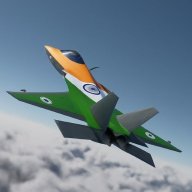
Although the Indian government remains officially silent on its neighbour's defence agreements, experts suggest that the growing aviation partnership between Islamabad and Ankara makes it even more critical for India to speed up its indigenous Advanced Medium Combat Aircraft (AMCA) project.
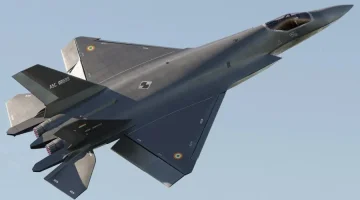
Recent updates indicate that India's AMCA is targeting a prototype rollout by late 2026 or early 2027, with the first flight slated for 2028.
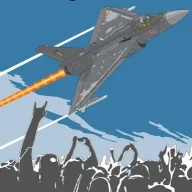
Built by Turkish Aerospace Industries (TAI), the KAAN fighter made its first successful flight on February 21, 2024, marking a major milestone in Turkey's goal to produce a homegrown stealth aircraft.
With plans to fly two more prototypes by April 2026, the project is advancing steadily.
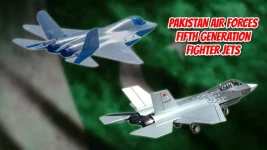
Pakistan has openly shown interest in joining the initiative, exploring potential manufacturing partnerships and future purchases. Nevertheless, the specific details and extent of Islamabad's involvement are still pending official confirmation.
For India, the cooperation between Turkey and Pakistan represents more than a simple arms deal; it points to a wider shift in global alliances.
Turkey has frequently backed Pakistan's stance on Jammu and Kashmir. In response, New Delhi has deepened its strategic ties with nations like Greece, Cyprus, and Armenia—countries that share strained relations with Turkey.
Defence experts view these shifting ties as a broader geopolitical counterweight, rather than just disconnected military transactions.
Indian experts are also paying close attention to the evolving military relationship between the United States and Turkey. The initial KAAN models rely on the American-made General Electric F110 engine, which requires US export clearance.
Any positive shift in US-Turkey diplomatic relations could lead to relaxed sanctions and smoother technology exports. Such developments would directly speed up Turkey's aviation projects, subsequently benefiting any future aircraft partnerships with Pakistan.
Despite the ambitious plans, Indian defence experts are aware of the significant hurdles Pakistan faces in fully committing to the KAAN initiative.
The foremost challenge is the immense cost linked to creating, buying, and maintaining a fifth-generation stealth fighter, which demands continuous funding for decades.
Reports also suggest that Pakistan is eyeing China's J-35 stealth jet alongside its Turkish engagements. Analysts point out that funding two advanced fighter jets while upgrading the rest of its armed forces would place an enormous strain on Pakistan’s already struggling economy and defence budget.
The timeframe for the KAAN project presents another layer of complexity. While the aircraft has taken to the skies, it is still in the early stages of creation. It will need to undergo rigorous flight trials, weapons testing, and software integration before it is ready for actual combat.
Defence specialists anticipate that, if everything stays on schedule, mass manufacturing and full military deployment of the jet will likely not happen until the early to mid-2030s.
For India, the security implications go far beyond its immediate western border. China is steadily increasing its fleet of J-20 stealth fighters and rapidly improving its cutting-edge aerial capabilities.
Additionally, there are strong indications that Pakistan may acquire the export variant of the Chinese J-35, even though a clear timeline remains undisclosed.
If Islamabad manages to secure both the J-35 and a role in the KAAN project, its air force would see a massive leap in modern combat capability within the next ten years.
This rapidly changing security scenario in the region has amplified calls within India to fast-track the AMCA project.
The Indian government has given the green light for the comprehensive development of its own stealth fighter, recently taking steps to include private companies in a bid to hasten the process.
Designed to be the backbone of the Indian Air Force, the AMCA will feature advanced stealth profiles, modern sensors, and cutting-edge warfare networks.
Military analysts stress that keeping the project on schedule is vital, as any major delays could create a dangerous disadvantage for India in the 2030s when neighbouring forces field larger fleets of next-generation aircraft.
However, the path ahead is filled with uncertainties for Pakistan's stealth ambitions.
Islamabad's precise role in manufacturing the KAAN jet is still unconfirmed, the aircraft requires years of refinement, and access to crucial foreign components like engines will remain at the mercy of international export laws.
For India, the best countermeasure will not be found in diplomatic objections. Instead, defence experts believe New Delhi will focus entirely on boosting its domestic aviation industry through the AMCA initiative, all while steadily upgrading its current fleet to ensure the Indian Air Force remains a dominant regional power.