- Views: 2K
- Replies: 14
New Delhi's aerospace planners are on high alert. In early 2026, the Indian defence establishment received a stark reality check as China’s sixth-generation fighter jet initiatives transitioned from mere concept art to rigorous, real-world flight testing.
With Beijing rapidly advancing multiple next-generation prototypes across its major aviation hubs, the Indian Air Force (IAF) and the Ministry of Defence are urgently re-evaluating their combat aviation roadmaps to ensure they do not fall behind.
China’s Dual-Track Aviation Threat
China’s push for absolute air superiority is being driven simultaneously by two heavyweight aerospace manufacturers:- The Chengdu J-36: Chengdu Aircraft Corporation is actively flight-testing what analysts call the J-36. Recent open-source intelligence indicates this is a massive, tailless, trijet aircraft featuring a diamond-double-delta wing configuration. Designed as an ultra-heavy platform for long-range strike and sensor fusion, early prototypes were even spotted flying alongside twin-seat J-20 chase planes.
- The Shenyang J-50: Concurrently, Shenyang Aircraft Corporation is testing a distinct, cranked-arrow wing concept known as the J-50. This separate design philosophy appears heavily focused on extreme agility and networked combat capabilities, potentially tailored for carrier-based naval operations.
By early 2026, the Chengdu J-36 had already progressed through multiple design iterations, showcasing visible technological leaps such as diverterless supersonic inlets (DSI) and two-dimensional thrust vectoring.
This rapid evolution from drawing board to the runway threatens to create a massive technology gap in the Indo-Pacific over the next decade.
India’s Domestic Push and Regional Realities
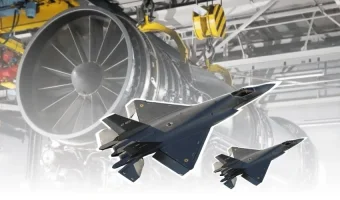
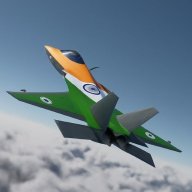
This accelerating timeline directly threatens India’s current airspace strategy. New Delhi is heavily invested in its Advanced Medium Combat Aircraft (AMCA) project, a ₹15,000-crore initiative to build a 25-tonne, 5.5-generation stealth fighter.To speed up the process, the government recently shortlisted private consortia—including Tata Advanced Systems and Larsen & Toubro—to lead prototype development, targeting a first flight by 2029 and serial production by the mid-2030s.
However, the harsh reality is that by the time India’s AMCA enters active service, Beijing may already be deploying fully operational sixth-generation jets.
Furthermore, the very real possibility that China could eventually export advanced stealth fighters to its closely allied neighbour, Pakistan, has added severe urgency to New Delhi's strategic calculus.
Exploring the European Alternative
To bridge this impending technological divide, India is actively seeking a seat at the table of a global sixth-generation consortium.While India initially evaluated the UK-Italy-Japan Global Combat Air Programme (GCAP), its prospects as a core partner dwindled after Japan's integration into the alliance.
As a result, India has aggressively pivoted toward Europe’s Future Combat Air System (FCAS)—a joint venture led by France, Germany, and Spain.
Deep industrial friction and intellectual property disputes between France’s Dassault Aviation and Germany’s Airbus have severely delayed the FCAS timeline. Paradoxically, this internal European turbulence has created a unique strategic window for India to step in as a major developmental partner.
During the 6th India-France Annual Defence Dialogue in February 2026, Defence Minister Rajnath Singh officially expressed India's intent to join the FCAS programme.
From a financial standpoint, a commitment from India to procure 150 to 200 next-generation fighters would inject massive stability into the struggling European project.
Furthermore, the IAF’s existing operational reliance on Dassault Rafales ensures a seamless technological and industrial synergy with French aerospace infrastructure.
Cementing a Two-Track Strategy
New Delhi is now formulating a pragmatic, dual-track aviation doctrine:- Domestic Autonomy: Continue aggressively funding the indigenous AMCA to ensure a modern, 5.5-generation fighter enters service by 2035.
- Global Collaboration: Partner in a European sixth-generation project to secure a fully integrated, AI-driven combat aircraft closer to 2040.
Defence planners recognise that participating in a global next-generation coalition is no longer just an option—it is an absolute necessity to secure India's long-term air superiority.