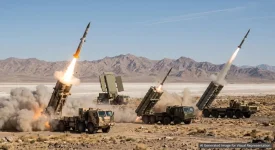
India and the United Kingdom are on the verge of finalising an Inter-Governmental Agreement (IGA) to supply the Indian Army's tactical units with British Lightweight Multirole Missiles (LMMs), according to recent reports.
In October of the previous year, during Prime Minister Narendra Modi’s visit to the UK, the two nations revealed a Memorandum of Understanding (MoU) for a £350 million ($468 million) government-to-government contract.
The weapon, also referred to as the Martlet—named after a legendary bird that stays in constant flight—was initially ordered in smaller quantities, but British officials indicate the intended purchase volume has grown substantially.
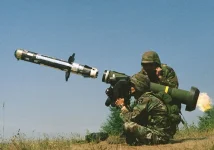
Produced by Thales UK, the LMM is highly adaptable. It can be launched manually by ground troops or seamlessly mounted onto armoured vehicles, naval vessels, and helicopters.
The British armed forces have successfully incorporated the Martlet into their maritime systems and rotary-wing squadrons. Optimised for operations in densely populated urban settings, the weapon is constructed at Thales's production centre in Belfast, Northern Ireland.
For ground forces, the missile serves as a versatile tool capable of neutralising a wide array of targets. This includes wheeled or tracked light armoured vehicles, as well as airborne threats, functioning effectively up to a range of over 6 kilometres.
Operating on a laser beam-riding guidance system, the missile can be deployed via shoulder launchers, tripods, or mobile vehicles. It weighs only 13 kilograms, spans about 1.3 metres in length, and reaches speeds exceeding Mach 1.5.
The Martlet has been actively used by the British military for several years and has seen extensive combat use by Ukrainian troops defending against Russian forces.
Compared to traditional, heavy air-defence interceptors, the Martlet offers a compact and cost-effective alternative.
This economic advantage makes it particularly suited for countering the growing threat of relatively cheap unmanned aerial vehicles (UAVs) and loitering munitions, such as Shahed-style drones, where firing multimillion-dollar missiles is financially unsustainable.
The UK has increasingly focused its own Martlet strategy on counter-drone missions. Earlier this year in June, the British government committed an additional £36 million for LMMs, explicitly pointing to their necessity in defeating hostile aerial systems.
While British representatives have not disclosed exact figures, they confirmed that the forthcoming Indian acquisition will involve several hundred units, a marked increase from the original discussions held last October.
Authorities anticipate the formal IGA will be executed shortly. Once finalised, this procurement will position India as the second-largest operator of the Martlet globally, trailing only Ukraine.
In 2025, the British government unveiled a substantial £1.6 billion assistance package for Ukraine that included over 5,000 Martlet missiles.
The Ukrainian Ministry of Defence later clarified that this commitment would deliver 5,350 LMMs and associated RapidRanger launch systems over a five-year period.
An additional 1,000 units were pledged to Kyiv this year, pushing the UK's total publicly disclosed supply to Ukraine past 6,000 missiles.
This emerging deal builds on a deeper defence partnership formed in February 2025, when India and the UK committed to co-developing advanced weaponry.
That agreement saw Thales and India's Bharat Dynamics Limited (BDL) partner to produce Laser Beam Riding MANPADs (LBRM), which already resulted in early deliveries of STARStreak High-Velocity Missiles and launch equipment the previous year.