- Views: 3K
- Replies: 9
Following the tactical success observed during the recent "Operation Sindoor," the Indian Army is reportedly considering the acquisition of additional Ultra-Light Howitzers (ULH).
The operation served as a critical proving ground for the M777 155mm artillery guns, validating their mobility and precision in high-altitude combat zones.
This combat validation has reinforced the Army's strategic requirement for lightweight, long-range artillery platforms capable of operating in the challenging mountainous terrains of Ladakh and Arunachal Pradesh.
Upgrading the Existing Fleet
Beyond looking for new units, the Army is actively planning a comprehensive modernization of its current inventory of 145 M-777A2 guns. High-level discussions with the manufacturer, BAE Systems, are underway to upgrade the existing fleet to a more lethal standard.The core of this upgrade involves replacing the standard 155mm/39-calibre barrels with longer 155mm/52-calibre barrels. The current barrels, which are chromium-plated, would be swapped for titanium-lined tubes similar to those used on the British L121 and the Extended Range (ER) variants of the M777.
Enhanced Range and Firepower
The primary goal of this "up-gunning" is to drastically increase the engagement range of the artillery without sacrificing the gun's defining characteristic—its portability.According to the proposal submitted by BAE Systems, the technical specifications for the upgrade are as follows:
- Weight Increase: The new barrel assembly adds approximately 400 kg to the total weight of the gun. Despite this increase, the system remains light enough to be underslung and transported by heavy-lift helicopters like the CH-47F Chinook, a crucial capability for rapid deployment in the Himalayas.
- Range Extension: The upgrade transforms the weapon's reach. While the current 39-calibre guns have a maximum range of 24–30 km using base-bleed rounds, the new 52-calibre configuration can hit targets 40–50 km away using Rocket-Assisted Projectiles (RAP).
- Future Capabilities: With the integration of Ramjet-powered projectiles—advanced ammunition currently entering service with forces like the US Army—the effective range could exceed 70 km.
Strategic Context
The push for these upgrades aligns with India's broader Field Artillery Rationalisation Plan (FARP), which seeks to standardize the calibre of guns across the Army to 155mm for simplified logistics and ammunition compatibility.The M777 has been a game-changer for India's mountain strike corps.
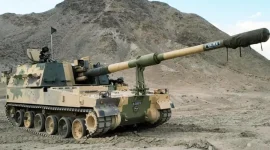
Unlike heavier tracked self-propelled howitzers (like the K9 Vajra) or towed guns (like the Dhanush) which have limitations in extremely narrow mountain passes, the titanium-bodied M777 was specifically designed to be airlifted into inaccessible areas.
By upgrading these guns to a 52-calibre standard, the Indian Army aims to achieve "overmatch" capabilities—the ability to outrange and outgun adversaries across the Line of Actual Control (LAC).