The Indian Army has begun the process of establishing five Integrated Battle Groups (IBGs) aimed at fortifying the Line of Actual Control (LAC) with China, with a specific focus on the high-altitude sectors of Sikkim and Arunachal Pradesh.
Commanded by Major General-rank officers, these highly agile formations will each comprise approximately 5,000 personnel.
Rather than drafting completely new units from scratch, the military is dynamically restructuring existing forces to create cohesive units that seamlessly blend infantry, armoured vehicles, artillery, combat engineers, signals, air defence, and vital logistical support.
The defining feature of these new groups is their rapid deployment capability, designed to mobilise and strike within a 24-hour window of receiving directives—a stark contrast to traditional larger formations that historically took weeks to position.
The IBG concept represents a significant evolution in India's military doctrine, transitioning from conventional, slower-moving brigade and corps structures into compact, self-sufficient fighting machines.
Each battle group is custom-tailored to the specific operational demands of its designated environment.
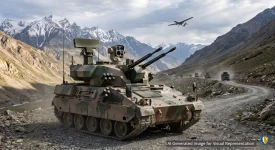
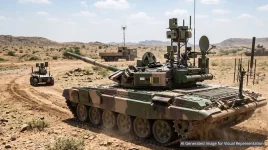
While IBGs deployed on the western borders are armour-heavy for desert warfare, the newly raised units for the northern and eastern frontiers are configured specifically for the harsh realities of mountain warfare, prioritising lightweight mobility and infantry strength.
This combined-arms approach consolidates multiple combat capabilities under a single operational command, ensuring swift offensive action and flexibility across varied and unforgiving terrains.
This structural overhaul is a cornerstone of the newly outlined ‘VIJAY’ vision introduced by Army Chief General Dhiraj Seth.
The doctrine—standing for Vigilance, Innovation, Jointness, Atmanirbharta (Self-reliance), and Yodha (Warrior) First—serves as the guiding philosophy for the modern Indian soldier.
It places a premium on maintaining continuous alertness, integrating advanced technologies into everyday operations, fostering deeper tri-service synergy, and prioritising soldier welfare.
Furthermore, the VIJAY framework is heavily intertwined with the Army's broader "Decade of Transformation" agenda, a strategic roadmap aimed at evolving the military into a technology-driven, multi-domain force while directly supporting the national push for complete self-reliance in the defence manufacturing sector.
The successful operationalisation of these five mountain-specific IBGs is expected to drastically enhance India's deterrent posture and rapid-response capabilities along the northern borders, a necessity underscored by the ongoing border friction that began in eastern Ladakh in 2020.
However, military analysts note that realising the full strategic potential of these units will require overcoming substantial hurdles.
Operating effectively in the rugged Himalayas demands continuous, specialised training, resilient logistical supply chains, and consistent technological upgrades to outpace adversaries.
Ultimately, the long-term success of the IBG initiative will rely heavily on steady policy backing and the uninterrupted execution of the broader reforms championed by the ‘VIJAY’ transformation roadmap.