As India accelerates its push for complete self-reliance in military aviation, a former senior official from the Gas Turbine Research Establishment (GTRE) has proposed a comprehensive, 30-year roadmap for indigenous aero-engines.
This vision aims to secure the propulsion needs for everything from the Indian Air Force’s (IAF) current fighter jets to future uncrewed combat aerial vehicles (UCAVs) and next-generation stealth fighters.
Currently, India’s primary focus is on selecting a foreign partner—with aerospace giants like Rolls-Royce and Safran locked in tight competition—to co-develop a 120kN class engine with full intellectual property rights for the Advanced Medium Combat Aircraft (AMCA) Mk2.
However, the former GTRE official cautions against treating this as a single-point solution. Instead, he proposes using the 120kN core architecture as the foundation for an entire family of engines spanning 90kN to 140kN.
This shared-core strategy would drastically reduce India's reliance on imported propulsion systems while streamlining maintenance and lifecycle support for the IAF.
The 90kN Kaveri 2.0: Upgrading Tejas and Powering Drones
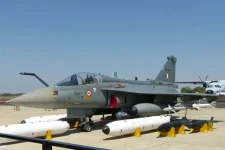
The foundational step in this proposed roadmap is the creation of a 90kN afterburning engine, effectively a "Kaveri 2.0."Producing 90kN of thrust, this engine would comfortably outperform the American-made General Electric F404-IN20 (which generates roughly 84kN) that currently powers the Tejas Mk1 and Mk1A fleet.
This makes it an ideal indigenous substitute for future Tejas upgrade cycles.
Furthermore, by removing the afterburner to create a "dry" variant, the exact same 90kN core could power next-generation High-Altitude Long-Endurance (HALE) UCAVs.
This approach mirrors the ongoing DRDO Ghatak stealth drone project, which is currently testing a 49–51kN dry variant of the original Kaveri engine.
Bridging crewed and uncrewed platforms with shared engine technology would significantly cut down research and development costs.
A Detuned 100kN Variant for Tejas Mk2
Building upon the 120kN AMCA engine being co-developed for the 2030s, the official suggests engineering a "detuned" 100kN variant using the identical core.This would act as a long-term propulsion replacement for the heavier Tejas Mk2 fighter when it undergoes its scheduled mid-life upgrades in the mid-2040s.
By that time, transitioning the Tejas Mk2 fleet from its initial foreign engines (the planned GE F414) to an indigenous 100kN powerplant would be both economically and technically advantageous.
The Logistics Advantage
The strategic brilliance of this roadmap lies in component commonality.A 100kN Tejas Mk2 engine and a 120kN AMCA engine would share major internal hardware and manufacturing processes.
For the Indian Air Force, this translates to massive savings in operating costs.
Key benefits of engine commonality include
- Unified Inventories: Ground crews could maintain a single inventory of spare parts.
- Shared Infrastructure: The IAF could use identical specialised tools and overhaul procedures across multiple aircraft fleets.
- Supply Chain Security: It frees India from the geopolitical vulnerabilities and spare-parts bottlenecks linked to foreign aerospace manufacturers.
Scaling to 140kN for 6th-Gen Fighters
Looking toward the deep future, the official recommends upscaling the 120kN core into a massive 140kN-class engine.Future sixth-generation combat aircraft will demand substantially higher thrust to support heavier payloads, larger internal fuel tanks, advanced electronic warfare suites, and directed-energy weapons.
A 140kN engine would provide the necessary power margin for these advanced fighters, as well as for heavy deep-strike UCAVs acting as "loyal wingmen" alongside crewed jets.
Scaling up a proven engine core mitigates the massive financial and technical risks associated with designing a heavy-thrust engine from scratch.
Ultimately, this scalable roadmap—a 90kN Kaveri 2.0 for current fighters and drones, a 100kN variant for Tejas Mk2 upgrades, a 120kN powerplant for the AMCA, and a 140kN derivative for future autonomous platforms—offers a practical and sustainable pathway to complete propulsion independence for the Indian defence sector.