- Views: 2K
- Replies: 2
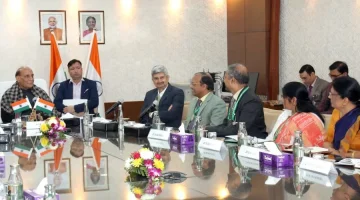
During the 6th India-France Annual Defence Dialogue in Bengaluru on February 17, 2026, Indian Defence Minister Rajnath Singh strongly advocated for increased local manufacturing in the proposed deal for 114 Dassault Rafale fighter jets.
Meeting with his French counterpart, Catherine Vautrin, Singh requested that the share of India-made components be increased to at least 50%.
He also stressed the importance of manufacturing and overhauling the aircraft's engines domestically, which would serve as a major catalyst for the 'Make in India' programme. Furthermore, the dialogue resulted in the renewal of a 10-year bilateral defence cooperation agreement between the two nations.
This development arrives at a crucial time for India's defence capabilities.
The Defence Acquisition Council recently approved the acquisition of these 114 multi-role fighter jets in a deal valued at approximately ₹3.25 lakh crore. Under the proposed plan, 18 aircraft will be delivered in a ready-to-fly condition, while the remaining 96 will be built in India.
This major procurement is designed to address the Indian Air Force's current squadron shortage—presently operating at around 29 squadrons against a sanctioned strength of 42—while building upon the foundation laid by the previous purchase of 36 Rafale aircraft.
Both nations are actively prioritising technology transfer and joint production.
While Dassault Aviation initially proposed around 40% local participation, Indian officials have made it clear that they intend to negotiate for a much higher threshold. As technical talks proceed, the Indian government's goal is to push the domestic content well past the 50% mark.
In addition to the aircraft, an agreement was also signed between Bharat Electronics Limited (BEL) and Safran to locally manufacture HAMMER air-to-ground missiles, further deepening industrial ties.
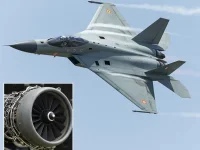
Beyond assembling the airframes, a primary focus for India is securing the technology to build and maintain the fighter's propulsion systems. The Rafale is equipped with the advanced Safran M88 turbofan engine.
Because engine manufacturing and maintenance, repair, and overhaul (MRO) are among the most closely guarded and complex areas of aerospace technology, acquiring these capabilities would significantly advance India's industrial maturity.
Establishing full-scale engine production and overhaul facilities locally would decrease long-term reliance on foreign support, improve operational readiness, and pave the way for future joint engine development.
Already, Safran has broken ground on a €40 million MRO facility for M88 engines in Hyderabad, demonstrating practical progress toward this goal.
Localising the production and maintenance of these advanced fighters represents a tangible step toward self-reliance.
By involving Indian workers and engineers in assembling the jets, integrating domestic weapon systems, and conducting full MRO services, the country can generate high-skilled employment and reduce supply chain vulnerabilities.
This strategic demand for higher indigenous content in foreign purchases complements India's ongoing efforts to develop its own combat aircraft, such as the Tejas Mk1A, Tejas Mk2, and the Advanced Medium Combat Aircraft (AMCA).
Ultimately, the government aims to use international acquisitions as a tool to build permanent domestic capabilities rather than continuing a cycle of import dependence.