- Views: 2K
- Replies: 4
Recent media reports suggest the Indian Navy is considering the purchase of 31 additional Rafale M fighter jets from France, supplementing the 26 aircraft already ordered in April 2025.
This potential expansion stems from an urgent need to prevent a shortfall in maritime strike capabilities.
The Navy currently relies on a fleet of 40 MiG-29K deck-based fighters, which are expected to reach the end of their operational lifespan around 2035, leaving a potential void in carrier air wing strength.
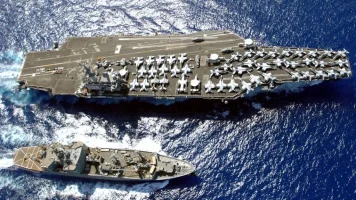
Because aircraft carriers are the primary tools for India's power projection at sea, defence planners are now actively revising their strategy to ensure the Navy maintains a robust and uninterrupted fighter inventory over the coming decade.
The Shift from Indigenous Timelines to Interim Solutions
Initially, the Navy had planned to acquire 51 Rafale M jets.However, this figure was halved to 26 based on early assurances that India's indigenous Twin Engine Deck Based Fighter (TEDBF) would be ready for mass production by 2029 or 2030.
At that time, the TEDBF was scheduled to make its maiden flight in 2026, which would have allowed for a swift introduction into service.
Unfortunately, the TEDBF project has encountered significant delays.
- Funding and Clearances: The Aeronautical Development Agency (ADA) is currently seeking approximately ₹13,000 to ₹14,000 crore in funding to proceed with full-scale development.
- Revised Flight Targets: With clearance from the Cabinet Committee on Security (CCS) now anticipated around 2026 or 2027, the initial 2026 target for the first flight has been severely pushed back. Current estimates indicate that the prototype's first flight may only occur in the early 2030s.
Even after production begins, it will take several more years to manufacture enough aircraft to equip carrier squadrons fully.
Although the Navy ultimately plans to acquire at least 80 TEDBF jets in its first phase, the lengthy development process leaves a vulnerable gap in the mid-2030s, making the interim reliance on French-built Rafale Ms crucial.
TEDBF Design Philosophy: Practicality Over Extreme Stealth
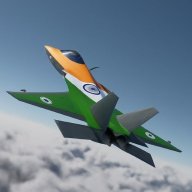
Regarding the indigenous fighter's design, defence sources note that the Navy opted for a highly practical configuration rather than a strictly stealth-focused one to ensure easier maintenance.During Aero India 2025, the ADA showcased a TEDBF model that shared aerodynamic similarities with the Rafale but notably featured Diverterless Supersonic Intakes (DSI).
Billed as a "5 Minus" generation aircraft, it will utilise advanced avionics similar to the upcoming Advanced Medium Combat Aircraft (AMCA) but will lack internal weapons bays to prioritise payload and operational efficiency.
Developing a naval fighter involves extreme technical hurdles, particularly carrier qualification.
Ensuring the aircraft can safely launch and land on a moving deck requires heavy structural reinforcements and rigorous testing.
ADA acknowledges that validating these capabilities will take considerable time, further justifying the need for an immediate stopgap measure.
Expanding the Rafale Fleet and Future Carrier Ambitions
In this context, procuring 31 more Rafale M jets serves as an ideal bridge.Should this deal materialise, India would operate a total of 57 naval Rafales—surpassing the French Navy's own fleet of 41.
Key benefits of the expanded Rafale acquisition:
- Immediate Compatibility: The jets are fully compatible with India's indigenous aircraft carrier, INS Vikrant.
- Logistical Efficiency: A larger fleet would significantly improve maintenance economies of scale while the TEDBF matures.
- Strategic Alignment: This move parallels broader national defence strategies, as the Indian Air Force is concurrently evaluating a massive procurement of 114 additional Rafale fighters.
The service is currently seeking government clearance by 2026 for a second Indigenous Aircraft Carrier (IAC-II), expected to be a ~45,000-tonne sister ship to INS Vikrant, built by Cochin Shipyard Limited.
Looking further ahead, plans remain for an even larger 65,000-tonne carrier (IAC-III, previously referred to as INS Vishal) to eventually replace the ageing Russian-built INS Vikramaditya, providing a larger deck to launch future generations of heavy fighters and unmanned aerial vehicles.