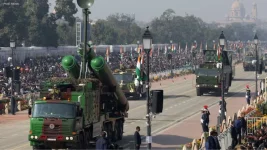
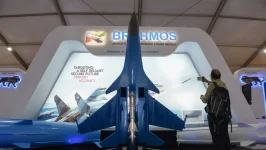
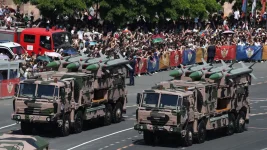
The BrahMos supersonic cruise missile, India’s premier defence export, is rapidly gaining international recognition.
While initially focused on Southeast Asian markets, the demand for this advanced weapon system has expanded significantly, drawing interest from nations across the Middle East, Africa, and Latin America.
This growing global appetite underscores India's rising status as a key player in the high-technology military hardware market and aligns with New Delhi's goal to become a major global exporter of defence equipment.
A Technological Edge in Modern Warfare
Developed through a joint venture between India’s Defence Research and Development Organisation (DRDO) and Russia’s NPO Mashinostroyeniya, the BrahMos has transitioned from a purely domestic strategic asset into a formidable competitor on the global stage.Capable of reaching speeds near Mach 2.8, the missile offers unmatched precision and operational versatility.
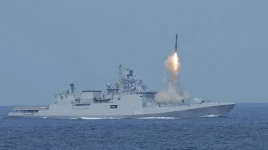
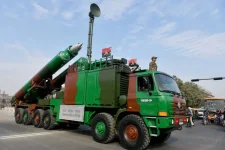
It can be deployed across a diverse range of platforms, including naval warships, submarines, fighter aircraft, and mobile land-based launchers.
This multi-platform capability, combined with its ability to perform terminal manoeuvres to evade modern air defence systems, makes it an ideal solution for nations seeking to bolster their coastal protection and long-range strike capabilities.
Expanding Footprint: From Southeast Asia to the Gulf
The Philippines made history as the first international customer for the BrahMos, securing a shore-based anti-ship variant.Building on this momentum, India has since finalized an agreement with Vietnam and is in the advanced stages of negotiations with Indonesia.
The scope of interest has now broadened to include nations such as Saudi Arabia, Egypt, Thailand, Brazil, and Chile.
Notably, India is currently in preliminary discussions with the United Arab Emirates (UAE). If concluded, this would mark the first deployment of the BrahMos in the Gulf region.
Beyond the missile itself, the UAE has also expressed interest in India’s Akashteer air defence command-and-control system, reflecting a deeper desire to integrate Indian technology into its broader military modernization framework.
Building a Long-Term Strategic Ecosystem
India is not merely selling hardware; it is constructing a comprehensive infrastructure to support long-term international partnerships. This institutional approach includes:- Lifecycle Support: Establishing robust maintenance, logistics, and training networks to ensure sustained operational readiness.
- End-Use Governance: Implementing strict monitoring mechanisms that align with international arms export standards.
- Diplomatic Engagement: Leveraging strategic dialogues to manage the geopolitical nuances of providing advanced defence technologies to sovereign nations.
A New Era for India’s Defence Industry
The success of the BrahMos programme is a cornerstone of the 'Aatmanirbhar Bharat' (Self-Reliant India) initiative.The surge in export orders—which reached a record high in the 2025-26 fiscal year—is driven by increased domestic manufacturing and stronger collaboration between public and private sector enterprises.
As global confidence in Indian-made military technology grows, analysts expect this momentum to extend beyond missiles into other sectors, including unmanned aerial vehicles (UAVs), radar systems, and next-generation aerospace technologies.
By positioning itself as a reliable, high-tech, and politically flexible supplier, India is effectively carving out a significant role in the evolving global defence landscape.