India’s Hypersonic Strategy Shifts to Mass-Produced Indigenous Solutions as BrahMos-II Faces Prohibitive Costs and Tech-Transfer Hurdles

India’s Hypersonic Strategy Shifts to Mass-Produced Indigenous Solutions as BrahMos-II Faces Prohibitive Costs and Tech-Transfer Hurdles


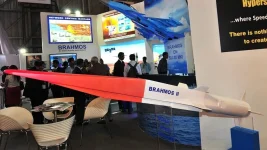
The much-anticipated BrahMos-II hypersonic cruise missile project, long viewed as the pinnacle of Indo-Russian military collaboration, is facing substantial roadblocks.

Driven by skyrocketing prices for its scramjet engines, a lack of comprehensive technology transfer, and exorbitant per-unit costs, the joint venture is no longer seen as a viable option for widespread use against conventional targets like enemy aircraft shelters or command centres.

Consequently, India's strategic focus is swiftly pivoting towards domestic hypersonic missile development, prioritising affordability and practical combat utility over expensive joint platforms.

Initially designed as the Mach 7–8 successor to the formidable BrahMos supersonic missile, BrahMos-II was meant to deliver a 1,500 km range capable of piercing modern air defence shields.

However, the timeline for its maiden flight has now been pushed back to 2027–28.

This delay is largely attributed to Moscow's hesitance to share critical scramjet propulsion technology, which has reportedly driven the estimated cost of a single BrahMos-II missile to an unviable $12.5 million—more than double the price of existing supersonic BrahMos variants.

In a scenario involving intense, sustained warfare, deploying such costly munitions against standard hardened shelters or scattered communication nodes is economically unfeasible.

While the BrahMos-II remains highly relevant for isolated, high-value strategic strikes, its prohibitive price tag severely restricts the sheer volume of missiles India could stockpile and fire.

A limited inventory is a critical vulnerability when engaging with well-equipped adversaries possessing multi-layered missile defence networks.

Practical lessons from recent military engagements, notably the cross-border skirmishes of May 2025 during Operation Sindoor, brought these operational realities to light.

During the conflict, the Pakistan Air Force’s Chinese-made HQ-9 surface-to-air missile batteries failed to reliably intercept proven Indian munitions, such as Rampage rockets and SCALP-EG cruise missiles.

By utilising low-altitude flight paths, electronic warfare tactics, and stealth profiles, these relatively affordable weapons easily breached the HQ-9 radar screens, exposing severe vulnerabilities in Pakistan's integrated air defence architecture.

Such combat performance clearly illustrates that even highly advanced surface-to-air missile shields struggle to track and destroy fast-moving, low-profile threats.

Therefore, deploying a hypersonic cruise missile that blends breakneck speeds with mass-producible, affordable manufacturing would take advantage of these enemy blind spots much more efficiently than relying on a handful of excessively priced, specialised missiles.

Acknowledging these strategic imperatives, the Defence Research and Development Organisation (DRDO) is rapidly advancing several entirely homegrown hypersonic initiatives, most notably under Project Vishnu.

Programmes like the Extended Trajectory-Long Duration Hypersonic Cruise Missile (ET-LDHCM) are at the forefront of this shift.

These indigenous efforts heavily rely on autonomous scramjet advancements—building upon the success of India's earlier Hypersonic Technology Demonstrator Vehicle (HSTDV) test flights—and feature active cooling mechanisms and modular designs meant to maximise destructive capability while keeping manufacturing costs low.

The primary objective of these domestic projects is to dramatically reduce the cost per unit by maximising indigenous components and enabling large-scale assembly.

They aim to deliver the following strategic advantages:
  • Cost-Effective Scalability: Lower unit costs through high indigenous manufacturing content.
  • Precision Targeting: Optimised warheads and guidance systems tailored for both hardened infrastructure and mobile targets.
  • Massed Strike Capability: A greater inventory depth that allows forces to overwhelm enemy defences through sheer numbers.
Recent open-source milestones, such as the successful flight tests of the Long-Range Anti-Ship Hypersonic Missile (LR-AShM) off the Odisha coast—which demonstrated Mach 10 speeds, a range exceeding 1,500 km, and unpredictable skipping trajectories—highlight India's rapidly maturing grasp of hypersonic glide technologies.

By embracing indigenous production, New Delhi is actively mitigating the risks of foreign reliance while keeping defence budgets in check.

The nature of modern warfare dictates that the victor is often the force capable of sustaining relentless, high-tempo strikes over an extended period.

Developing a family of cost-effective, indigenous hypersonic missiles—suitable for routine bombardment of airbases, supply lines, and enemy leadership nodes—will fundamentally upgrade the Indian Armed Forces' deep-strike capabilities.

These new weapons will seamlessly integrate alongside the existing arsenal of supersonic BrahMos missiles and precision-guided bombs, forming a robust, multi-layered offensive net that deters adversaries economically.

As DRDO engineers continue to conquer complex technical hurdles related to scramjet engine endurance and extreme thermal management, the defence sector anticipates rapid prototyping and swift induction of these missiles in the near future.

The strategic pivot away from prohibitively expensive foreign partnerships towards self-reliant, homegrown technologies represents a significant maturation of India’s military doctrine.

It is a calculated move that perfectly harmonises world-class lethality with the practical, economic demands of protracted warfare.
 
i thought the only thing india was decent at is making missiles! why are we still begging russians for the tech.. cant we develop it on our own instead of being forever reliant on russia..
 
"During the conflict, the Pakistan Air Force’s Chinese-made HQ-9 surface-to-air missile batteries failed to reliably intercept proven Indian munitions, such as Rampage rockets and SCALP-EG cruise missiles."

They are all expensive and made by Isreal and France.

India needs to pickup its game. Involve Indian private sector as well as foreign private sector. The one paying the devepment owns the IP. Stop trying to re-invent the wheel with SOE's that are underfunded and don't attract the best talent in India.
 
"During the conflict, the Pakistan Air Force’s Chinese-made HQ-9 surface-to-air missile batteries failed to reliably intercept proven Indian munitions, such as Rampage rockets and SCALP-EG cruise missiles."

They are all expensive and made by Isreal and France.

India needs to pickup its game. Involve Indian private sector as well as foreign private sector. The one paying the devepment owns the IP. Stop trying to re-invent the wheel with SOE's that are underfunded and don't attract the best talent in India.
Definitely, Atmanirbharta in everything is not just a "tag"! Atleast top tier missiles should be made only by Indian companies. DRDO is grossly underfunded; even in that limited funding it has made such crown jewels of defence tech that it is hard to ignore. Govt should just fund these labs more.
 
This articles screaming Brahmos fraud on Indian tax-payers that this project is 50-50% joint project.
ministry of defence with PSUs commiting fraud on poor tax payers. All these fancy words and rosy articles and chest beating is out in public. (Quality of Brahmose not questioned by me but IPRs and shady ownership). if its joint project why do we need tech transfer as its all shared and done jointly.
Sindor ops had 90% missiles of imported nature.
Bharat marching top 3rd largest world economy but holding top number 1 importers of weaponry.
Astra1/2/3 going on more from last 20 years and more than 50 "successful" test but just bought Russian BVVR for more than U$1billion last week.
ISRO semi-cryo engine testing from last 20 years but Bharat on cusp of importing Russian Sem-cryo-engine. ISRO failed to achieve their stated launch in 2025!! cost us U$2 billion a year.
NAtional media, including this forum and mil-expert dubbed it game-changer to tax payers. Joke on poor tax payers as they are taken for very very long ride.
 
Last edited:
i thought the only thing india was decent at is making missiles! why are we still begging russians for the tech.. cant we develop it on our own instead of being forever reliant on russia..
Indian ministry of defence and PSUs comprising mil-industrial complex of HAL+ISRO+ADA+DRDO+OrdFactories+AtomicDept+ShippingDept are big fraud and rotten lot.
They bleed Bharat about U$20-30billion a year.
let me drop some documented historysheet of only one dumbo dept: HAL cost nation U$2billion a year.
List of such ToTs for Gen Z
1. De Havilland Vampire FB.52 / T.55 Production: ~250 units Era 1953–1960
2. 2. Folland Gnat F.1 Production: ~200 units Era: 1956–1974
3. Hawker Siddeley HS-748 Production: 89 units Era: 1961–1988
4. SEPECAT Jaguar IS/IB/IM production start: ~1981 Over 120 units
5. MiG-21FL / MiG-21M / MiG-21 BIS Production: >600 units Era: 1966–1985
6. MiG-27M / MiG-27ML Production: ~165 units Era: 1985–1996
7. Su-30MKI Production: ~222 units Era: 2004–present
8. RD-33 Series Engines under license
9. AL-31FP Engines under license
10. Dornier Do-228-101 / 201 Production: 125+ units Era: 1984–present
11. Turbomeca / Safran Engines French engines under licence
12. Fairchild C-119 Flying Boxcar (Assembly only, 1950s)
 
Definitely, Atmanirbharta in everything is not just a "tag"! Atleast top tier missiles should be made only by Indian companies. DRDO is grossly underfunded; even in that limited funding it has made such crown jewels of defence tech that it is hard to ignore. Govt should just fund these labs more.
DRDO grossly under funded??? You are born retard or became one later?

DRDO : 5000 engineers + 25,000 support staff(non engineering staff)
Cost tax payers yearly U$3billion a year.
Lets analyse objectively about NDA highly nationalistic regime
2014-2026: 12 years x 3 = U$36 billions spent
Please, my humble appeal to list top 3 military export worthy equipment or weapon from this termite institution!!!

There are thousands of example but let me enlighten you the current fiasco in real time unfolding as we write here in comments.
ASTRA BVR missiles project of DRDO
started in 2009 and carried out about 50 "successful" tests.
May 2026: couldnot deliver so had to buy from Russia!!
The Indian Defence Ministry has signed a contract for the sale of 300 Russian R-37M long range
air-to-air missile
which has been valued at over $1.2 billion


only and only missile exported out is Brahmos which is Russian but assembled in India, otherwise Bharat is net importer of missiles and 90% missiles used in Sindor Ops were imported!
 
Last edited:

Forum statistics

Threads
7,122
Messages
65,566
Members
5,323
Latest member
The Patriot 🇮🇳🇮🇳
Back
Top