- Views: 2K
- Replies: 2
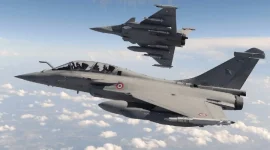
Following the recent milestone approval by India's Defence Acquisition Council on 12 February 2026, the monumental $36 billion procurement of 114 Dassault Rafale multirole fighter jets is poised to revolutionise both the Indian Air Force (IAF) and global aerospace manufacturing.
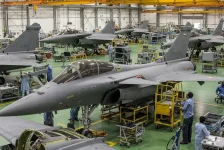
Under this sweeping Multi-Role Fighter Aircraft (MRFA) programme, approximately 90 to 96 of these advanced combat aircraft will be constructed locally at the Dassault Reliance Aerospace Limited (DRAL) facility in Nagpur.
This watershed agreement represents the very first time Rafale jets will be fully manufactured on such a massive scale outside of France.
To address immediate operational requirements and bridge the IAF's current squadron shortfalls, an initial batch of 18 aircraft will be delivered directly from French assembly lines in a ready-to-fly condition.
Beyond rapidly plugging critical capability gaps in India's combat fleet, this colossal defence procurement serves as a massive catalyst for the nation's indigenous aerospace ambitions.
The DRAL site in Nagpur's MIHAN Special Economic Zone—which has already proven its mettle by manufacturing Falcon business jet components and Rafale spares—is transitioning into a fully-fledged final assembly line.
Defence Ministry sources and industry analysts reveal that this newly upgraded hub will function with a dual mandate.
Not only will it anchor the execution of the IAF's massive 114-jet contract, but it will also effectively serve as Dassault Aviation’s second-largest global manufacturing nexus, boasting a projected capacity of up to 24 aircraft annually.
Crucially, this positions the Indian hub to seamlessly supply advanced fighter jets to international buyers, including prospective operators like Indonesia.
The establishment of an Indian production nerve centre arrives at a critical juncture for Dassault Aviation, which is currently navigating an unprecedented surge in global demand.
Official figures released for the end of December 2025 demonstrate a robust, unyielding backlog of 220 Rafale jets, comprising 175 destined for international clients and 45 reserved for the French military.
Although Dassault successfully delivered a record-breaking 26 units throughout 2025, the immense influx of continuous international orders means the backlog has remained stubbornly high.
Once the formal contract for India's 114 jets is inked and finalised, that waiting list will rocket well past the 330-mark, straining existing European manufacturing capacities to their absolute limits.
Consequently, the activation of the Nagpur manufacturing corridor is nothing short of a strategic game-changer.
Aerospace executives have signalled that with emerging markets and repeat customers potentially adding hundreds of additional airframes to the order books in the coming years, a solitary production line in France simply cannot satisfy the surging appetite.
By running two high-capacity final assembly lines simultaneously—one in Merignac, France, and the other in Nagpur, India—the aerospace giant projects that combined global output could confidently reach between 50 and 60 jets annually by the early 2030s.
Notably, aviation experts suggest that the final squadrons rolling off the Indian line might even feature the cutting-edge F5 "Super Rafale" standard, equipped with the upgraded 90 kN thrust M88 T-REX engines.
For India, this sprawling initiative transcends mere numerical reinforcements for its aerial defence grid.
The localisation of Rafale production guarantees an unprecedented level of critical technology transfer, stimulates the creation of thousands of highly skilled engineering jobs, and cements India's status as a formidable anchor in international supply chains.
With major domestic players like Tata Advanced Systems—which is already slated to produce fuselage sections in Hyderabad—integrating into the project, the domestic ecosystem is rapidly maturing.
Ultimately, exporting high-performance combat aircraft stamped with "Made in India" credentials will seamlessly fuse the precision of elite French aviation engineering with the formidable scale of Indian industrial prowess.