- Views: 3K
- Replies: 7
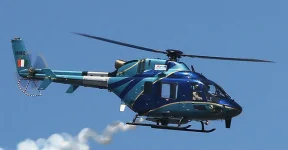
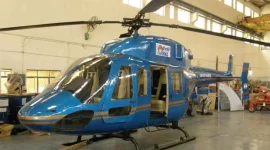
India’s highly anticipated Light Utility Helicopter (LUH) programme, spearheaded by Hindustan Aeronautics Limited (HAL), has essentially ground to a halt.
Recent reports indicate that the indigenous aircraft has not taken to the skies in almost three months and has seen minimal flight activity over the past year.
This standstill casts a shadow of doubt over one of the country’s most vital domestic defence initiatives, especially as private sector competitors begin to establish a firm foothold in the aerospace market.
The severe delays are rooted in a complex bureaucratic deadlock.
Disagreements have erupted between HAL, the Indian Army, and key aviation certification bodies, including the Centre for Military Airworthiness and Certification (CEMILAC) and the Regional Centre for Military Airworthiness (RCMA).
The core disputes revolve around differing operational expectations, testing criteria, and compliance standards.
While technical hurdles are a routine part of aircraft development globally, such disputes within the Indian defence manufacturing ecosystem frequently result in extended programmatic freezes.
For the Indian Army, these delays are not merely administrative—they present an immediate operational crisis.
Armed forces operating in the treacherous, high-altitude environments of the Himalayas rely heavily on light helicopters for troop transport, emergency medical evacuations, reconnaissance, and daily logistics.
Currently, the military is forced to depend on the vastly outdated Cheetah and Chetak fleets, which trace their design origins back to the 1960s and suffer from mounting serviceability and safety concerns.
Driven by immediate operational necessity, the Army has had to implement stopgap measures.
Following the terror attack in Pahalgam, the military partially reactivated its grounded HAL Dhruv fleet to manage essential duties in the Kashmir region.
Furthermore, the armed forces have even evaluated the possibility of leasing civilian helicopters to fulfill light utility requirements, highlighting a severe capability gap on the front lines.
Compounding HAL’s challenges are recent strategic moves by the Ministry of Defence.
In August 2025, the government issued a Request for Information (RFI) to procure 200 modern reconnaissance and surveillance helicopters, split between 120 units for the Army and 80 for the Air Force.
This procurement push aligns directly with a major milestone in India’s private aerospace sector: the February 2026 inauguration of the Tata Advanced Systems and Airbus Final Assembly Line (FAL) in Vemagal, Karnataka.
Virtually inaugurated by Prime Minister Narendra Modi and French President Emmanuel Macron, the Vemagal facility will assemble the Airbus H125 family.
Its military iteration, the H125M, now boasts robust "Make in India" credentials, with the first domestically assembled chopper anticipated by early 2027.
Defence analysts suggest that the Tata-Airbus platform is heavily favoured to secure the 200-helicopter RFI, potentially sidelining the indigenous LUH project.
Despite the current impasse surrounding the LUH, HAL remains committed to an expansive long-term production strategy.
Utilizing modern manufacturing hubs like the Tumakuru Helicopter Factory, the state-run enterprise projects the delivery of roughly 1,000 helicopters in the 3-to-15-tonne category over the next two decades.
This ambitious roadmap includes continued production of the ALH Dhruv, the LCH Prachand, and future multi-role helicopters for both land and naval forces.
However, the immediate reality for the LUH is a stark contrast to its initial promise.
Once celebrated as the definitive homegrown replacement for India's ageing fleets—especially after completing rigorous high-altitude trials in Siachen—the platform currently sits idle.
Whether this grounding is strictly a matter of technical certification or a byproduct of intensified scrutiny following past issues with the Dhruv programme, the freeze exposes deep-seated systemic challenges within India’s defence acquisition and testing framework.