- Views: 44
- Replies: 1
"We have five engines, the sixth engine is ready now. It will be picked up shortly. Last time, when I visited GE, the assurance was that they would give us 20 engines in the second half of this calendar year, between June and December. This is the indication from GE and this is a pessimistic number; they have told me they should do better," – D.K. Sunil, Chairman Hindustan Aeronautics Limited (HAL) in a media interview in April 2026 speaking about the F404-IN20 engine deliveries delays to India for the Tejas Mk1A program.
After the now well-known and extensively reported inordinate delays in the deliveries of F404-IN20 engines for India’s Tejas Mk1A fighter program, with just 6 engines delivered of the 99 originally ordered in 2021, and with the HAL invoking liquidation damages against GE which, now, is promising deliveries of 20 F404 engines in H2 2026; GE is now at loggerheads, once again, with the HAL as part of commercial negotiations for the F414 engines which are effectively creating a new set of runway roadblocks and take-off challenges for India’s upcoming 5th generation AMCA program, besides the Tejas Mk2 and the Navy’s TEDBF programs as well, as all of them have been designed around the GE’s F414 engine.
Latest media reports appearing in the Indian media mention that General Electric (GE) has abruptly raised the quoted price of its F414 fighter jet engines for India's upcoming indigenous fighter programs by three times, from an estimated INR 70–80 crore ($8-$9 million) earlier to nearly INR 200 crore ($24 million) per unit now. This massive, almost 300% surge has caused a virtual logjam in the ongoing commercial negotiations between HAL and the GE officials.
Alongside the engine unit price revision, commercial discussions between the sides have also bogged down over the proposed technology transfer and local manufacturing arrangements, with GE, reportedly, seeking over $800 million (approx. INR 6,000 crore) to establish a dedicated, local F414 assembly and manufacturing line within India.
The development, however, has serious & strategic implications for India as the GE F414 engine is the bedrock of India’s strategic & overarching indigenous fighter jet development & production plan and is slated to power multiple, upcoming indigenous fighter jet programs; namely, the Tejas Mk2, serve as the interim engine for the fifth-generation Advanced Medium Combat Aircraft (AMCA) Mk1 variant besides the Navy’s Twin Engine Deck based Fighter (TEDBF); with India projected to require at least 200+ F414 engines from GE.
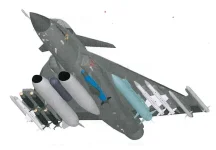
South Korea’s Indigenous 4.5+ Gen KF-21 Boramae Jet Powered by GE’s F414-GE-400K Engine
South Korea, too, has developed its indigenous 4.5+ generation KF-21 Boramae fighter program around the GE’s F414 engine, based on a very similar model & template, as being followed by India, with the F414-GE-400K engine variant (which powers the KF-21) being produced locally, within South Korea, under license from GE at scale by Hanwha Aerospace, based on an agreement signed between the two sides originally in 2016.As part of the routine & periodic engine procurement for the KF-21 program, South Korea’s Defense Acquisition Program Administration (DAPA) awarded a $401 million contract exactly two years ago, on June 25, 2024, to supply 40 F414-GE-400K engines through December 2027, which effectively pegs the per unit cost of the F414 engine at around $10 million. With local production of the engine, systems as well as the airframe; South Korea has been able to price the 4.5+ generation KF-21 fighter highly competitively, at around $80+-$100+ million depending on the variant, as compared to and as a highly capable yet cost effective alternative to its more expensive Western counterparts, like the F-35, which could be crucial to its success in international exports market going forward.
India’s Jet Engine Conundrum and the Way Forward
The latest, abrupt surge in pricing on the F414 engine, after the serious & inordinate delays on the F404 engine deliveries so far, which GE has squarely attributed to the reopening of the F404 assembly line after the pandemic in 2021; are effectively fuelling mass scepticism and giving rise to growing public speculation that the same might be a part of GE’s underlying agenda of delaying, undermining or even sabotaging India’s indigenous fighter jet program while its neighbour and arch-rival, Pakistan, is already planning to procure the stealthy, 5th generation J-35 jets from China over near term, with the PAF pilots, reportedly, having already started their flight training on the J-35; while Pakistan is also a partner in the Turkey’s upcoming 5th generation KAAN fighter jet program. The Russian media has also reported that Pakistan is likely to receive the KAAN jets by late 2028 or 2029, in addition to the J-35, with a local co-production program for KAAN also in the pipeline, thereby, effectively raising the security concern & threshold for India manifold.GE’s F404 engine program, besides powering India’s Tejas Mk1 and Mk1A programs, also powers the USAF’s latest T-7A Red Hawk trainer aircraft program, namely the F404-GE-103 variant, developed & produced by Boeing & Saab, which intends to replace the existing, ageing T-38 Talon jets over near to medium term. In May 2026, the USAF cleared the T-7A Red Hawk for Low-rate Initial Production (LRIP), after developmental delays, which means, GE will have to now ramp-up engine deliveries of the F404-GE-103 engines for the program and, as a corollary, India’s overdue F404-IN20 engine deliveries, too, should be streamlined & fast tracked. And, if they are still not delivered, it will only signal otherwise, and further fuel the speculation of the presence of an underlying American agenda.
As mentioned earlier, all 3 of India’s upcoming fighter jets have been designed around the GE’s F414 engine with designs now frozen, which is effectively giving GE the leverage for the price hike demands now. In terms of options, India has the option of turning towards Safran, which already has the latest variant of its M88 engine (which power the Dassault Rafale), the T-Rex variant, with its 88.2-89.6 kN thrust output range rating which can be further uprated to match the F414’s 98 kN thrust rating.
However, changing the engine at this stage will take significant rework & effort towards changes in airframe design & overall program specifications which will further delay the development timeline at least by another couple of years which could be critical amid the rapidly evolving regional threat context. A former HAL engineer recently quoted in a media interview that re-engining the Tejas Mk1A program (in case F404 engine deliveries do not materialize from GE going forward) around a new engine will take at least 5-7 years with extensive redesign required for airframe changes & other revisions, including, intake ducting & structural engine mounts besides testing & certification, thereby, effectively resulting in the creation of a new aircraft variant altogether.
Agreeing to an unreasonable price hike demands from GE will effectively & invariably mean losing cost competitiveness on the Tejas-Mk2, AMCA and the TEDBF programs which will effectively hamper and erode their export potential in the international market over long term while looking for an alternate supplier will create delays and extend the development timelines. An indigenous or a joint co-development effort with a foreign player for a new engine from scratch-up, too, will be time intensive and create delays.
However, another option available with the Government of India, in the meanwhile, is to seek its existing leverage against GE and use it as a negotiating chip to get the right deal and create a breakthrough in national interest; one of which, could be India’s huge & rapidly growing domestic commercial aviation market for airplanes and engines, wherein, GE is a key supplier with its LEAP engines (produced by CFM, its JV with Safran) which power the Boeing’s 737 MAX airplanes as the exclusive power plant. Additionally, given the ongoing tussle over the supply of engines being created by GE in the overall, complex scheme of things, the Russian Su-57, too, might also be revisited & considered for co-development & domestic production and may get a fresh lifeline from India as an urgent, interim stealth fighter for the IAF.
On a concluding note, it may be difficult to directly point a finger at GE for the intent but what is effectively happening, seemingly, is the stalling & undermining of multiple Indian fighter programs simultaneously and the Indian aerospace ecosystem, players and the national defense planners will have to ensure going forward that all their eggs are never put in a single basket, in terms of strategic suppliers, to avoid a repeat of the GE fiasco ever again.
Further, it’s high time to revisit the old, crucial lesson learnt the hard way decades-ago in the 1960s and its underlying rationale; when, after the India-China war of 1962, America & the Great Britain had refused to sell their latest supersonic fighter jets to India while subsequently equipping Pakistan with the Lockheed-built F-104 Starfighters with India going for the Soviet MiG-21s; which, has subsequently and effectively ensured that the Indian defense planners have chosen to go solely with the Russian and French fighter jets for the IAF and the latest GE saga will only accelerate and extend that inveterate creed & conviction further to even engines, critical systems & sub-systems now going forward, which, however, would only be detrimental to American commercial interests as well as global reputation while being further conducive to the French and Russians’ in the long run...
Lastly, the context invariably reminds one of the old, yet still so true, Henry Kissinger quote, "It may be dangerous to be America's enemy, but to be America's friend is fatal..."