- Views: 3K
- Replies: 9
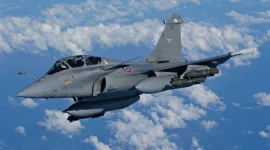
The next-generation Rafale F5 variant, often referred to as the "Super Rafale," is poised to bring a massive leap in beyond-visual-range (BVR) aerial combat.
One of the most notable upgrades is its ability to carry up to six Meteor air-to-air missiles, a notable increase from the current limit of four.
While attaching missiles to the aircraft's additional wing stations has always been structurally possible, it was previously avoided because the resulting air resistance compromised the jet's overall aerodynamic performance.
Currently, the Rafale variants in service, such as the F3R and F4, operate with a maximum of four Meteor missiles to maintain an optimal balance between firepower, external fuel tanks, and other essential equipment.
Mounting two extra missiles on the outer wing pylons creates significant drag. This added air resistance reduces the fighter's operational range, increases fuel consumption, and restricts its high-speed manoeuvrability.
Consequently, air forces have avoided a six-missile setup to prevent these severe performance drawbacks.
To resolve these aerodynamic challenges, the upcoming F5 standard will be equipped with a heavily upgraded powerplant: the Safran M88 T-REX (Thrust Range Extension) engine.
Open-source data indicates that this new engine will generate approximately 90 kilonewtons (kN) of thrust—a massive 20 percent increase over the 75 kN produced by current models.
This immense boost in power and improved thermal efficiency will easily offset the extra weight and drag of a heavier weapon payload. As a result, the aircraft will be able to maintain high speeds and agility during intense BVR dogfights, ensuring greater endurance and tactical flexibility.
On the battlefield, arming the Rafale with six Meteor missiles elevates it to a supreme air dominance fighter, exceptionally suited for heavy combat where pilots must engage multiple targets at once.
The Meteor missile is already renowned for its advanced ramjet propulsion and massive "no-escape zone," giving it a lethal edge at ranges exceeding 150 kilometres.
By increasing the fighter's magazine depth, pilots will enjoy higher survivability and strike efficiency. This enhanced firepower is vital for penetrating heavily defended airspaces or confronting enemies with larger fleets.
These advancements hold massive significance for the Indian Air Force (IAF), especially following the Defence Acquisition Council's (DAC) recent clearance for the ₹3.25 lakh crore Multi-Role Fighter Aircraft (MRFA) programme.
While the majority of the 114 jets planned for domestic production and direct purchase will likely be the F4 standard, reports suggest a later tranche of over 20 aircraft could be delivered in the cutting-edge F5 configuration by the early 2030s.
This phased approach will allow the IAF to seamlessly adopt future technologies, including a new Gallium Nitride (GaN) radar, the advanced SPECTRA electronic warfare suite, and "loyal wingman" autonomous drone integration, all without stalling the overall procurement process.
Introducing the Rafale F5 with a six-Meteor payload will grant the IAF an overwhelming technological advantage in long-range aerial combat, particularly when securing contested borders or targeting high-value enemy assets.
This capability perfectly complements modern military strategies that prioritise the "first-shot, first-kill" approach.
By combining superior sensor fusion, sophisticated networking systems, and expanded long-range firepower, the IAF will be well-equipped to dominate the skies and maintain a robust national defence.