- Views: 3K
- Replies: 9
India’s strategic air mobility is approaching a critical juncture.
The Indian Air Force (IAF) is currently navigating the gradual phase-out of its older heavy transport planes while facing a hard cap on its modern alternatives.
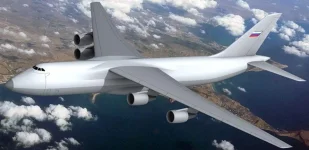
With future logistical demands only expected to grow, defence planners are shifting their focus toward a pressing requirement: the development of an indigenous heavy-lift aircraft.
The Ageing Backbone: IL-76 'Gajraj'
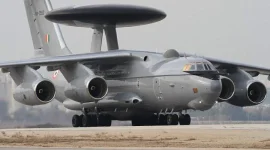
For decades, a fleet of 17 Soviet-era Ilyushin IL-76 aircraft—known in the IAF as 'Gajraj'—has served as the primary workhorse for India's heavy logistical needs.Inducted in the mid-1980s, these aircraft have routinely moved troops, heavy armour, and disaster relief supplies across vast and difficult terrains.
However, as these airframes cross the 40-year mark, they are becoming increasingly difficult to maintain.
Ageing structural components and a scarcity of spare parts for their legacy D-30KP engines have reportedly caused fleet availability rates to drop significantly in recent years.
While the IAF is actively exploring life-extension upgrades with Russia to keep a portion of the fleet airworthy into the 2040s, a permanent, modern replacement remains an absolute necessity.
The C-17 Bottleneck
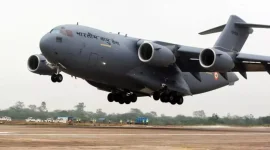
To modernise its capabilities, India inducted 11 Boeing C-17 Globemaster III aircraft between 2013 and 2019.These state-of-the-art jets revolutionised the IAF's reach, offering the ability to transport over 70 tonnes of cargo directly to short, high-altitude runways.
Despite their operational success, the IAF cannot easily expand this fleet.
Boeing officially closed the C-17 production line over a decade ago, in 2015. While recent global demand has sparked industry discussions about a potential multi-billion-dollar production restart, India is currently unable to purchase new units to scale up its heavy-lift operations.
Expanding Military Requirements
The necessity for a robust heavy-lift fleet is becoming more pronounced as India’s military inventory grows.Modern warfare strategies rely heavily on rapid mobility to shift forces and supplies across multiple fronts, whether deploying to the mountainous northern borders or responding to emergencies in the Indian Ocean region.
While the IAF is currently advancing its Medium Transport Aircraft (MTA) procurement to find 18-to-30-tonne capacity planes, this initiative is primarily designed to replace the smaller An-32 fleet and share some of the IL-76's tactical load.
It does not replace the strategic need for true heavy airlifters.
Defence analysts estimate that India will ultimately require between 50 and 60 new heavy transport aircraft to adequately replace the IL-76 and meet future strategic airlift demands.
The Case for a Domestic Platform
Creating an Indian heavy transport aircraft would resolve multiple strategic challenges simultaneously.Beyond serving as a standard cargo freighter, a large, domestically produced airframe could be adapted into a family of specialised military assets, including:
- Airborne Warning and Control Systems (AWACS): Providing crucial radar surveillance and airspace management.
- Mid-Air Refuelling Tankers: Extending the range, payload, and endurance of fighter jets.
- Intelligence and Electronic Warfare: Serving as dedicated platforms for signals intelligence (SIGINT) and target acquisition (ISTAR).
A homegrown airframe would grant the country total control over mission system integration, software upgrades, and maintenance schedules.
The Path Forward
India has already built a strong foundation in aerospace manufacturing through the Light Combat Aircraft (LCA) Tejas programme and the ongoing Advanced Medium Combat Aircraft (AMCA) project.By combining the expertise of the Defence Research and Development Organisation (DRDO), Hindustan Aeronautics Limited (HAL), and the private aerospace sector, developing a heavy transport aircraft is a highly realistic long-term goal.
This ambitious project could be pursued entirely in-house or through strategic international partnerships.
Collaborating with established global manufacturers could drastically reduce development time while transferring critical flight control and engine technologies, ultimately securing India’s aerospace independence for decades to come.