Russian state arms exporter Rosoboronexport has presented a proposal to India to jointly manufacture the advanced T-90MS main battle tank.
This offer aims to elevate the quarter-century-long armoured vehicle partnership between the two nations.
If accepted, the agreement would supply the Indian Army with a highly modernised and far more formidable iteration of its primary frontline battle tank.
This development follows a monumental achievement for India’s defence industry: the successful production of the 1,000th T-90S Bhishma tank under licence.
Rolled out recently from the Armoured Vehicles Nigam Limited's Heavy Vehicles Factory in Avadi, Chennai, this milestone underlines the significant growth of India's domestic tank manufacturing capabilities.
Over the years, India has transitioned from buying fully assembled tanks from Russia to indigenously manufacturing the vast majority of the vehicle's components, demonstrating the success of local industrial efforts.
Currently, the heavily localised T-90 versions boast approximately 80% Indian-made parts, including a domestically produced engine.
According to the new proposal, rather than just importing the latest variant, India will get the chance to build the T-90MS within its own borders. This approach mirrors the proven blueprint established during the T-90S manufacturing programme.
Such a collaboration would deepen the defence manufacturing ties between New Delhi and Moscow. Furthermore, it ensures that India’s armoured regiments are upgraded with the cutting-edge technology present in Russia’s newest tank models.
India's journey with the T-90 series started in 2001 when initial contracts were signed with Russia.
The Indian Army urgently needed a modern tank capable of performing in varied landscapes, from the hot deserts of Rajasthan to the freezing high-altitude regions along the northern frontiers.
The programme began with the direct import of 124 fully built tanks from Russia, followed by semi-knocked-down kits, and eventually shifted toward full-scale local manufacturing.
Today, Indian factories independently produce critical systems like hulls, turrets, and various mechanical assemblies, allowing the nation to maintain one of the largest T-90 fleets in the world while mastering complex armoured vehicle manufacturing.
The proposed T-90MS is a major leap forward compared to the T-90S Bhishma currently in service.
Built upon the foundation of Russia’s highly advanced T-90M "Proryv" tank, the new MS variant integrates numerous state-of-the-art technological features.
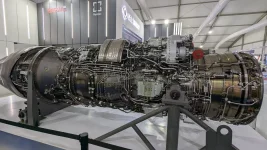
A key upgrade is the inclusion of a robust 1,130-horsepower engine, a significant step up from older models. This extra power provides superior mobility and acceleration, which are crucial for survival in tough combat environments, while also supporting heavier armour.
Additionally, the T-90MS sports a redesigned welded turret and advanced explosive reactive armour (ERA). These upgrades provide vastly improved defence against modern anti-tank missiles, shaped charges, and kinetic penetrators.
Firepower and targeting have also seen massive improvements.
The T-90MS is fitted with the advanced "Kalina" digital fire-control system, which dramatically boosts the accuracy of engaging targets while the tank is moving. Upgraded thermal imaging allows the crew to fight effectively in total darkness and severe weather.
Moreover, the tank features a commander's independent panoramic sight, granting a "hunter-killer" capability. This means the commander can spot and track new threats while the gunner is simultaneously destroying another target.
The tank is also integrated with a modern digital battlefield management system, allowing real-time data sharing with other units, artillery, and command centres to enhance overall situational awareness.
Beyond combat performance, the T-90MS offers better reliability, upgraded communication systems, and improved ergonomics to reduce crew fatigue during long missions.
For India, manufacturing this tank locally makes strategic sense. Since the Army already operates a massive fleet of T-90S tanks, the necessary maintenance infrastructure, supply chains, and crew training facilities are already in place.
Building the T-90MS at home would perfectly align with the government’s "Make in India" initiative, creating jobs and boosting domestic industrial capacity.
Even as India continues to develop its indigenous Arjun Mk1A and future tank projects, the T-90 family remains the core of its armoured strength. Inducting the T-90MS would seamlessly modernise the military's frontline capabilities while long-term domestic platforms are perfected.