India is taking decisive steps towards securing its airspace with homegrown technology through the ambitious long-range air defence initiative, Project Kusha.
Led by the Defence Research and Development Organisation (DRDO), this critical programme has gained significant momentum with the active participation of private sector major Solar Industries.
Recent reports indicates that the project is advancing rapidly, with the successful ground testing of dual-pulse rocket motors and the fabrication of the first interceptor missiles marking a major leap for India's self-reliance in military capabilities.
Understanding Project Kusha
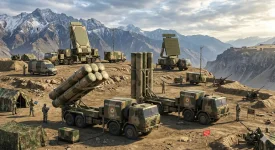
Also known as the Extended Range Air Defence System (ERADS), Project Kusha is designed to create a formidable, multi-layered shield against a wide variety of airborne threats.The mobile surface-to-air missile network will be capable of tracking and destroying enemy fighter jets, cruise missiles, drones, and ballistic missiles at distances of up to 400 kilometres.
While India currently operates highly capable imported systems—such as the Russian S-400, whose fourth squadron recently arrived in the country—Project Kusha aims to provide a comparable, fully domestic alternative.
This homegrown system will ensure greater strategic independence, uninterrupted lifecycle support, and better cost-effectiveness.
A Three-Tiered Defensive Shield
To efficiently neutralise different types of threats, the ERADS architecture relies on three distinct interceptor missiles.These missiles share a common kill vehicle but utilize different booster setups to achieve varying ranges:
- M1 Interceptor: Covering up to 150 km, this variant is primarily aimed at highly agile targets like fighter jets and cruise missiles. Reports suggest that the M1 missile has already been fabricated and is being prepared for its first fully integrated flight trials in the near future.
- M2 Interceptor: Extending the protective umbrella to 250 km, the M2 is specifically designed to engage stealth aircraft and high-speed threats.
- M3 Interceptor: The longest-range variant reaches out to 350–400 km, specifically targeting high-value airborne assets such as aerial refuellers and airborne warning and control systems (AWACS).
Crucially, Project Kusha will be fully integrated into the Indian Air Force's Integrated Air Command and Control System (IACCS), allowing it to communicate seamlessly with existing defence platforms like the Akash, Barak-8, and S-400 batteries.
The Crucial Role of Solar Industries
The inclusion of Solar Industries as a vital development and production partner highlights a major shift toward involving private enterprises in India's high-tech defence manufacturing.The company brings specialized expertise in the production of solid rocket motors and advanced propellants, and is notably contributing to the manufacturing of the booster for the M2 interceptor.
This collaboration not only significantly accelerates the overall development timeline but also strongly supports the "Atmanirbhar Bharat" initiative.
The company has already demonstrated its manufacturing readiness to senior military leadership, solidifying its growing role in advanced missile propulsion.
Financial Scope and Future Induction
Initially cleared with an estimated budget of ₹21,700 crore to equip the Indian Air Force with five squadrons, the scale of Project Kusha is expanding.As the system moves closer to reality, leading integration partners like Bharat Electronics Limited (BEL) anticipate potential orders reaching up to ₹40,000 crore, with the Air Force projecting an eventual requirement of up to 10 squadrons.
With initial operational capabilities targeted between 2028 and 2030, Project Kusha is poised to become the undisputed backbone of India's national security architecture.
Furthermore, by breaking the reliance on foreign suppliers for strategic air defence, the system is already drawing international attention and could open up highly lucrative export opportunities for India in the coming decade.