Following the anticipated completion of the Defence Research and Development Organisation's (DRDO) Netra Mk1A and Mk2 programmes, the Indian Air Force (IAF) is planning a major expansion of its airborne surveillance capabilities.
According to sources, the IAF aims to introduce a fleet of six next-generation Airborne Warning and Control System (AWACS) aircraft mounted on widebody Airbus A330 airframes after 2030.
Informally referred to as the "AWACS Mk3," this platform will be India’s first domestically developed system to offer seamless, 360-degree airborne radar coverage, ensuring persistent surveillance over the Chinese and Pakistani borders.
At present, India relies on three Israeli-built Phalcon AWACS mounted on Russian IL-76 heavy transport planes. While highly capable, this small fleet makes it difficult for the IAF to monitor its northern and western frontiers simultaneously.
This capability gap became evident during the 2019 Balakot airstrikes and the subsequent border standoff in Eastern Ladakh, where the lack of adequate 360-degree radar coverage hindered round-the-clock monitoring of enemy airspace.
In modern warfare, having uninterrupted radar tracking is essential to counter complex, multi-directional threats like stealth jets, drones, and long-range missiles.
The current Netra Mk1 and the upcoming Netra Mk2 rely on fixed radar antennas mounted on the aircraft's spine.
The ₹19,000 crore Netra Mk2 project—which was approved by the Cabinet Committee on Security in mid-2025—utilises modified Airbus A321 airframes.
While the Mk2 incorporates an additional nose radar to achieve nearly 300 degrees of coverage, it still possesses blind spots. In contrast, the envisioned AWACS Mk3 will feature a classic, circular rotodome elevated above the aircraft's fuselage on struts.
However, the technology inside this dome will be far more advanced than older mechanical systems.
Instead of a physically spinning dish, the new rotodome is expected to house a fixed, triangular Active Electronically Scanned Array (AESA) radar.
This setup allows for instantaneous 360-degree electronic scanning without the lag of mechanical rotation, significantly boosting target tracking speeds, refresh rates, and the ability to monitor multiple targets simultaneously.
The IAF has explicitly specified that this future radar must detect aerial threats from over 550 kilometres away.
Achieving this range will vastly improve the military's ability to track low-flying drones, stealth fighters, and enemy command planes deep within hostile territory, placing the Indian system among the world's most powerful AWACS.
Selecting the Airbus A330 for this massive radar is a strategic and practical move.
Compared to the narrower A321s and Embraer jets used for the Netra programmes, the widebody A330 offers substantially more interior volume, greater electrical power generation, and superior flight endurance.
This extra capacity is vital for powering high-performance computers, large cooling units, and multiple operator stations needed for complex battle management.
Furthermore, the A330's massive fuel capacity ensures the aircraft can stay on station much longer during wartime, maintaining a constant watch over vast regions.
Open-source reports have also previously indicated that an A330 platform offers the potential for mid-air refuelling capabilities, extending mission times even further.
This future Mk3 project is not meant to replace the ongoing Netra Mk2 development. Instead, the Mk2 is viewed as a vital intermediate step to build immediate capacity.
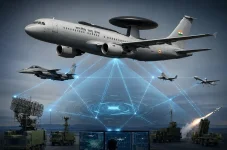
Once the larger 360-degree A330 AWACS arrive, both platforms will operate in tandem. Combined, they will create a dense, highly integrated aerial surveillance network tailored for modern, data-driven warfare.
Ultimately, introducing a fully integrated 360-degree AWACS will radically upgrade the IAF’s combat readiness. These flying command centres will manage complex air defence operations, guide interceptor jets over long distances, and provide crucial battlefield data.
Operating alongside ground-based air defence networks, satellites, and future unmanned combat drones, the A330 AWACS will secure India’s skies against evolving regional threats.