India has officially begun taking delivery of its fourth Russian-made S-400 Triumf air defence regiment, locally designated as the "Sudarshan Chakra."
The initial shipments recently arrived via sea routes, representing a vital enhancement to the nation's long-range airspace security.
The remaining hardware is anticipated to dock at various Indian ports over the coming days, with the complete handover of the fourth system projected to finish by the end of June 2026.
This progress comes after previous delivery timelines were affected by supply chain disruptions stemming from the Russia-Ukraine conflict.
Prior to shipment, Indian Air Force (IAF) personnel carried out comprehensive equipment inspections in Russia to ensure operational readiness.
Although military planners originally intended to position this fourth squadron in the central sector near the Chinese border, evolving security dynamics have prompted a strategic pivot.
The newly arrived system is now expected to be deployed along the western frontier bordering Pakistan.
This strategic realignment is specifically designed to eliminate a narrow but crucial gap in radar and interception coverage, supplementing the two S-400 units already actively guarding that region.
Out of the five regiments ordered under the landmark $5.43 billion contract signed in 2018, the current defensive posture dictates that three will monitor the western borders, while the remaining two will secure northern territories.
Driven by the platform's exceptional performance, the Defence Acquisition Council has already approved the purchase of five additional S-400 squadrons.
The Triumf system serves as the backbone of a comprehensive, multi-layered national air defence grid, seamlessly overlapping with indigenous platforms like Akash, MRSAM, and the future Project Kusha. The fifth and final regiment from the original order is slated for delivery by November 2026.
The strategic value of the S-400 was definitively proven during the intense 88-hour military confrontation with Pakistan in May 2025, known as Operation Sindoor.
Throughout the conflict, the system achieved historic operational milestones, including the interception of a high-value surveillance aircraft at ranges exceeding 300 kilometres, and the downing of a Pakistan Air Force JF-17 Thunder deep within hostile airspace.
The platform also highlighted its high survivability through rapid "shoot and scoot" tactics, allowing it to easily dodge enemy counter-fire.
Although hostile aircraft briefly capitalized on a temporary radar blind spot to drop munitions, the S-400 was ultimately the deciding factor in securing absolute air superiority for India.
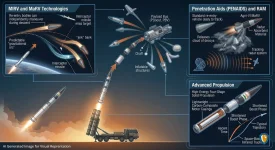
Built to counter a vast array of modern aerial dangers, the S-400 can simultaneously track and destroy fighter jets, cruise and ballistic missiles, drones, and low-observable targets at distances of up to 400 kilometres.
It represents a massive technological leap over older systems like the S-300, boasting an engagement speed that is two-and-a-half times faster.
Fully integrated into the IAF's Integrated Air Command and Control System (IACCS), this advanced capability ensures that India maintains an impenetrable and highly responsive protective shield over its most critical assets.