Bengaluru-based defence manufacturer SSS Defence has introduced a new lightweight, shoulder-launched missile concept integrated into its Varaha Counter-UAV System.
This development highlights the firm's strategic shift from small arms manufacturing into the domain of guided air defence.
Built as a specialized hard-kill interceptor, this compact weapon adds a vital engagement layer to the Varaha network, aimed at neutralizing low-altitude unmanned aerial vehicles (UAVs).
Positioned as a dedicated Man-Portable Air Defence (MANPAD) solution, the new missile is engineered strictly for countering drones rather than traditional combat aircraft.
While standard shoulder-fired missiles are built to take down fast jets or attack helicopters, this indigenous concept is fine-tuned to target the slower, low-flying profiles typical of commercial quadcopters, first-person view (FPV) drones, and tactical loitering munitions.
Technical details released by the company reveal a highly portable weapon system.
Measuring just 0.6 metres long with a 76.2 mm diameter, the missile weighs a mere 1.5 to 1.8 kilograms—a fraction of the weight of legacy MANPADs.
It utilizes a single-stage solid rocket motor for propulsion, while a canard-based flight control design ensures the rapid agility required to chase down erratic drone movements during final interception.
Performance estimates indicate the interceptor can reach speeds of 250 to 280 km/h, effectively engaging hostile drones hovering at altitudes of 150 to 250 metres.
This operational envelope perfectly matches the typical flight ceiling of battlefield observation and attack drones. Furthermore, its rapid lock-and-fire capability ensures soldiers can immediately counter sudden aerial ambushes before the threat closes in.
This missile acts as a complementary layer within the broader Varaha architecture, which boasts a 100% passive, zero-emission acoustic detection array. The system listens for drone signatures and triangulates their position without alerting the enemy.
Once a target is mandatorily confirmed via thermal imaging, the system's smart routing determines the best response.
The new MANPAD joins Varaha's existing suite of automated effectors, which includes Remote Controlled Weapon Stations (RCWS) and autonomous interceptor drones.
A multi-layered strategy ensures that varying drone threats are neutralized using the most economically viable method.
While close-range or smaller drones can be taken down by machine guns or drone-on-drone interception, this lightweight missile delivers a swift, kinetic punch for targets requiring immediate, extended-range elimination.
This development builds upon SSS Defence's growing footprint in the counter-UAS sector.
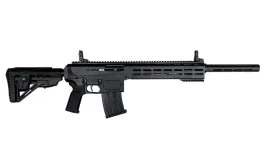
Recently, the Indian Army’s Northern Command inducted the company’s T-12 semi-automatic counter-drone shotgun.
Designed to fire specialized pellets capable of disabling drone rotors at 90 metres, the T-12 acts as the absolute last line of infantry defence.
The addition of a guided missile concept shows the firm is working to secure the airspace at extended ranges beyond the shotgun's reach.
The push for such specialized interceptors highlights a global shift in modern combat dynamics.
Deploying multi-million dollar Short-Range Air Defence (SHORAD) missiles against cheap, off-the-shelf commercial drones is financially unsustainable.
Consequently, militaries around the world are urgently seeking cost-effective, high-precision alternatives to counter the overwhelming proliferation of unmanned aerial systems.
While SSS Defence has kept the specifics regarding the missile’s seeker technology, guidance mechanisms, and production timelines under wraps, this concept strongly indicates the firm's pivot towards indigenous guided weaponry.
Once fully realized, this man-portable interceptor could serve as a formidable asset for the Indian Armed Forces and security agencies, significantly bolstering the protection of critical national infrastructure against evolving aerial threats.