Tejas Mk1A Export Prospects Brighten as GE Commits to Supply 20 F404 Engines Annually Starting FY 2026

Tejas Mk1A Export Prospects Brighten as GE Commits to Supply 20 F404 Engines Annually Starting FY 2026


India’s ambition to become a significant exporter of fighter aircraft has received a substantial boost following a firm commitment from US aerospace major General Electric (GE).

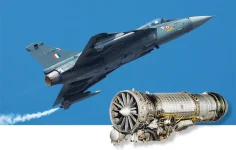
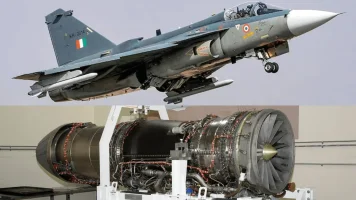
The company is set to supply 20 F404-IN20 engines annually starting from the 2026–27 financial year, with an initial batch of five engines scheduled for delivery before the end of March 2026.

This stabilisation of the supply chain addresses the primary bottleneck that had previously hampered both the induction of the jets into the Indian Air Force (IAF) and marketing efforts abroad.

Breaking the Supply Chain Gridlock​

The export campaign for the Tejas Mk1A—an advanced 4.5-generation light combat aircraft—had effectively been paused due to persistent delays in engine procurement.

These delays caused a knock-on effect, stalling the production schedule for the 83 jets ordered by the IAF in a ₹48,000 crore deal signed in 2021.

With the supply constraints now easing, Hindustan Aeronautics Limited (HAL) and the Ministry of Defence are preparing to reinvigorate their international sales strategy.

According to defence officials, the arrival of new engines will allow HAL to resume deliveries to the IAF by March 2026. The state-run manufacturer expects to hand over five jets by July of the same year.

This resumption of strict delivery timelines is crucial for restoring confidence in the production line, a key factor for potential international clients who prioritise reliability alongside performance.

A Vote of Confidence: The 97-Jet Order​

Bolstering the programme's credibility is the recent government approval for an additional 97 Tejas Mk1A fighters, a deal valued at approximately ₹62,370 crore ($7.5 billion).

This follow-on order is widely viewed within the defence establishment as a formal endorsement of the platform's maturity.

Unlike earlier iterations, this new batch will feature significantly higher indigenous content, including the locally developed Uttam Active Electronically Scanned Array (AESA) radar, which replaces the Israeli ELM-2052 used in earlier batches.

The aircraft will also incorporate an advanced electronic warfare (EW) suite known as 'Swayam Raksha Kavach', updated mission computers, and seamless integration with indigenous weapons such as the Astra beyond-visual-range air-to-air missile.

Ramping Up Production​

The resolution of the engine shortage has paved the way for higher production rates.

HAL has operationalised a third production line at its Nashik facility to complement its two existing lines in Bengaluru. With GE planning to increase deliveries to 24 engines annually from FY2027–28, HAL aims to scale its output to match this figure.

This expanded capacity is strategically vital. It ensures that HAL can allocate dedicated production slots for export orders without cannibalising the delivery schedule promised to the IAF.

Targeting the Global Market​

With production stability assured, India is eyeing markets in Southeast Asia, Africa, and Latin America. Many air forces in these regions are looking to retire ageing fleets of Cold War-era jets, such as the MiG-21, Northrop F-5, and Chinese F-7.

The Tejas Mk1A presents itself as a modern, cost-effective replacement that offers supersonic performance and low maintenance costs.

The aircraft’s value proposition includes a glass cockpit, AESA radar capabilities, and a potent strike package, making it an attractive option for nations seeking credible air defence without the high acquisition and operating costs associated with heavyweight twin-engine fighters.

Countries such as the Philippines and Egypt have previously shown interest in the platform, and the renewed supply certainty may help advance these discussions.

With the engine pipeline secure and the domestic order book swelling to over 180 Mk1A jets, the Tejas programme is poised to transition from a developmental success to a viable contender in the global defence market.
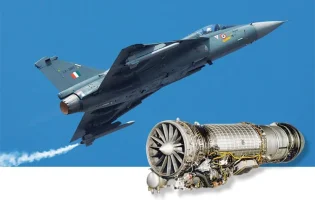
 
Happy to see the GE engine deliveries..... HAL can quickly ramp up it's production..... IAF worries will be solved.....

Kaveri Engine with 85KN & further improvements in power capabilities to 90KN will be a boost for Tejas programme....
 
Lets break it down:
1. Hindus do figure in top demography whereever they land as they lead by education, skills, hardwork and family values with benevalent kind nature. Stats in these countries prove it.
2. YES YES China is more corrupt than India RELATIVELY (not saying India not corrupt, as this corruption exisit in each nation, even in Singapore). Being 12-20 family owned personal property China blanket bans any news or info or corruption relation these families and pincelings. Do i have to eloborate that? tip of iceberg" NYT report: China leader Wen Jiabao's family " to low level directors multi-millions of ill-gotten money on display at Australian cities, sometime their brat flaunting around U$20-50 million assets being only uni students. so much material that this forum is too small. Google is your best friend if you are not in China.
India is lessor corrupt as Public media, noisy public, court and opposition keeps check on level of corruption. Indian prime minister and oppostion leader always discussed, watched and ridiculed and taken to court year long through their lives. ( long histrorysheet but recent Foreign min QIN disappeard and curent purge of top general are few to chew on!)
3.China done amazing job of moving billions into good life style, better ammunities and infra, thanks to COMMUNISM!! once High Chair signs agreement, project is done overnight no opposition or your family existence is wiped clean from Planet Earth. so they had advantage of moving with god speed to reach top second spot. I admire this system for advancement, their tech-espionage by hook or crook to advance, cyber-security, keeping check in muslims and Chrisitains are some of the aspect that helped them to accelerate. These measure not available to democracy like India(specially muslim appeasement and job reservation).
2.a Slow growth in Defence and overall:
Inda adopted Soveit socialism after 1947 and 1947-2014 British stooge were at helm in the name of Gandi family( they faked it as Gandhi). Statecraft of India severely compromised by them, civlisational history corrupted for sake of muslims appeasement. Severe punitive regulations used to keep indutrial eco-system under state control.
only SC/ST/OBC reservation based employees hired to man these state monopoly industries and result was Ambassdor car when world was zipping around in Ferraris(metaphor).
These workers were low skilled, mediocre and unprofessional, this cader still at play in Defence mil-industrial complex comprised of HAL+DRDO+ADA+DeptAtmoicEnergy_ISRO+OrdnenanceFactories.
Result is they cannot even make decent tank engine or assult rifle/ bullet-proof vest or hemat as of Feb 2026.
But private sector so capable to test launch cryo engine in less than 5 years under U$40million with only 300-500 employees. Provide satellited solutions to world with advance hyper-spectrum and AI.
Dept of Atmoic Energy is another Soveit era white elephant so yes India is poor because of political mismanagement. COVID vacs and suppy to world in short time shows the prowess.

But Chinese model doesnt allow such private innovation and success case in point Aliexpress Jack Ma, ambitions clipped by High Chair big daddy. Indian reform to unshackle private industries would give wings that China would be left in its wake in no time.
India fields unicorns in such adverse eco-system, think about open un-regulated environment would bring in 1000x more innovators and billionaires.

** point to think about during your TEA evening time
1. The People’s Liberation Army (PLA) serves the Communist Party of China (CPC) rather than the Chinese state, acting as the party’s armed wing. While it defends national interests, the PLA is under the absolute leadership of the CPC’s Central Military Commission (CMC), designed to secure Party rule, not to be a neutral state institution.
2. Chinese crown jewel: Bullet Train project corruption is classic case to teach kids in uni about corruption and consequences of it. its nice infra and i used it but U$$ paid for it and project delivered screams CORRUPTION and it STINKS!!!
3. Realestate Evergrande: U$310Billions swindled and you are arguing Chinese corruption is less than India!!
Indians are indeed naive and simplistic. They oversimplify issues, believing that "Indian reforms will liberate private enterprises, and China will soon be left behind." They also think that "by entrusting weapons research and development to private enterprises, they can solve all problems.".
 

Forum statistics

Threads
6,257
Messages
62,472
Members
4,903
Latest member
sushRJ
Back
Top