- Views: 2K
- Replies: 3
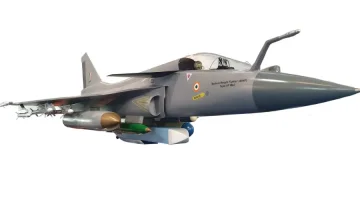
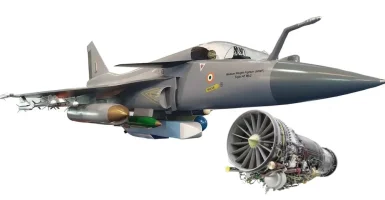
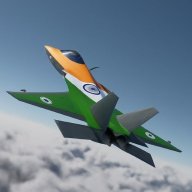
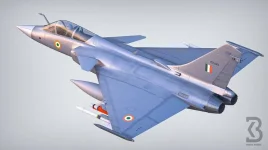
The upcoming Tejas Mk2 fighter jet is set to feature a revolutionary Open Architecture Avionics (OAA) suite, marking a significant leap forward in India's aerospace capabilities.
Developed by the Aeronautical Development Agency (ADA) and Hindustan Aeronautics Limited (HAL), this new framework transitions the aircraft away from restrictive, vendor-specific systems toward a Modular Open Systems Approach (MOSA).
Based on operational feedback from the Tejas Mk1 and guided by recent procurement requests, such as the October 2025 Auxiliary Mission Computer (AMC) initiative, the Mk2's electronics are built for rapid modernisation.
This ensures India maintains complete sovereign control over its critical combat systems without relying on foreign "black boxes" over the jet's expected 30-year service life.
At the heart of this technological leap is a novel three-tiered computing structure designed to separate the aircraft's flight controls from its combat systems.
The Digital Flight Control Computer (DFCC) acts as the foundation, managing the complex physics of flight and keeping the aircraft stable.
Because it is strictly insulated, it does not require time-consuming safety recertifications every time a new combat feature is added.
Above this sits the Mission Management and Display Computer (MMDC), which serves as the tactical brain handling navigation, weapon deployment, and pilot displays.
To guarantee survival in contested environments, the system introduces a third layer: an active Auxiliary Mission Computer (AMC).
Connected via high-speed data links, this new computer functions as a real-time backup, ready to instantly assume the duties of either the flight or mission computers if they suffer damage or electronic interference.
One of the most crucial benefits of the OAA is its Universal Armament Interface (UAI), which allows for true "plug-and-play" weapon integration.
In older generations like the Mk1, integrating state-of-the-art indigenous munitions—such as the Astra Beyond Visual Range (BVR) air-to-air missile or the Rudram anti-radiation missile—required extensive, costly rewrites of the aircraft’s core software.
The Tejas Mk2 eliminates this hurdle by treating new weapons as independent software applications housed within secure digital partitions.
The fighter's systems can instantly recognise the new weapon's profile and display it seamlessly to the pilot.
This vastly reduces testing timelines and allows the Indian Air Force to rapidly arm the jet with the latest domestic and international smart weapons without grounding the fleet for massive software overhauls.
To support these advanced capabilities, the Tejas Mk2 is upgrading its internal data networks from the older MIL-STD-1553B standard to high-speed, modern fibre-optic connections similar to Gigabit Ethernet.
This massive increase in bandwidth makes "true sensor fusion" a reality.
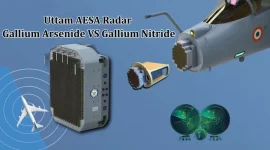
Rather than relying on the pilot to manually interpret separate screens, the avionics automatically combine data from the indigenous Uttam Active Electronically Scanned Array (AESA) radar, internal Infrared Search and Track (IRST) sensors, and the Unified Electronic Warfare Suite (UEWS).
The result is a single, clear tactical picture. Furthermore, the system boasts "graceful degradation"; if an enemy manages to jam the main radar, the computer smoothly shifts reliance to the IRST and electronic warfare sensors to track targets, ensuring the pilot never loses situational awareness.
The strategic impact of the Tejas Mk2’s open architecture extends far beyond its own operational capabilities.
By establishing this framework, the Mk2 acts as a vital testing ground for India's upcoming fifth-generation fighter, the Advanced Medium Combat Aircraft (AMCA).
Successfully proven hardware and software modules from the Mk2 can be directly transferred and enhanced for the AMCA, drastically reducing development risks for future technologies like expanded sensor suites and manned-unmanned teaming.
Ultimately, compared to the older federated designs of the Mk1 and Mk1A, the Tejas Mk2 delivers unmatched triple redundancy, superior data processing, and AI-assisted combat awareness.
This ensures that the fighter can receive vital software updates in a matter of months rather than years, keeping India's aerial defence at the absolute cutting edge of modern warfare.