Analysis Tejas Mk2 vs. Global Rivals: How India’s 4.5-Gen Fighter Compares in Power, Cost, and Export Appeal

From Cost-Effectiveness to Superior Tech, How Tejas Mk2 is a Formidable Challenger to Leading Global 4.5-Gen Multirole Fighters


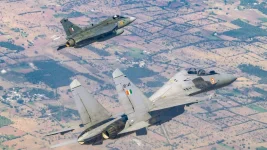
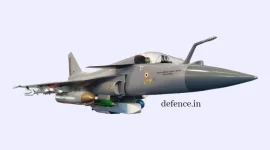
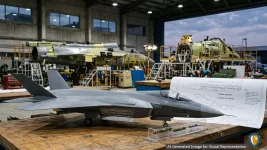
The Aeronautical Development Agency (ADA) and Hindustan Aeronautics Limited (HAL) are rapidly advancing the Tejas Mk2, transforming it from its light-combat origins into a 17.5-tonne Medium Weight Fighter (MWF).

Built to replace aging Indian Air Force fleets like the Mirage 2000, Jaguar, and MiG-29, this 4.5-generation multirole jet is now positioned to challenge established global aerospace leaders.

Tejas Mk2 vs. Lockheed Martin F-16 Block 70​

  • The Competitor: The F-16 Block 70 brings decades of combat history, massive international production, and a vast global footprint.
  • The Indian Advantage: While the F-16 relies on its combat pedigree, the Tejas Mk2 introduces a fresh, open-architecture avionics suite, advanced sensor fusion, and close-coupled canards for superior turning agility. By utilizing indigenous hardware and software, India bypasses restrictive foreign export controls and end-user agreements, ensuring unlimited and independent future upgrades.

Tejas Mk2 vs. Saab Gripen E​

  • The Competitor: Sweden’s Gripen E shares a similar design philosophy, prioritizing low operational costs alongside robust electronic warfare and network-centric combat capabilities.
  • The Indian Advantage: Though the Gripen E is already active, the Tejas Mk2’s localized manufacturing offers India unmatched control over its supply chain and drastically lower maintenance costs over the aircraft's lifespan. This domestic ecosystem also ensures seamless, unrestricted integration of homegrown weapons, such as the Astra series of beyond-visual-range (BVR) missiles.

Tejas Mk2 vs. Dassault Rafale​

  • The Competitor: France’s Rafale is a heavyweight, twin-engine fighter famous for executing complex multirole missions and carrying massive weapons payloads.
  • The Indian Advantage: The Rafale operates in a heavier, far more expensive category. The Tejas Mk2 delivers comparable high-end technologies at an estimated cost of $70–80 million per unit—a fraction of the Rafale's price. Featuring the indigenous Uttam AESA radar, which utilizes modern Gallium Nitride (GaN) technology, and 11 hardpoints capable of holding a 6,500 kg payload, the Mk2 serves as a highly capable, cost-effective backbone in a mixed fleet.

Tejas Mk2 vs. Boeing F/A-18E/F Super Hornet​

  • The Competitor: The twin-engine Super Hornet is fundamentally a naval specialist, built heavily and ruggedly to survive the extreme physical forces of aircraft carrier operations.
  • The Indian Advantage: Operating as a single-engine fighter, the Tejas Mk2 is optimized strictly for land-based missions. It focuses on high-speed maneuverability, rapid air defense, and precision ground attacks, aligning perfectly with the geographic and strategic realities of the Indian subcontinent.
The Tejas Mk2 is advancing toward its maiden flight following extensive structural and avionics validations.

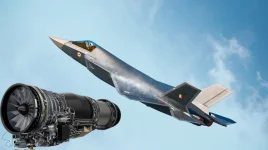
It will be driven by the General Electric F414-INS6 engine, which generates 98 kN of thrust and is part of a landmark agreement transferring up to 80% of engine manufacturing technology to India.

Combined with next-generation domestic armaments like the long-range Astra MK2 and the Rudram anti-radiation missiles, the Mk2 secures India’s airspace while presenting a highly affordable, top-tier alternative for international buyers looking to avoid the massive financial commitments of Western jets.
 
To me the obvious competitor to Tejas Mk2 is Gripen E. If the cost of the aircraft itself is kept low, I see Tejas Mk2 having the advantage of low cost Indian weapons. If the cost of spares, training, SIM etc are lower than for Gripen E it should be an attractive solution for some countries. HAL's reputation, however, may handicap its chances. No customer wants to sign a deal with an unreliable supplier if there is an alternative, reliable supplier available.
 
Last edited:
Except that it's still a paper tiger.

First and foremost, India must stop copying French design. Sheesh seriously..show the diff.. start from retractable refuel probe
 
Except that it's still a paper tiger.

First and foremost, India must stop copying French design. Sheesh seriously..show the diff.. start from retractable refuel probe
Time will tell whether it is paper tiger or game Changer. Without a single flight of the aircraft, you started criticising. It is shows that you want only imported jets and the country should not work for self reliance.
 
It is advisable to go with the su57 wholeheartedly as we will acquire new technology from a proven partner. Let india not forget we owe our survival to Russia. The US and the treacherous UK have always sided with Pakistan. In the past and today. NEVER EVER FORGET THAT. DO NOT FORGET THE GENOCIDE OF THE INDIAN BEGALIES BY THE FAT BASTARD CHURCHILL. HOPE HE NEVER FINDS PEACE
1.5 MILLION STARVED TO DEATH BECAUSE OF HIM. Nothing has ever been mentioned in our history books. Never mentioned in school, , sad but true. Russia has always stood by us they gave us blue prints for our nuclear submarine, we owe them for rocket technology when the world treated us like pariah. 250usd million for 1 Rafale ? When the world is already into 20000 dollar drones? I have limited knowledge in this regard. Our aim should be towards the SU 57 with a high tech mica coating on it. But again am just a simple Indian. GOD BLESS MY BHARAT.
 
Time will tell whether it is paper tiger or game Changer. Without a single flight of the aircraft, you started criticising. It is shows that you want only imported jets and the country should not work for self reliance.
It does not show a love for imported jets.

What it does show is talk less, get the damn jet in the air already.

The only thing it has to show so far is delays. Get that damn thing in the air and then debate whether it can compete or not. Get it in the air before other 4.5 gen jets are retired for it to compete.
 
This whole article is rather pointless! Of course Tejas Mk.2 will have advantages in its home market. Put it head to head with the Gripen E and F in the international market and there's no contest whatsoever. As they say; A bird in the hand is worth two in the bush. The E is already in production and delivery has started plus it backed by 30 years of the earlier Mk's being on the market and having all the bugs worked out. That's still a long time in the future for both Mks. of th Tejas.
 

Forum statistics

Threads
8,016
Messages
68,383
Members
5,774
Latest member
rohit kumar
Back
Top