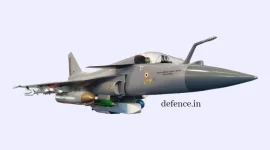
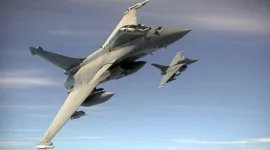
A recurring debate within the Indian defence community has recently resurfaced, questioning whether Hindustan Aeronautics Limited (HAL) and the Aeronautical Development Agency (ADA) should develop a semi-stealth interim version of the Tejas.
This proposed variant would feature a redesigned, low-observable exterior fuselage alongside a compact internal weapons bay.
The core objective of this theoretical project would be to serve as a stopgap measure for the Indian Air Force (IAF) before the fifth-generation Advanced Medium Combat Aircraft (AMCA) is fully operational.
While this idea appears highly attractive in theory, it is not a completely novel proposition.
The concept actually dates back over a decade. During the Aerospace Forum in Sweden in June 2012, the former chief of the DRDO, Dr. V.K. Saraswat, publicly suggested developing a stealthier Tejas variant, which he labelled the Mark 3.
His vision involved transferring advanced technologies directly onto the existing Light Combat Aircraft (LCA) platform, including upgrading the aircraft's composite material content to nearly 70 percent to drastically lower its radar visibility.
This approach aimed to utilise next-generation stealth research immediately, rather than waiting for the AMCA's full maturation. However, like many bold internal initiatives within India's defence sector, the Mark 3 concept was ultimately sidelined.
It is important to acknowledge that the current baseline design of the Tejas Mk2 already incorporates significant stealth characteristics, even without enclosed weapons carriage.
Engineers have heavily utilised radar-absorbent composites and aerodynamic shaping to reduce the aircraft's frontal Radar Cross-Section (RCS) to an estimated 0.1 to 0.2 square metres when flying without external stores.
This represents a massive 75 percent reduction in radar visibility compared to the current Tejas Mk1A, placing the Mk2 on par with advanced 4.5-generation fighters globally.
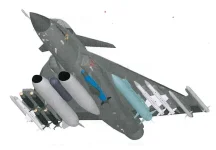
The fundamental limitation, however, is that the Mk2 utilises 11 external hardpoints to carry its payload. Once missiles, bombs, and drop tanks are attached to the wings, the aircraft's radar signature dramatically increases, nullifying its clean-configuration stealth advantages.
Integrating a heavily modified outer stealth fuselage and a small internal weapons bay would directly resolve this vulnerability.
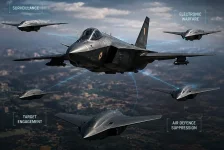
By hiding munitions inside the aircraft, it could perform limited air-to-air engagements or precision strikes without external pylons exposing its location to enemy radar.
This theoretical internal bay would not require the large payload capacity planned for the AMCA; accommodating just two beyond-visual-range missiles or a pair of smart bombs would be sufficient.
Such a capability would drastically improve the fighter's survivability during critical operations in highly contested airspace, a scenario where a standard, fully-loaded Tejas Mk2 would be easily detected.
Similar evolutionary concepts are being pursued globally, such as South Korea's plan to evolve its KF-21 fighter from external carriage in Block 1 to internal weapons bays in the future KF-21EX variant to improve penetration capabilities.
Nevertheless, engineering an internal bay into an airframe that was not originally designed to accommodate one is an exceptionally complex task.
It requires a complete redesign of the fuselage's structural load paths, relocating internal fuel tanks, and integrating complex door mechanisms that can rapidly open and close in mid-air while maintaining a low radar signature.
Because of these immense structural challenges, such retrofits are rarely executed. Furthermore, the most significant barrier is not technological, but operational capacity.
The combined engineering workforce of ADA and HAL is currently stretched to its maximum limits managing the ongoing Tejas Mk1A deliveries, preparing the standard Tejas Mk2 for its maiden flight, and accelerating the AMCA's critical design phase.
Diverting vital engineering resources to launch a parallel semi-stealth Tejas Mk3 project could severely delay the existing, higher-priority fighter programmes.
Ultimately, while the idea of a semi-stealth Tejas Mk3 is strategically sound and has historical backing from senior defence scientists, the primary roadblock is the lack of organisational bandwidth.
India's aerospace institutions must prioritise their primary fighter timelines to counter dwindling squadron numbers.
Unless the Mark 3 concept is managed as a highly classified, low-cost parallel research initiative that does not drain manpower from the main production lines, it is unlikely to materialise.
Without a dedicated external engineering team, this modern iteration of the Mk3 will likely suffer the exact same fate as the 2012 proposal: remaining a brilliant concept that never takes flight.