- Views: 43
- Replies: 1
In a significant development following a newly minted trilateral defence alliance, Turkish military transport planes have reportedly delivered hundreds of armed drones to a key Pakistani airbase.
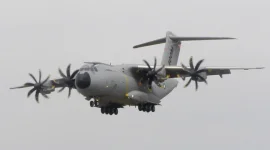
On August 18 and 19, 2026, a Turkish Air Force A400M transport aircraft completed multiple back-to-back trips from Istanbul to Pakistan's PAF Base Murid, a central hub for unmanned aerial operations.
Open-source intelligence analysts claim these flights brought an estimated 850 Asisguard Songar armed drones to the facility.
Flight tracking systems revealed a clear path for the Turkish A400M, which traveled through Afghan airspace before touching down in Pakistan.
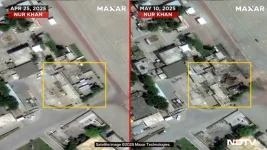
This delivery was part of a larger, 60-hour logistical surge. During this window, numerous Turkish C-130 Hercules and A400M cargo planes, operating alongside Chinese Y-20 heavy transports, landed at Pakistani military airbases including Nur Khan, Masroor, and Murid.
The concentrated nature of these flights suggests an urgent military resupply effort rather than standard training exchanges.
The choice of PAF Base Murid in Punjab's Chakwal district is highly notable. The facility is Pakistan's primary command center for combat drones, including Bayraktar systems.
Murid sustained significant damage from Indian strikes—including supersonic BrahMos cruise missiles—during the brief India-Pakistan military conflict known as "Operation Sindoor" in May 2025.
Bypassing other bases to deliver new drone technology directly to a previously targeted site signals a determined effort by Islamabad to restore its aerial capabilities at the exact locations degraded by Indian forces.
According to defense analysts, the cargo included three specific variants of the Asisguard Songar, Turkey's first domestically produced armed drone system. The estimated breakdown consists of:
- 400 Songar MG: Equipped with a 5.56×45mm NATO automatic machine gun featuring a built-in stabilizer and recoil damping.
- 400 Songar MG GL: Armed with both a machine gun and a 40mm grenade launcher capable of targeting up to 450 meters.
- 50 Songar Togan: A heavy-payload model integrated with an 81mm air-dropped mortar, boasting a lethal blast radius of 35 meters.
While it is not designed for long-distance strategic strikes, a fleet of 850 units provides a substantial swarm capability for border surveillance and counterinsurgency.
Pakistan is already highly familiar with this hardware; during the 2025 conflict, Pakistani forces deployed roughly 300 to 400 Songar drones against Indian positions, many of which were intercepted. This recent shipment indicates a massive replenishment of those wartime losses.
This rapid military resupply is heavily tied to the Mecca Joint Defence Agreement, a landmark collective security pact signed by Pakistan, Turkey, and Saudi Arabia on August 7, 2026.
The treaty effectively pools Saudi financial backing, Turkish defense technology, and Pakistani military manpower into a united front.
Reports indicate that during the negotiations in Saudi Arabia, Pakistan’s military leadership explicitly requested drone replacements from Turkish President Recep Tayyip Erdoğan to make up for the heavy attrition suffered in 2025.
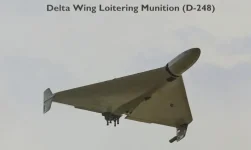
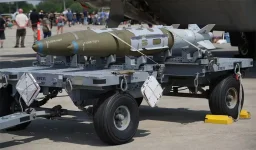
Beyond the Songar systems, defense sources suspect the shipments may have also secretly carried loitering munitions, upgraded Bayraktar TB2 drones, and AI-guided cruise missiles.
These assets were reportedly moved under the cover of darkness to avoid satellite detection and dispersed to military facilities in Rawalpindi and Bahawalpur.
While the heavy transport flights from Turkey and China to Pakistani bases are confirmed by global flight tracking data, neither Ankara nor Islamabad has officially verified the specific cargo contents.
The exact figure of 850 drones remains an open-source estimate based on payload capacities and operational needs.
However, the overarching reality remains clear: backed by a new multinational defense pact, Pakistan is swiftly and substantially rebuilding its drone warfare fleet using advanced Turkish hardware.