- Views: 3K
- Replies: 9
The Advanced Medium Combat Aircraft (AMCA)—India’s ambitious stride into the realm of fifth-generation stealth fighters—has recently dominated defence headlines.
Much of the discourse has focused on reports that Hindustan Aeronautics Limited (HAL) has been excluded from the initial prototype and development phase.
Instead, major private conglomerates such as Tata Advanced Systems, Larsen & Toubro (L&T), and Bharat Forge have emerged as the frontrunners to partner with the Aeronautical Development Agency (ADA).
While this marks a historic pivot away from HAL’s traditional monopoly over fighter production, a crucial aspect of the narrative remains largely overlooked: HAL has already embedded a significant portion of its engineering DNA into the AMCA’s design.
Although the ADA, operating under the Defence Research and Development Organisation (DRDO), serves as the primary architect for the AMCA’s core stealth geometry and aerodynamics, HAL has been far more than a silent spectator.
Senior leadership at the state-owned enterprise, including Chairman and Managing Director D.K. Sunil, has revealed that HAL is responsible for approximately 20-25% of the aircraft’s overall design work.
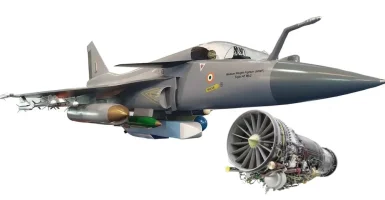
This contribution is not merely theoretical; it leverages the practical, hard-won expertise HAL has gained from decades of managing the Tejas Light Combat Aircraft (LCA) and the Dhruv helicopter programmes.
HAL’s engineering footprint is visible in some of the most critical subsystems of the stealth fighter. The organisation has collaborated closely with ADA on the stealth-optimised airframe, utilising advanced carbon composites and radar-absorbing materials essential for reducing the aircraft's visibility to enemy sensors.
Furthermore, HAL has played a pivotal role in designing the avionics suite, including the mission computers, cockpit displays, and electronic warfare systems, adapting proven technologies from the Tejas Mk1A upgrades.
The company has also been involved in the fabrication of complex structural elements, such as the leading-edge sections, which require specialised manufacturing techniques to meet fifth-generation standards.
The government’s decision to look beyond HAL for the prototype phase is driven by logistical pragmatism rather than a lack of confidence in the PSU’s technical abilities.
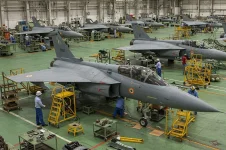
The primary factor is HAL’s massive order book, which currently stands at nearly eight times its annual revenue—far exceeding the "3x revenue" limit set by the selection committee for the AMCA prototype bid.
With urgent commitments to deliver over 180 Tejas Mk1A jets, accelerate the LCA Mk2, manufacture Prachand combat helicopters, and assemble GE F414 engines, HAL’s production lines are operating at maximum capacity.
Bringing in private players is a strategic move to ensure the AMCA project adheres to strict timelines, aiming for a prototype rollout around 2028-29 without overburdening the existing aerospace infrastructure.
Ultimately, this shift represents an expansion of India’s aerospace capabilities rather than a replacement of HAL.
While private firms may construct the initial prototypes to prove the concept, HAL has indicated it will aggressively bid for the mass production contracts anticipated in the mid-2030s. At that stage, its unparalleled infrastructure for scaling up fighter manufacturing will be indispensable.
The emerging model for the AMCA project—combining ADA’s design leadership, HAL’s subsystem expertise, and the private sector’s agility—signals the maturation of a true national defence ecosystem under the vision of Aatmanirbhar Bharat.