- Views: 2K
- Replies: 2
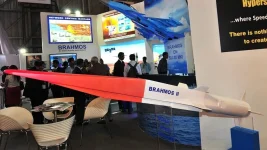
According to Dr. Sudhir Mishra, former Managing Director and Chief Executive Officer of BrahMos Aerospace, the BrahMos supersonic cruise missile stands as one of the hardest projectiles to intercept globally.
This is largely due to its distinct blend of extreme velocity, low-level flight patterns, minimal radar visibility, and its ability to shift direction during the final stages of its strike.
In an interview with Sputnik India, Dr. Mishra highlighted that the weapon was purpose-built to defeat contemporary air defence networks. It achieves this by severely limiting the timeframe an opponent has to spot, follow, and shoot down the incoming threat.
One of the most significant assets of the missile is its incredible speed, which falls in the Mach 3 category. Flying at nearly three times the speed of sound drastically shortens the response time available to an enemy air defence system.
Once the missile appears on radar screens, defending forces have just a small window of seconds to recognise the danger, prepare their interceptors, and launch countermeasures.
However, velocity is not the only reason the weapon is so hard to stop. Dr. Mishra pointed out that the missile travels extremely close to the ground or the surface of the ocean, especially as it approaches its target.
This "sea-skimming" or "terrain-hugging" approach keeps the projectile hidden beneath the radar horizon for the majority of its journey, ensuring that it remains undetected until it is dangerously close.
Adding to its stealth, the missile features a compact radar cross-section. This makes it incredibly hard for enemy surveillance systems to maintain a steady lock on the weapon.
The combination of flying close to the surface and remaining somewhat invisible on radar creates a highly complex situation for even the most advanced integrated air defence grids.
Furthermore, Dr. Mishra emphasised the missile's exceptional agility. While traditional ballistic missiles follow a set and predictable arc as they fall towards their target, this cruise missile can execute sharp, unpredictable movements during the final moments of its flight.
Such evasive actions make it exceptionally difficult for defensive systems to calculate an interception path, lowering the chances of a successful shoot-down.
Created through a joint venture between India and Russia, the missile is currently recognised as one of the fastest operational supersonic cruise missiles in existence.
It serves in various roles across the Indian Army, Indian Navy, and Indian Air Force, with versions launched from the ground, naval vessels, submarines, and aircraft. The weapon has also made its mark internationally, with the Philippines acquiring it to bolster its coastal security.
The system has seen constant enhancements over time, featuring better precision, a higher percentage of locally made components, and extended ranges.
Open-source reports indicate that India is currently testing an extended-range variant capable of striking targets up to 800 kilometres away, expected to be fully ready by late 2027.
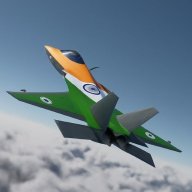
Meanwhile, work is progressing on the BrahMos-NG (Next Generation). This upcoming version will be smaller, lighter, and capable of reaching speeds up to Mach 3.5, allowing it to be carried by a wider variety of fighter jets, including the indigenous Light Combat Aircraft (LCA) Tejas. Initial flight trials for the NG variant are anticipated around 2026.
While military experts acknowledge that no weapon is completely immune to interception—especially against layered, modern defence networks—the probability of stopping a threat relies heavily on its speed, radar signature, flight path, and agility. By excelling in all four areas, this supersonic cruise missile remains one of the toughest challenges for any modern military to face.
Dr. Mishra’s insights reinforce the weapon's status as a vital component of India's strategic deterrence, maintaining its reputation as a formidable tool against highly sophisticated air and missile defence shields.