- Views: 3K
- Replies: 17
The shortfall in the Indian Air Force's (IAF) combat aircraft inventory is fundamentally an issue of sheer volume, not just a lack of advanced technology.
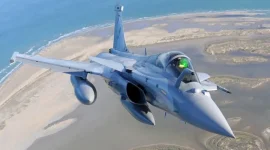
While the induction of 36 French-made Rafale jets—forming exactly two squadrons—brought a substantial qualitative boost to the fleet, it failed to reverse the overall decline in squadron numbers.
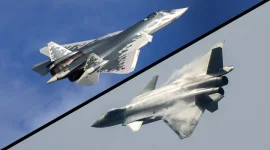
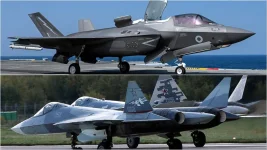
As New Delhi evaluates the potential purchase of Russia's fifth-generation Su-57 stealth fighter, limiting the acquisition to merely two squadrons would again yield restricted operational advantages.
Presently, the IAF's combat strength has dwindled to roughly 29 to 31 active squadrons, drastically falling short of the government-mandated 42 squadrons required to tackle a two-front threat.
Furthermore, this gap is poised to widen as legacy fleets, including the ageing Jaguars—which are set to begin retirement around 2028—along with the MiG-29s and Mirage-2000s, are phased out over the coming decade.
Therefore, the crisis demands a comprehensive restoration of overall fleet numbers, rather than just the piecemeal addition of highly capable jets.
The recent Rafale procurement perfectly highlights this dilemma. These 36 fighters introduced formidable capabilities to the region, such as cutting-edge sensors, long-range Meteor air-to-air missiles, and superior electronic warfare suites.
Yet, they were unable to shift the fundamental numerical disadvantage confronting the IAF. While they fortified specific combat zones, the wider fleet shortage remained completely unresolved.
This exact principle applies to the ongoing discussions surrounding the Su-57.
Procuring just two squadrons—comprising about 36 to 40 aircraft—would certainly provide the IAF with elite platforms for critical tasks like suppressing enemy air defences, executing deep-penetration bombing strikes, and ensuring air superiority.
Nevertheless, such a limited number would still represent only a tiny fragment of the country's total fighter force.
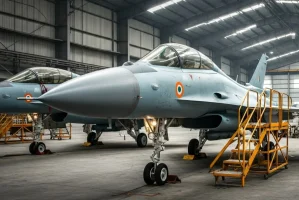
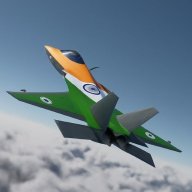
If the objective is to establish a credible and robust fifth-generation presence before the domestic Advanced Medium Combat Aircraft (AMCA) is ready for mass production—currently projected for the mid-2030s—a far more substantial order is necessary.
Procuring four to five squadrons, equating to roughly 72 to 90 aircraft, would deliver a much more profound strategic impact.
A fleet of this magnitude would permit simultaneous operations across multiple combat theatres, while comfortably accommodating routine maintenance, training schedules, and crucial operational reserves.
Furthermore, committing to a larger fleet offers significant industrial and economic benefits.
A substantial order of 72 to 90 jets could be tied to domestic assembly, comprehensive technology transfer, and joint production agreements.
Scaling up the numbers traditionally lowers the cost per aircraft and fosters the creation of local maintenance, repair, and overhaul (MRO) facilities, thereby strengthening the indigenous aerospace ecosystem.
Crucially, however, any massive investment in foreign platforms like the Su-57 must be carefully calibrated to align with India's primary long-term goal: the successful deployment of the AMCA.
A large-scale foreign purchase should act as a reliable capability bridge while the indigenous fifth-generation jet undergoes its development and testing phases, ensuring it supports—rather than derails—India's ultimate pursuit of self-reliance in aerospace defence.