India and the United Arab Emirates (UAE) are quickly becoming home to one of the biggest networks of Rafale fighter jets in the world.
This growth presents significant chances for both nations to work together on repairing, maintaining, and supplying these aircraft over the long term.
Currently, the Indian Air Force flies 36 Rafale jets, and the Indian Navy is preparing to bring in 26 Rafale Marine fighters. Additionally, India is discussing the purchase of 114 more planes under the Multi-Role Fighter Aircraft (MRFA) initiative.
Meanwhile, the UAE has ordered 80 of the advanced Rafale F4 models.
If all these plans go through, the total number of Rafales in the region could pass 250.
Having so many of these high-tech jets completely changes how countries manage the costs of keeping them flying. In the past, countries had to send their planes back to France for major repairs.
However, with so many Rafales now located around the Indian Ocean and the Gulf, it makes financial and practical sense to build local repair hubs that can serve several nations at once.
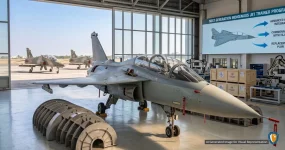
A major step toward this goal is the decision by Safran Aircraft Engines to open a maintenance and repair facility in Hyderabad, India, by the end of 2026.
This centre will focus on the M88 engine, which is the powerhouse behind every Rafale jet across the globe. Keeping these engines in top condition is essential for making sure the planes are always ready to fly.
The upcoming Hyderabad plant will be the first specialised military M88 repair centre located outside of France. It is designed primarily to service India's planes but will also have the capacity to help other countries in the region that fly the Rafale.
The UAE is set to have one of the largest Rafale fleets outside of France. Having a repair centre just a short flight away in India offers them huge practical benefits.
When engine parts need serious work, they can be flown to India much faster than sending them all the way to Europe. This faster turnaround means the UAE's fighter jets will spend less time grounded in hangars and more time available for duty.
Furthermore, Dassault Aviation has partnered with Tata Advanced Systems Limited (TASL) to build key structural parts and fuselage sections for the Rafale right in Hyderabad, India. The first Indian-made fuselage is expected to be completed by 2028.
This expanding manufacturing network creates a dependable, local supply of replacement parts and building skills, moving away from past reliance on other firms.
As India’s aviation manufacturing sector grows stronger, other countries in the region will benefit greatly. They will be able to get the parts they need much faster, without having to rely on long and complicated shipping routes from Western countries.
In addition to the aircraft itself, the European company MBDA is working with India to improve local maintenance for the MICA air-to-air missile, which is one of the main weapons carried by the Rafale.
By setting up local facilities to inspect, fix, and eventually completely overhaul these missiles, India can better manage its own weapon stockpiles.
This also opens the door for India to offer the same repair services to neighbouring nations that use the same missile system.
Naturally, providing repair services to other countries would require specific legal contracts and official export permissions.
However, the rapidly growing base of technical knowledge and repair skills in India lays a strong foundation for supporting the entire region's defence needs.
If India begins repairing Rafales for other countries, it will benefit financially through economies of scale.
When there is a higher demand for spare parts and technical help, the overall cost of running the repair facilities is spread out over more aircraft, making everything cheaper per jet.
This cost-saving will be especially helpful if the Indian Air Force buys the extra 114 fighters it is currently considering.
Building a massive repair and manufacturing network also boosts India’s aviation industry for the future.
The highly trained workers, special tools, testing centres, and engineering knowledge gained from working on the Rafale can be used later to build and fix India's own homegrown aircraft, such as the Tejas Mk2 and the Advanced Medium Combat Aircraft (AMCA).
For the UAE, the alternative to sending jets thousands of kilometres away to Europe is working with a reliable nearby partner like India, which already has deep experience flying the Rafale.
The shorter travel distance means major repairs happen faster, ensuring that Abu Dhabi’s military is always ready to respond, especially during times of tension in the region.
The relationship between India and the UAE is already strong, with the two nations regularly conducting joint military exercises and high-level talks.
Because both countries will soon fly very similar versions of the Rafale, they have excellent opportunities to train their pilots together, share maintenance crews, and plan joint military strategies.
The Indian Air Force stands to learn a lot from the UAE’s cutting-edge Rafale F4 models, which feature major upgrades in digital connectivity, electronic warfare, and modern sensors.
On the flip side, UAE pilots would benefit from India's vast experience in real-world operations, massive training exercises, and different flying environments.
These shared experiences do more than just prepare the pilots for combat. They also help both air forces develop shared methods for fixing the planes, planning supply chains, and setting high technical standards.
Another key factor bringing the two countries together is Dassault Aviation’s shift toward Performance-Based Logistics (PBL).
Under these new types of contracts, the manufacturer does not just sell spare parts; they promise to keep a specific number of planes ready to fly at all times.
To do this, the manufacturer takes on the heavy lifting of scheduling repairs, managing parts inventories, and running the repair networks efficiently.
To make these guarantees work, having a repair hub in the region is completely necessary. By putting major repair centres in India, companies like Dassault and Safran can fix problems much faster.
This cuts down on shipping costs and ensures that the countries owning the jets always have enough planes ready for duty.
India’s large population of trained engineers and its rapidly growing aviation factories make it a very attractive location for these repair hubs.
Because it costs less to operate in India and there are plenty of skilled workers, the country is quickly becoming a highly competitive, long-term centre for aircraft maintenance.
However, the final size of this shared repair network still depends on a few things that haven't happened yet. For example, India has not yet signed the final contract to buy the 114 additional Rafales.
Also, whether India’s factories can actually fix planes for other countries will depend heavily on the final business deals struck between the aircraft manufacturers, engine builders, weapon suppliers, and the purchasing governments.
As India builds more aviation factories and the UAE brings its massive new fleet of Rafale F4s online, both nations are perfectly placed to create a repair and supply network unlike anything seen outside of Europe.
This setup would lower repair bills, keep more planes in the sky, boost the defence industry, and cement the deep strategic friendship between New Delhi and Abu Dhabi.