India's ambition to supply the BrahMos supersonic cruise missile to the United Arab Emirates (UAE) is gaining momentum, and defence experts believe Russia will back the move rather than block it.
Because the missile is a joint creation of India's Defence Research and Development Organisation (DRDO) and Russia's NPO Mashinostroyeniya, Moscow's green light is legally required for any foreign sale.
However, a combination of strategic, political, and financial reasons indicates that Russia will likely support the deal.
Since its establishment in 1998, the BrahMos project has stood out as a prime achievement in Indo-Russian military collaboration.
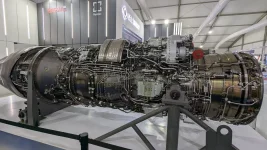
The joint venture, BrahMos Aerospace, merges India's skills in guidance and system integration with Russia's expertise in supersonic propulsion and aerodynamics, heavily based on the P-800 Oniks missile.
With Russia holding a 49.5% share in the company, every international sale directly boosts Russian industries through licensing fees, royalties, and the supply of crucial components.
As India rapidly evolves into a prominent global defence supplier, Moscow finds these export approvals increasingly beneficial.
Russia has previously cleared the sale of BrahMos missiles to the Philippines, and discussions with nations like Indonesia and Vietnam have been ongoing.
By allowing these international sales, Russia helps prove that their joint venture is a highly competitive and commercially successful product on the global stage, rather than just a weapon for local use.
Recent figures indicate that India's defence exports reached an impressive $4.11 billion in the latest fiscal year, underscoring the growing global demand for Indian military hardware.
The strong diplomatic relationship between Moscow and Abu Dhabi plays a crucial role in this expected approval. Despite ongoing global conflicts, the UAE and Russia share solid economic and political ties.
Regular communications between Russian President Vladimir Putin and UAE President Sheikh Mohamed bin Zayed Al Nahyan have fostered cooperation in areas like regional security and energy.
Furthermore, following the heavy Western sanctions imposed on Russia due to the Ukraine war, cities like Dubai and Abu Dhabi have transformed into vital financial safe havens for Russian trade and investments.
The UAE has successfully balanced its alliances with the West while keeping its economic doors open to Moscow.
Because of this mutual goodwill, selling the BrahMos to the UAE does not present any political roadblocks for Russia.
Rather than arming a hostile nation, supplying these highly capable missiles to a friendly Gulf state allows Moscow to subtly expand its regional influence without direct military involvement.
Financial factors also heavily influence Moscow's anticipated backing.
The Russian defence manufacturing sector is currently dealing with the immense pressure of global sanctions and restricted export markets.
Every BrahMos order brings much-needed revenue not just to India, but also to the Russian entities that provide the missile's engine technology and intellectual property. As a major shareholder, Russia earns a direct cut of the profits.
These international orders are essential for keeping production lines active, safeguarding technical knowledge, and ensuring the long-term survival of the Indo-Russian partnership in a fierce global market.
Beyond immediate financial gains, this potential sale perfectly fits into Russia's wider strategy in West Asia. Moscow has mastered a flexible diplomatic approach in the region, maintaining ties with nations that often oppose one another.
By indirectly supporting the UAE's military capabilities through the BrahMos deal, Russia can strengthen its standing in the Gulf's complex security environment. It allows Moscow to benefit from defence cooperation without having to sign formal military pacts or deploy its own forces to the area.
Additionally, Russia places immense value on its historical strategic partnership with India. Even as New Delhi diversifies its military arsenal with Western and home-grown equipment, the defence bond with Moscow remains crucial.
Russia is well aware of India's aggressive goals to boost its defence exports over the next ten years, with BrahMos leading the charge.
By endorsing these export ambitions, Moscow proves its dedication to the alliance, building trust and paving the way for future joint developments in advanced military technology.
From the UAE's perspective, acquiring the BrahMos from India offers a very practical advantage. Because the weapon is produced and sold by an Indian company, it avoids the direct political friction of buying arms straight from Russia.
This unique arrangement acts as a crucial buffer against the United States' Countering America's Adversaries Through Sanctions Act (CAATSA), which penalizes nations that conduct significant defence trade with Russian firms.
While the ultimate application of CAATSA rests with Washington, buying an Indo-Russian product from New Delhi is far less controversial than a direct Russian purchase, allowing the UAE to upgrade its military while keeping both Western and Eastern allies happy.
For India, securing the UAE as a buyer is a massive strategic victory. Selling to a major military power in the Middle East would solidify the BrahMos's reputation as a world-class weapon, building on the earlier success in the Philippines.
Recent reports suggest the UAE is also highly interested in integrating India's indigenous Akashteer air defence system alongside the BrahMos to counter emerging drone and missile threats in the region.
Breaking into a Gulf market that is usually dominated by American and European suppliers would cement India's status as a reliable provider of top-tier military hardware. Furthermore, this dynamic proves that India's rising defence industry can complement, rather than threaten, Russian interests.
In the end, Russia's expected consent for the UAE BrahMos deal is rooted in practical strategy rather than mere politics.
The agreement promises financial rewards for Russian businesses, honors a trusted defence pact with India, deepens relations with a pivotal Gulf nation, and highlights Moscow's ability to smoothly navigate and influence multiple geopolitical spheres at once.