- Views: 3K
- Replies: 6
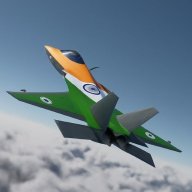
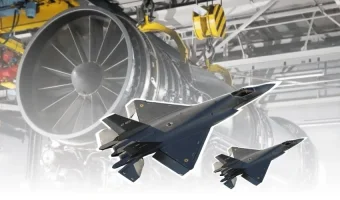
The development of India’s indigenous fifth-generation fighter jet has reached a critical juncture, with new details surfacing regarding its production timeline.
According to a senior official from the Aeronautical Development Agency (ADA), who requested anonymity, the agency aims to unveil the first prototype of the Advanced Medium Combat Aircraft (AMCA) by late 2028.
This target is contingent upon meeting key assembly deadlines. Following this initial rollout, the subsequent prototypes are scheduled to emerge in a staggered manner, with the final test unit expected by the close of 2031.
The programme envisages the construction of five distinct prototypes, released at intervals of approximately nine months. This strategy allows for a compressed yet comprehensive testing phase.
The first three aircraft will be utilised primarily to test flight characteristics, aerodynamic performance, and avionics. The final two will be reserved for integrating weaponry and conducting firing tests.
This method of parallel validation is intended to accelerate the certification process, a practice supported by the Cabinet Committee on Security’s (CCS) clearance of ₹15,000 crore for the project in March 2024.
A crucial decision regarding the industrial roadmap is also imminent. Authorities are expected to name the final production partner within the next quarter, a step that will facilitate the start of long-lead manufacturing.
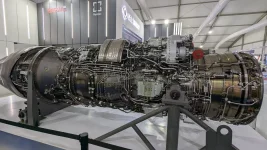
The Indian Air Force (IAF) has already firmly committed to procuring 40 units of the AMCA Mk1 variant. These initial jets will be equipped with the US-made General Electric F414 engine, capable of generating 98 kilonewtons (kN) of thrust, with mass production slated to commence around 2034.
Looking further ahead, the roadmap includes a more advanced Mk2 variant. This version will feature a more powerful 120 kN class engine, likely developed through an Indo-French collaboration, ensuring superior thrust and payload capabilities.
The IAF plans to acquire approximately 80 units of this enhanced variant, with production expected to begin after 2036. Defence analysts view this engine development as a vital step in establishing a self-reliant aero-engine ecosystem in India.
The testing strategy emphasizes a step-by-step integration of complex systems. Critical stealth features—such as serpentine air intakes and internal weapon bays, which are essential for minimizing the aircraft's radar cross-section—will be validated alongside sensors and mission systems.
By assigning weapons trials to the later prototypes, engineers can ensure that combat readiness is tested simultaneously with aerodynamic stability, thereby mitigating the risk of delays during the final stages of development.
This ambitious schedule, requiring five rollouts in three years, underscores the programme’s reliance on modular design and concurrent engineering. Beyond meeting deadlines, these milestones signify the AMCA’s evolution from a design concept to a physical reality.
Success in this endeavour will not only provide the IAF with a potent combat asset but also demonstrate India's maturity in managing complex, multi-layered defence programmes.