During the Cold War, the Soviet-designed MiG-21 emerged as one of the world's most prominent supersonic fighter jets. However, India and China adopted fundamentally contrasting approaches to integrating this aircraft into their military fleets.
While India chose to assemble the jet under official license through Hindustan Aeronautics Limited (HAL), China engineered the aircraft into its own long-lasting J-7 fighter series.
This distinct Chinese effort ultimately laid the groundwork for its modern aerospace defence sector.
This divergence in approach was not merely a reflection of technical capability. Instead, it was driven by unique geopolitical realities, distinct industrial strategies, and each nation's respective diplomatic ties with the Soviet Union during the 1960s.
In 1962, New Delhi officially selected the MiG-21 to modernise its air force and secured a highly structured agreement with Moscow for domestic assembly.
Through HAL, India legally manufactured over 800 of these jets across several decades, including the FL, M, and bis variants. This formal pact granted India direct, legitimate access to authentic Soviet blueprints, manufacturing techniques, and expert guidance.
Consequently, Indian engineers had no immediate need to reverse-engineer the aircraft. Their primary goal was to establish the local industrial infrastructure required to build an advanced supersonic fighter, rather than creating a new design from scratch.
Initially, Beijing pursued a similar strategy, receiving early MiG-21F-13 models and technical support from Moscow. However, the ideological Sino-Soviet split in the early 1960s abruptly ended this partnership.
With Soviet experts withdrawn, China was left with incomplete technical data and aircraft hardware. To keep the project alive, Chinese scientists were forced to troubleshoot production hurdles independently. Their efforts resulted in the J-7, a locally adapted version of the early Soviet fighter.
Rather than just copying the original jet, China spent the following decades constantly upgrading the J-7 architecture. They integrated better engines, modern radar, and new weapon systems, eventually altering the airframe entirely.
The jet was even widely exported under the designation F-7 to nations like Pakistan and Bangladesh. This continuous evolution served as a critical learning platform for Chinese engineers in aerodynamics, propulsion, and avionics.
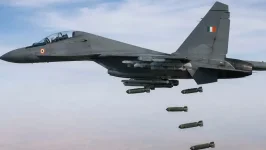
Conversely, India maintained strong, uninterrupted relations with the Soviet Union. This ensured a steady flow of newer aircraft, prompting India to transition to more advanced platforms like the MiG-23, MiG-27, MiG-29, and eventually the Su-30MKI.
Because imports and licensed production remained highly reliable, India did not feel compelled to spin off the MiG-21 into a vast family of local derivatives.
This created a notable trade-off in industrial development. By building under license, India rapidly acquired the ability to manufacture complex airframes and engines, outfitting its military with a large fleet of modern combat jets.
Yet, producing an aircraft from foreign blueprints is vastly different from possessing the deep, foundational knowledge required to design and modify one independently.
Because China was forced into isolation, its defence industry had to learn how to actively redesign systems, bridging the technological gap between early Soviet copies and modern indigenous fighters like the Chengdu J-10.
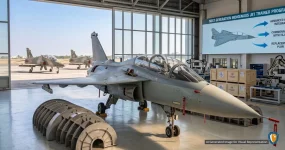
To achieve design independence, India took a much steeper path. Instead of slowly evolving a mature, existing aircraft like the MiG-21, Indian agencies pursued entirely new projects, such as the HF-24 Marut and the Light Combat Aircraft (LCA) programme, which yielded the modern Tejas fighter.
Creating a fighter jet from the ground up proved to be a far more complex challenge than gradually upgrading a proven airframe.
Ultimately, India’s decision to stick to licensed manufacturing was a logical choice based on its strategic requirements and stable Soviet alliances at the time.
However, the historical outcome highlights a vital lesson in aerospace engineering: while licensed production effectively builds manufacturing capacity, continuous indigenous modification builds design mastery.
China used the MiG-21 platform to progressively train generations of engineers, whereas India acquired immense manufacturing experience but had to make a much sharper, more difficult leap to domestic design with the Tejas programme.