- Views: 1K
- Replies: 1
The Defence Research and Development Organisation (DRDO) has achieved a major breakthrough in India’s domestic aerospace sector by successfully executing the initial developmental flight test of the Project Kusha M1 interceptor.
With this foundational variant proving its capabilities, the development campaign is now pivoting towards testing the more advanced M2 and M3 interceptors, which are designed to serve as the high-altitude, long-distance tiers of India’s forthcoming air defence network.
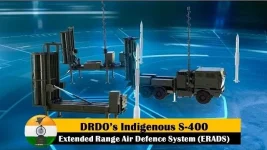
Officially designated as the Extended Range Air Defence System (ERADS), Project Kusha is a three-tiered surface-to-air missile initiative.
It is engineered to neutralise a wide array of aerial dangers, including hostile fighter jets, unmanned drones, cruise missiles, and specific ballistic threats.
Often referred to as India's indigenous answer to the S-400, the platform will work alongside existing foreign and domestic systems to secure the nation's airspace.
Sanctioned with a budget of ₹21,700 crore for five Indian Air Force (IAF) squadrons, the project features Bharat Electronics Limited (BEL) and Bharat Dynamics Limited (BDL) as critical manufacturing partners.
The recent successful flight of the M1 missile, which targets threats up to 150 kilometres away, confirms the reliability of the system’s innermost long-range layer.
Following this milestone, achieved at the Integrated Test Range on Abdul Kalam Island, DRDO engineers are now preparing for the maiden developmental launches of the M2 and M3 models.
The upcoming M2 interceptor will push the protective boundary outward to approximately 250 kilometres, vastly expanding the safe zone around strategic assets.
To achieve this extended reach, the M2 will utilise a larger rocket motor, a modified aerodynamic shape, and upgraded tracking technologies, ensuring it remains highly lethal at greater distances.
Reaching speeds of up to Mach 5.5, these interceptors will rely on advanced active electronically scanned array (AESA) radars and hybrid guidance systems.
Operating beyond the M2 will be the M3 interceptor, serving as the absolute outer perimeter of Project Kusha.
Engineered to strike targets between 350 and 400 kilometres away, the M3’s successful development will elevate India into a highly exclusive tier of countries capable of manufacturing their own ultra-long-range interceptor missiles.
At its maximum range, the M3 interceptor will perform a function similar to the longest-reaching missiles of the S-400.
It will be tasked with eliminating high-value enemy support aircraft—such as airborne early warning (AWACS) planes, mid-air refuelling tankers, and electronic warfare jets—long before they can approach Indian borders, provided they are detected by long-range radar networks.
By deploying three distinct missile variants, DRDO is constructing a deeply layered defensive shield.
This overlapping coverage allows defenders to engage hostile targets at various stages of their approach, granting commanders maximum tactical flexibility, boosting the overall success rate of interceptions, and making it exceptionally difficult for enemy forces to breach the airspace.
Furthermore, the system will be seamlessly integrated into the IAF’s Integrated Air Command and Control System (IACCS) to automate threat prioritisation and provide real-time battlefield awareness.
Simultaneously developing these three missiles offers significant operational advantages.
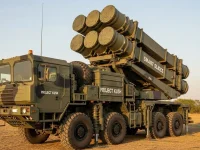
By sharing core technologies across the M1, M2, and M3—such as universal transporter-erector-launchers, fire-control radars, and digital command nodes—the military will benefit from vastly simplified logistics, streamlined training, and reduced maintenance costs.
The impending flight tests for the M2 and M3 variants will be decisive moments for the ERADS programme.
These early launches will strictly evaluate the fundamental flight mechanics, including rocket motor efficiency, stage separation dynamics, aerodynamic control, and seeker precision.
Only after these parameters are validated will the missiles be tested against physical aerial targets in complex combat simulations.
Consistent with standard aerospace testing protocols, the interceptors will undergo numerous developmental flights to reach full combat readiness.
Telemetry data gathered during these initial tests will allow engineers to fine-tune the flight software and propulsion mechanics before the hardware is handed over to the IAF for rigorous user trials.
The phased induction of the complete system is anticipated to begin between 2028 and 2030.
Project Kusha stands as one of India's most complex and vital indigenous defence initiatives to date.
Once all three interceptor variants are fully developed and actively deployed, the ERADS platform will provide the country with a robust, self-reliant, and multi-layered shield, ensuring that military bases, population centres, and strategic infrastructure remain safe from the full spectrum of modern airborne threats.