Hindustan Aeronautics Limited (HAL) is expected to delay the fully powered flight trials of the indigenous CATS Hunter cruise missile until late 2027 or 2028.
The postponement comes as the aerospace manufacturer focuses on perfecting the artificial intelligence framework and the unmanned platforms that power the overarching Combat Air Teaming System (CATS).
The CATS Hunter is a critical weapon in the broader CATS network, a next-generation defence initiative.
Developed in collaboration with the private firm NewSpace Research & Technologies, this programme blends manned fighters, unmanned combat aerial vehicles (UCAVs), and AI-driven autonomous weapons into a unified combat force.
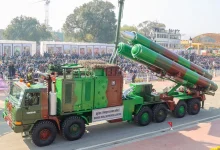
Designed as a stealthy, subsonic Air-Launched Cruise Missile (ALCM), the Hunter is built to slip past dense air defence networks and destroy high-value targets deep within enemy borders.
It weighs roughly 600 kilograms and carries a 250-kilogram warhead, offering a highly effective mix of range, survivability, and firepower.
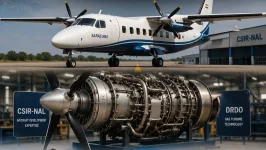
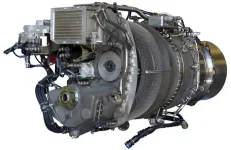
Open-source data indicates it utilises a turbojet engine—derived from the PTAE-7—alongside advanced infrared search and inertial navigation systems for pinpoint precision.
The missile offers significant operational flexibility. It will be integrated into manned aircraft like the Tejas Light Combat Aircraft, Su-30MKI, and Jaguar.
Furthermore, it is specifically engineered to fit inside the internal weapons bays of the CATS Warrior drone, allowing both human-piloted and unmanned aircraft to launch the same precision weapon.
While individual subsystems are still under development, the most significant milestone—full-scale powered flight tests—is yet to occur.
During these trials, the Hunter must detach from its launch platform, ignite its engine, and navigate autonomously to its target to prove its propulsion and guidance capabilities under real-world conditions.
However, the current timeline extension is not caused by the missile's design, but rather the complex ecosystem it will operate within.
The foundation of this network is HAL’s Air Combat Intelligence Development (ACID) software. The Hunter is not just a standard fire-and-forget weapon; it acts as a smart node in a digital network, sharing real-time target data and tactical commands with human pilots via AI.
HAL must thoroughly validate the core algorithms that manage this manned-unmanned teaming before the missile can demonstrate its full combat potential.
Additionally, HAL has decided to prioritise the completion of the CATS Warrior UCAV. This stealth drone, which features a maximum takeoff weight of 2,100 kilograms, will serve as a primary launch platform for the Hunter.
Because the Warrior carries the missile internally to maintain its low-observable profile, HAL considers the drone's successful flight testing to be a vital prerequisite.
Perfecting the UCAV will also prove the reliability of the AI, autonomous management, and communication systems the Hunter will ultimately rely upon. Once the Warrior is validated, the missile's integrated flight trials will follow.
Ultimately, the CATS initiative marks a revolutionary shift for Indian defence. Rather than sending increasingly expensive crewed fighters directly into contested airspace, pilots will command swarms of drones and smart missiles from a safe standoff distance.
This tactical approach not only protects the lives of aircrews but also multiplies the volume of precision firepower that can be delivered during a single mission.