- Views: 26
- Replies: 1
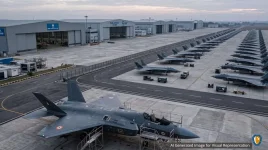
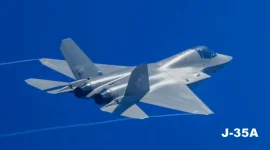
Recent reports indicate that Pakistan’s procurement of the Shenyang J-35—a twin-engine, fifth-generation stealth fighter from China—might face significant delays.
This development has triggered intense discussions among Pakistani defence experts.
The debate is largely shaped by analyses from Chinese researchers, such as Yang Xiaotong, who note that exporting such advanced aircraft depends on Beijing's manufacturing needs, strict technology security, and global strategic interests.
Instead of just dwelling on when the new jets will arrive, military analysts in Pakistan are rethinking the country's aerial strategy.
The focus has shifted towards finding ways for the Pakistan Air Force (PAF) to sustain a strong and effective combat edge during the interim years before a stealth fighter officially joins the fleet.
A Looming Technological Gap
A major concern in these discussions is the risk of falling behind technologically. If fifth-generation warplanes are not available for another ten years, Pakistan could face a serious disadvantage in the region.Historically, Pakistan's military strategy relied on securing a stealth fighter to work alongside its current squadrons of JF-17 Thunders and the recently inducted Chengdu J-10CE "Vigorous Dragon" jets. This was seen as essential for matching the modernising Indian Air Force (IAF).
With an extended wait for the J-35, questions are emerging about maintaining this balance, especially as India pushes forward with upgrading its Dassault Rafale and Sukhoi fleets and developing its own indigenous stealth fighter, the Advanced Medium Combat Aircraft (AMCA).
Furthermore, some observers suggest that China's focus on the larger Indo-Pacific region means Beijing will prioritise its own national interests over Pakistan’s immediate military schedules.
This highlights a hard reality: even robust alliances are heavily influenced by the broader landscape of global politics.
Maximising the 4.5-Generation Fleet
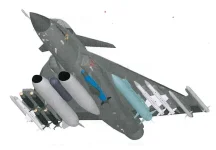
Acknowledging the likelihood of a delayed fifth-generation jet, military strategists are now concentrating on maximising the power of Pakistan's current and future 4.5-generation combat aircraft.Defence experts strongly advocate for immediate investments to strengthen the J-10CE squadrons and increase the production of JF-17 Block III fighters. A key priority is fully utilising their advanced Active Electronically Scanned Array (AESA) radars, such as the KLJ-7A.
Alongside these aircraft, there is a vital need to expand supporting technologies. This includes upgrading Airborne Early Warning and Control (AEW&C) systems, improving electronic warfare capabilities, deploying lethal long-range weapons like the PL-15 air-to-air missile, and building seamless communication networks.
This strategy stems from the understanding that modern aerial warfare relies heavily on connected, data-driven operations rather than just the speed or stealth of a single jet.
By linking various assets—such as fighter planes, radar planes, ground tracking stations, and jamming equipment—the PAF aims to create a unified combat network. Such an integrated system can effectively compensate for the temporary lack of stealth capabilities.
The Challenge of Technology Security
Protecting advanced military secrets is another prominent topic within these strategic debates.Chinese experts have frequently emphasised the need to secure critical fifth-generation features, including radar-evading designs, sophisticated flight software, and core mission systems.
Consequently, Pakistani officials are discussing the strict security protocols and end-user agreements that China will likely demand before handing over its top-tier combat planes.
Analysts recognise that stealth warplanes are among Beijing's most highly classified assets. Selling these jets is far more complicated than supplying older fourth-generation fighters like early JF-17 variants.
These conversations underscore that modern defence agreements rely just as much on protecting technological secrets as they do on strong diplomatic relations.
Shifting Timelines and Future Readiness
However, despite the concerns regarding prolonged delays, some experts believe that these timelines are not set in stone.Independent security analysts in Pakistan warn that expected delivery dates should not be viewed as final. Military purchasing plans often shift rapidly due to changing regional tensions, shifts in manufacturing capabilities, or new political directives.
It is argued that if the security climate in South Asia dramatically worsens, or if neighbouring countries deploy stealth aircraft faster than anticipated, China might revise its export rules to accelerate the J-35 transfer. History shows that defence alliances can fast-track equipment deliveries when geopolitical pressures rise.
Overall, the ongoing debate reveals that Pakistan's current military planning is focusing heavily on fortifying what it already has, rather than waiting for a new stealth fighter to arrive in the short term.
Improving combat training for pilots, broadening data-sharing networks, linking high-tech sensors, and boosting the sheer lethality of the current fighter wings are seen as practical, immediate steps.
These actions will ensure the PAF remains a formidable force, no matter when the stealth jets finally land on the tarmac.