- Views: 199
- Replies: 2
A few weeks following his retirement in June 2026 as the Vice Chief of the Air Staff for the Indian Air Force (IAF), Air Marshal Nagesh Kapoor shared a sharp review of India's homegrown Tejas Mk2 fighter jet programme. His comments have sparked major debates among defence experts.
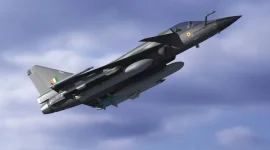
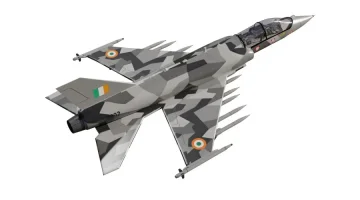
During an interview on NDTV's Ctrl Alt Defence, Kapoor was questioned about the future of the Tejas Mk2. The aircraft is a 4.5-generation medium-weight fighter that is anticipated to join the IAF in large numbers by the mid-2030s.
When asked if the jet would still be effective for frontline combat by that time, Kapoor gave a very clear answer: “No, operationally, definitely no.”
He based his conclusion on the fast-paced military advancements of neighbouring rivals.
By the middle of the next decade, China is expected to deploy up to 500 of its fifth-generation J-20 stealth fighters, alongside newer sixth-generation jets. Meanwhile, Pakistan is also looking into acquiring fifth-generation aircraft.
According to Kapoor, introducing a single-engine, 4.5-generation fighter without advanced stealth capabilities into frontline duty at a time when technology is two generations ahead would make it extremely difficult to handle high-level threats.
However, the former Vice Chief did not reject the Tejas Mk2 completely. He pointed out that India cannot afford to wait forever for locally made jets as regional threats grow.
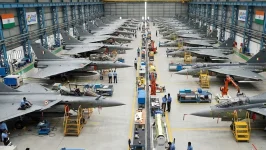
He criticised the ongoing production delays and the apparent lack of urgency from the manufacturer, Hindustan Aeronautics Limited (HAL).
For example, deliveries of the current Tejas Mk-1A are falling behind schedule, and the Mk2’s first test flight has been pushed back to around 2027.
Despite these issues, Kapoor admitted that 4.5-generation planes will still be useful.
Since it is impossible to protect a massive country like India using only a small number of ultra-expensive fifth- and sixth-generation fighters, the IAF will still need the Tejas Mk2 for tasks like airspace defence and supporting ground troops.
"Indigenous is the way to go without a doubt, but how long do we keep waiting?" he stated. He also recommended speeding up India's own Advanced Medium Combat Aircraft (AMCA) project and suggested looking into foreign partnerships for sixth-generation fighter jets.
Kapoor's statements set off a major debate online and among military experts. Those who oppose buying more French-made Rafale jets questioned why the IAF wants to buy over 100 additional foreign fighters under the Multi-Role Fighter Aircraft (MRFA) scheme.
They argue that the homegrown Tejas Mk2 offers similar modern technology at a lower price.
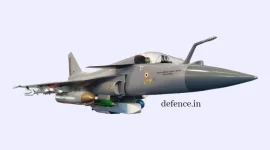
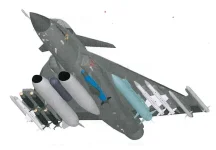
The Mk2 is a major upgrade over the earlier Tejas models; it is a heavier aircraft featuring a more powerful American GE-F414 engine, increased fuel capacity, and an indigenous Uttam Active Electronically Scanned Array (AESA) radar capable of tracking multiple targets over 100 kilometres away.
It can also carry up to 6.5 tonnes of weapons—including advanced munitions like the Astra beyond-visual-range missile and the BrahMos-NG cruise missile—across 11 hardpoints.
Supporters of the Tejas argue that focusing on self-reliance and building a larger fleet locally should be the top priority.
On the other side, experts who support buying foreign jets while developing local ones explain that the Rafale and Tejas Mk2 serve completely different purposes.
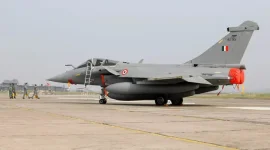
The Rafale is a heavier, twin-engine fighter with a maximum takeoff weight of 24.5 tonnes and a weapons payload of nearly 9.5 tonnes.
It boasts a longer flying range, a proven combat record, deep-strike capabilities, and the advanced SPECTRA electronic warfare system.
In contrast, the Tejas Mk2 is a single-engine, medium-weight fighter. Its main goal is to affordably replace the IAF's ageing fleets of Mirage 2000s, Jaguars, and MiG-29s, providing large numbers for tactical missions and local point defence.
Currently, the IAF's fighter squadron strength has dropped to near 30, which is dangerously below the approved level of 42. This creates an urgent need for more planes as older jets are retired.
Relying only on local production carries risks, such as delays in engine supplies and testing, especially while rival nations rapidly upgrade their forces.
Buying more Rafales, which could be delivered quickly and partly built in India, would provide a fast solution to cover the shortfall during the 2030s.
Meanwhile, the Tejas Mk2 and the upcoming AMCA are intended to form the long-term foundation of the air force.
Many military planners suggest a "high-low" mix: using high-end jets like the Rafale and AMCA for the most dangerous missions, while deploying cost-effective Tejas variants for widespread coverage.
Technical experts also point out that 4.5-generation fighters are still highly relevant globally if they receive continuous upgrades to their sensors, communication networks, and weaponry.
Modern jets like the latest Rafale F4 and the American F-15EX prove this point.
The Tejas Mk2 is built with room for future improvements and easily integrates with new Indian weapons.
Therefore, labelling it as outdated just because it lacks full stealth ignores the fact that modern air warfare relies heavily on advanced electronic systems and long-range missiles, not just invisible airframes.
Kapoor’s remarks highlight a growing frustration within the IAF regarding the slow pace of local manufacturing, despite strong support for national self-reliance.
His comments come at a critical time as India is negotiating the purchase of 114 additional multi-role fighters, alongside ongoing efforts to speed up the Tejas and AMCA projects with the help of private companies.
This situation underscores a major dilemma: the desire to build weapons at home versus the immediate reality of a shrinking fighter fleet and the advanced jets being deployed by neighbouring countries.
In the end, most defence professionals agree that India must pursue a balanced approach.
Waiting solely for the Tejas Mk2 and AMCA could leave the air force dangerously under-equipped in the 2030s, while depending entirely on foreign imports would harm India's long-term goal of military self-sufficiency.
Kapoor’s blunt warning demands a more realistic approach to production timelines, manufacturer accountability, and force structure priorities.
How the government balances expensive foreign imports with mass-produced local jets will ultimately decide the Indian Air Force's ability to protect the nation in an increasingly hostile region.